There is a familiar scene in modern medicine. Around a conference table sit clinical leads, commercial leads, regulatory leads, perhaps a market-access lead, each carrying a deck dense with evidence. The drug has a mechanism. The trial has endpoints. The launch has a sequence. Then someone asks what the patient needs, and the room discovers it has built a remarkably sophisticated answer to a question nobody outside the room quite asked.
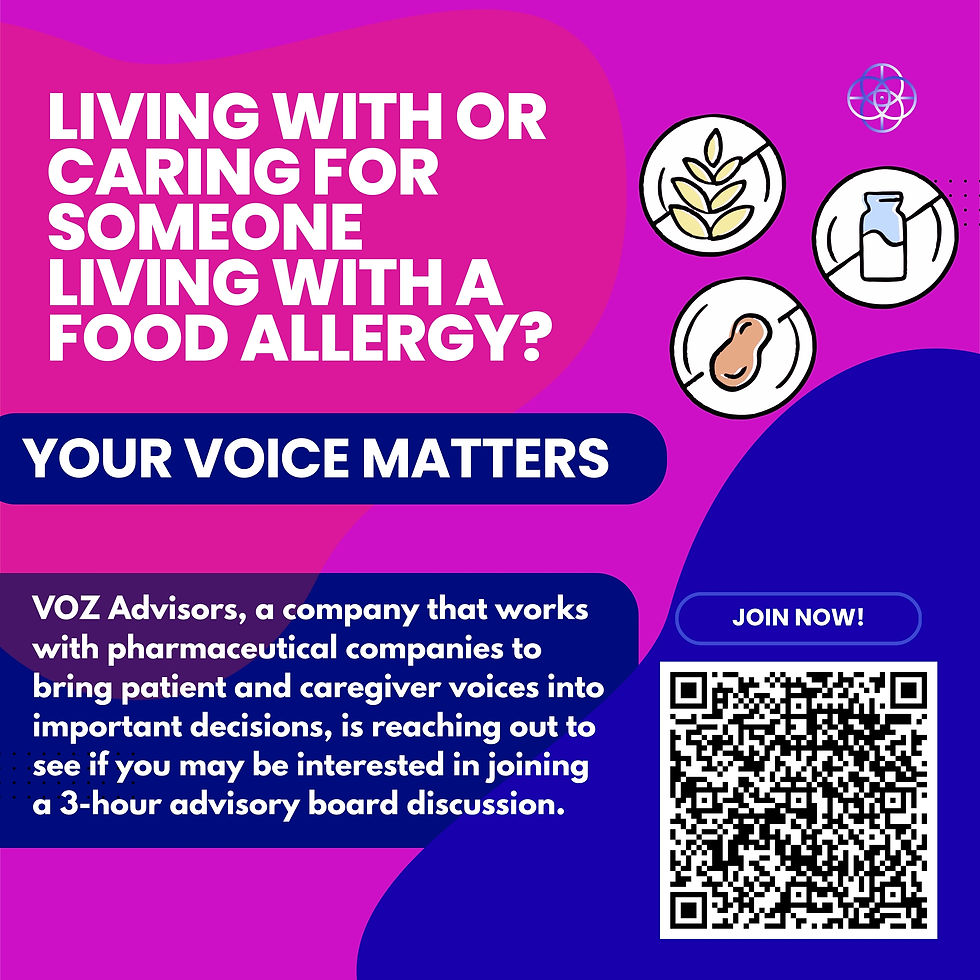
VOZ Advisors works at that moment of discovery. The New York firm helps pharmaceutical and biotechnology companies bring patients, care partners, advocacy organizations, professional societies and community groups into decisions from early research through post-market work. It is management consulting with a peculiar raw material: lived experience, which is rich in meaning, unevenly distributed and stubbornly resistant to a neat cell in a spreadsheet.
The name is a clue. VOZ means “voice” in Spanish and Portuguese. Mark Krueger founded the company in 1995 as Mark Krueger & Associates. Former client and advisory-board member Cláudia Hirawat acquired it in 2018; the VOZ identity followed that October. But voice alone is not the product. Plenty of companies can assemble an advisory board, take careful notes and produce a handsome summary. VOZ sells the conversion - the work required to turn what people say into a choice about a protocol, partnership, policy, team structure or educational program.
A map for a landscape made of trust
The firm's most concrete product is LEAD, short for Leveraging Environmental Assessment Data. It is a cloud-based, subscription platform containing more than 3,100 profiles of patient, professional and multi-stakeholder organizations. VOZ says each profile is organized across nine focus areas and more than 30 categories, covering such things as research, treatment guidelines, health equity, leadership and industry collaborations.
That sounds like a database until you consider the problem it addresses. A biotech entering a rare disease may find only a handful of organizations, each stretched thin and carrying years of history. A large pharmaceutical company entering oncology finds the opposite: a crowded field in which prominence, credibility and fit are not the same thing. A contact list answers “who exists?” LEAD is meant to help answer “who understands this problem, whom do people trust, and how should we approach them?”
Around that map sits the consulting practice: strategic plans, patient-experience mapping, advocacy benchmarking, pre-approval access policy, stakeholder forums, health-equity work and internal-readiness programs. The customer is usually a life-sciences company, small biotech or global manufacturer. The participants are often everyone the customer has difficulty reaching honestly - patients, caregivers, nonprofit leaders, clinicians and community advocates. VOZ makes money through customized projects and continuing counsel, with a software subscription in the mix. It publishes no rate card.
The summer dip that did not arrive
A public case study supplies the firm's clearest plot. A global biopharmaceutical company needed to recruit patients into several breast-cancer trials. It faced a crowded advocacy environment and needed relationships quickly. The ordinary temptation would be to turn up the volume: more campaign, more reach, more reminders. VOZ began with the network.
Over a two-year engagement, the team assessed advocacy organizations in priority markets, interviewed potential partners about the information they needed, created patient-friendly materials, translated them, distributed them through those organizations and kept up phone and email outreach. It also arranged advocate briefings at major conferences and webinars between meetings. The trials were fully accrued within one year. The client noted that the usual summer recruitment drop had not appeared and believed the advocacy-event work helped.
“All the engagement at advocacy events must have helped.”Mid-large-size biopharmaceutical company, in a VOZ case study
What failed first was not one dramatic tactic. It was the default assumption that recruitment is principally a message-distribution problem. VOZ treated it as a relationship and translation problem. The company did not merely identify where potential participants gathered. It asked trusted groups what their communities wanted to know, made the material usable and stayed visible long enough to earn repetition.
The first patient problem may be an org chart
Another case began after a company grew through acquisitions. Two legacy businesses had inherited opposite approaches to patient advocacy - one centralized, one decentralized. The visible problem was structure. The deeper problem was belief: each side had a different theory of where listening belonged and who had permission to act on it.
VOZ interviewed internal stakeholders, peer companies and patient groups, then compared current strengths with other operating models. Its conclusion was admirably unfashionable: there is no single correct structure. What changed minds was not a universal benchmark but triangulation. Leaders could see their own friction beside peer practice and the external community's experience. The recommendation gained force because it did not come from one constituency.
This is where VOZ sits in the market. Large communications networks can run campaigns. Strategy firms can redesign operating models. Research vendors can conduct interviews. Advocacy specialists can convene communities. VOZ combines pieces of all four but remains narrowly centered on patient advocacy and engagement. Its staff biographies repeatedly cross the border between industry and nonprofit work. President and CEO Ronnie Todaro, for example, spent more than a decade creating patient-engagement programs at the Parkinson's Foundation before joining VOZ.
The client list visible through testimonials makes the position clearer: CSL, Novartis Oncology, Takeda, Seattle Genetics, Soleno Therapeutics and Respivant. One CSL executive offered a revealing compliment, saying the team put better work with patients ahead of maximizing consulting spend. This is, at once, an endorsement and a business constraint. Advice earns credibility when the advisor is willing to sell less of it.
The parts worth stealing
A company need not hire a consultancy to copy the useful mechanics. The breast-cancer case is almost aggressively practical. Map before messaging. Interview intermediaries about information gaps. Write for the person making the decision, not the internal reviewer. Translate. Use trusted channels. Show up between campaign moments. Track an outcome tied to the actual problem.
Ask which decision the patient input can still change. If the answer is none, the meeting is ceremony.
Invite the groups with relevant trust, not merely the largest mailing lists. Explain constraints without hiding behind them.
Name an owner, a deadline and a place where the finding enters the operating plan.
Tell participants what changed, what did not and why. Trust grows when the loop closes.
The conditions matter. This approach is unlikely to work when patient involvement starts after the consequential choices are locked; when executives want validation rather than contradiction; when nobody across clinical, commercial, access and policy owns implementation; or when a company treats one articulate advocate as a complete community. Listening without the authority to change anything is merely expensive politeness.
VOZ's newest public work keeps widening the guest list. In 2026 it convened a webinar with BRIDGE on the evidence gap for pregnant and breastfeeding people with chronic disease. Its team supported the launch of MECP2 Duplication Global, an alliance of five international charities. It has also mapped cardiovascular resources for LGBTQ+ communities and then extended the method toward South Asian and Hispanic communities. The common move is not “add a patient.” It is to notice which experience the existing system has made easy to overlook.
That is the quiet argument inside the company’s thirty-year history. Patient engagement is not an act of corporate manners performed near the end of development. It is a way of detecting bad assumptions while they are still cheap enough to change. The meeting becomes useful not when every seat is filled, but when someone who lives outside the plan can still alter it.