There is a particular kind of optimism that belongs to the agency pitch. The deck is polished, the team is assembled, and every opportunity appears to be the opportunity. In 2025, M Booth Health tried something more interesting. It declined 80 percent of the requests for proposals that reached its door.
This was not swagger performed from a comfortable peak. The New York healthcare communications firm had just watched two separate pieces of business disappear. Federal health-education cuts, including two projects with the Centers for Disease Control and Prevention, represented 15 percent of its 2024 revenue. Then one of its largest clients consolidated work elsewhere in a reorganization, accounting for another 15 percent. When the first thing to fail is both public funding and account concentration, the usual reflex is volume: pursue more, pitch faster, fill the hole.
M Booth Health narrowed the funnel instead. It pursued the assignments where its combination of medical depth, policy fluency and consumer creative work made sense. It won 70 percent of those pitches, brought in agency-of-record work from BioNTech and TG Therapeutics, added mandates from Plan International and Pancreatic Cancer Action Network, and ended the year down roughly 8 percent from its record 2024. Revenue was nearly $25 million. The hole was real. So was the recovery.
An agency with a medical history
The M Booth Health name is young; the operating memory is not. Its lineage begins in 1992 with Cooney/Waters, founded by Lenore Cooney as a specialist in healthcare and pharmaceutical public relations. Creston agreed to acquire Cooney/Waters and its advocacy subsidiary in 2010 for up to $30.8 million. In 2019, Next 15 bought the American operation of Health Unlimited for initial consideration of $27.7 million and placed it alongside consumer agency M Booth. The new name advertised the premise: healthcare specialization, now plugged into a broader creative machine.
That history matters because health communications is not ordinary brand work wearing a lab coat. A message may have to satisfy a regulator, a medical reviewer, a patient advocate, a physician and a frightened family at the same time. It must be accurate without becoming inert. It must find attention without using the shortcuts that make attention easy. M Booth Health’s answer is a mixed staff of healthcare communicators, researchers, public-affairs practitioners, equity strategists, science writers, digital specialists and crisis counselors. One in four employees holds an advanced health degree.

Make science legible
Medical writing, data communication, disease education and conference programs turn evidence into material people can understand and use.
Make brands relevant
Product launches, creative campaigns, earned media, social strategy and influencer work compete for attention in regulated categories.
Make policy move
Public affairs, advocacy, stakeholder engagement and coalition building connect institutional goals to public action.
Make trust durable
Corporate positioning, executive counsel, employee communication and crisis preparation protect relationships when conditions change.
The product is attention that can survive scrutiny
The firm sells counsel and execution through retained and project engagements. Its customers are pharmaceutical and biotech companies, medical societies, providers, public agencies, philanthropies and advocacy groups. In practical terms, this can mean launching a medicine, explaining a clinical result, organizing a coalition, preparing an executive for scrutiny or building a patient community around a condition that polite conversation has ignored.
Consider Organon, the women’s-health company spun out of Merck. M Booth Health built “Let’s Get Loud” as an organizing idea for social content about neglected conditions, stigma and the unvarnished experience of patients and employees. In Organon’s first year, its social channels produced nearly 35 million impressions and drew more than 3,000 commenters into positive discussion. Its LinkedIn engagement rate was double that of a key competitor and five times that of several large pharmaceutical brands. The agency did not invent women’s frustration with healthcare. It gave that frustration a repeatable editorial form.
For the American Society of Clinical Oncology, where the relationship stretches beyond two decades, the job was different. M Booth Health helped put cancer-care equity on the largest available stage. It developed a roundtable with KFF that attracted more than 860 attendees, produced an annual-meeting keynote that reached more than 40,000 oncologists and worked equity messages into the organization’s wider communications. The mechanism was not a single clever ad. It was orchestration across experts, channels and moments.
“Better health starts with better conversations.”M Booth Health’s operating belief
Its proprietary research performs a similar job upstream. The 2021 Pharma Brandemic study measured how COVID-19 had turned pharmaceutical makers into brands that ordinary consumers could name and prefer. Chosen Circles later studied how Black, LGBTQ+ and Hispanic or Latino Americans use trusted personal networks to navigate health information. This is thought leadership with a commercial afterlife: the findings can shape patient campaigns, corporate equity platforms, advocacy programs and product launches.
What changed their mind about growth
Before the setback, the numbers encouraged expansion. M Booth Health had grown 60 percent over three years. Revenue rose 18 percent in 2024 to $27.2 million; client retention was reported at 100 percent. Growth seemed to prove the model. The 2025 shocks exposed the less pleasant mathematics of an agency: a few large accounts can outrun an impressive percentage gain, and external policy can erase work that performed perfectly well.
The lesson was not that government work is bad or that large clients should be avoided. The firm continued with organizations including ASCO and expanded relationships with Gilead and Organon. The change was a more disciplined answer to a deceptively simple question: where can this particular staff produce a result that a generalist agency cannot? That filter led to corporate reputation, product communications and advocacy work for biotechnology companies, plus mission-led assignments where the agency’s policy and equity expertise could earn its keep.
Lenore Cooney founds specialist healthcare agency Cooney/Waters.
Next 15 acquires Health Unlimited USA for $27.7 million initially and creates M Booth Health.
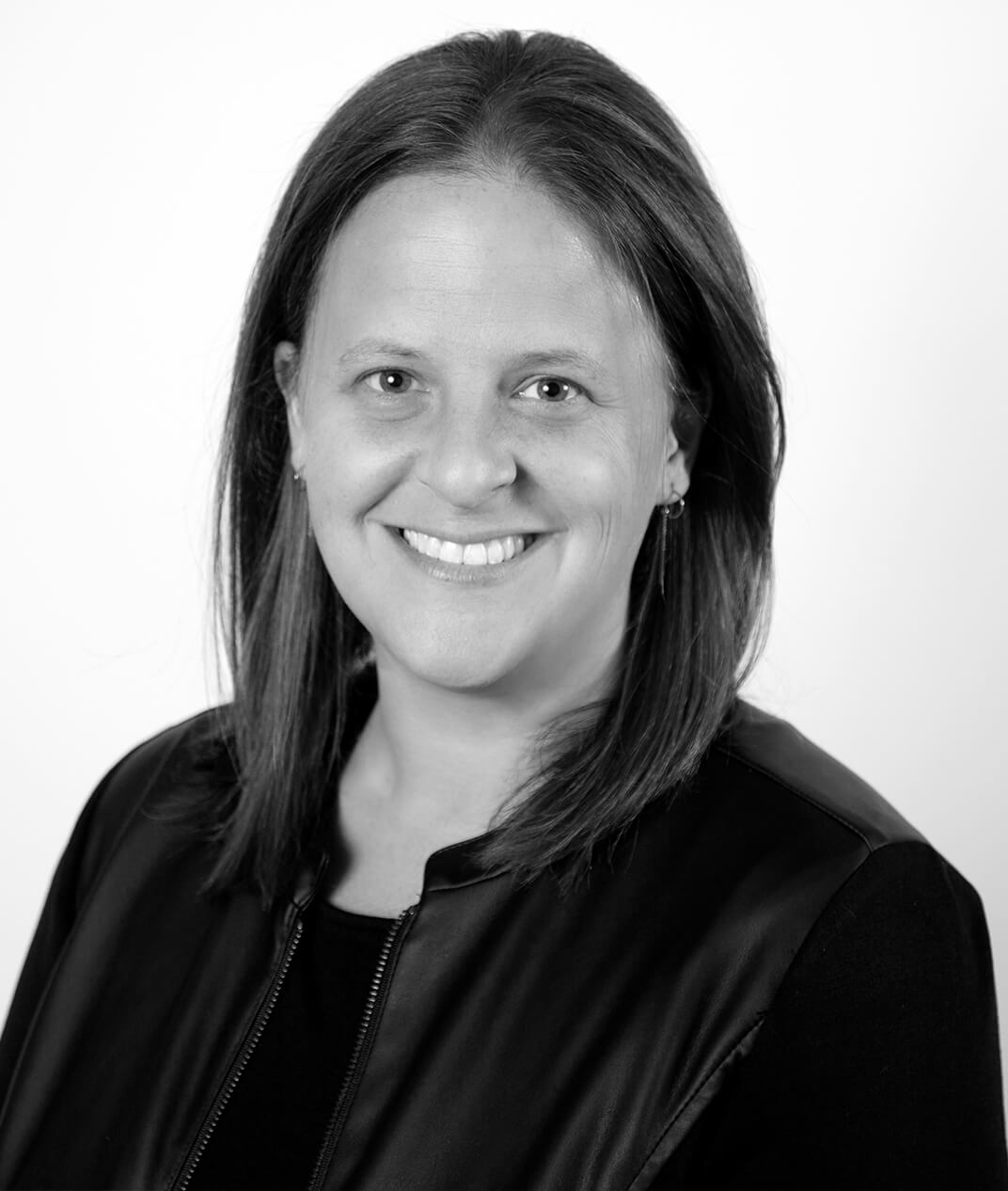
Stacey Bernstein becomes CEO, bringing a focus on contemporary digital and creative health work.
Revenue reaches a record $27.2 million after three years of 60 percent growth.
Two large losses produce a sharper pursuit strategy and a 70 percent win rate on selected pitches.
The part worth stealing
The useful idea is not “say no.” Refusal without a thesis is merely empty capacity. M Booth Health could decline pitches because it had already built a recognizable combination of capabilities, evidence from long relationships, and research that clarified where it knew more than the market. The decision came after specialization, not before it.
A copyable four-part filter
- Name the unfair combination. For M Booth Health, it is health and policy depth joined to consumer-grade creative and digital reach.
- Publish what you learn. Research such as Chosen Circles turns private expertise into a visible point of view.
- Count concentration as risk. A record year can hide how much revenue depends on policy or a single reorganization.
- Measure the no. An 80 percent decline rate and 70 percent win rate make selectivity operational, not sentimental.
This approach has conditions. It works when expertise is scarce, differentiation is legible and the firm has enough financial room to wait for fit. It is less useful for a new shop without proof, a commodity service competing on availability, or a team whose fixed costs demand constant utilization. Saying no also becomes self-flattery if leaders never test whether the market values their specialty. The discipline is not rejection. It is choosing, measuring and revising.
M Booth Health now sits in a crowded market beside large health networks and specialist firms that can also offer regulatory knowledge, medical communications and global reach. Its advantage is not permanent. But the 2025 episode shows what the model looks like under stress. The agency lost work for reasons that good creative could not fix. It did not pretend otherwise. It found the assignments where its particular mixture still mattered and left most of the rest alone. For a business built to make people pay attention, that may be its most attentive decision.