In the ordinary grammar of advertising, people sit at the end of the sentence. A company has a product. The product has a message. The message is aimed at an audience. If the work is good, the audience does something measurable. In healthcare, this grammar can become peculiar very quickly. The person at the end of the sentence may know more about living with the condition than anyone who wrote the brief.
Snow Companies was built by noticing that problem. Brenda Snow was diagnosed with multiple sclerosis, and the experience gave her a view of healthcare communication from the least convenient angle: inside it. In 2001, she founded a company in Williamsburg, Virginia, around the belief that patients and caregivers should not merely receive communication. They should help make it.
This sounds obvious now because “patient-centric” has become the kind of phrase that can survive an entire meeting without anyone defining it. Snow made the phrase operational. It recruited patients, screened them, trained them, learned their stories, secured consent, developed content with them, managed the medical and legal review, arranged events and travel, and kept answering the phone afterward. The agency called the resulting role a Patient Ambassador.

The ad was never the whole job
Snow is often described as a healthcare marketing agency, but that label hides the interesting bits. Its paying clients are pharmaceutical, biotechnology and medical-device companies. The people in its programs are patients and caregivers. Between them sits a chain of work that looks partly like research, partly like a creative studio, partly like an events business and partly like a patient-support operation.
The company organizes that work into four broad capabilities. Insights includes advisory boards, landscape analysis, social listening and analytics. Content includes writing, design and video made with patients. Activation covers advocacy, ambassador programs, digital communities and live or virtual events. Support brings in nurses, pharmacists, social workers, dietitians and counselors for phone, text, email, social and mentor programs.
This is also how Snow differs from a conventional ad agency. The visible thing might be a film, an event or a social post. The less visible thing is the continuity around it. A patient might begin with a recruitment call, contribute to an advisory board, learn how to tell a medically accurate personal story, appear at an event and later mentor someone facing the same treatment. The creative asset is only one moment in a longer relationship.
The clever move was to treat lived experience not as color for a campaign, but as a form of expertise.
A workflow disguised as empathy
Empathy is easy to admire and difficult to procure. A large pharmaceutical company cannot simply find a compelling patient, point a camera and press record. Health information is sensitive. Paid relationships need disclosure. Claims must remain accurate. Consent has to be specific. The patient's words may pass through medical, legal and regulatory review without being sanded into corporate paste.
Snow's moat, such as it is, lives in that production line. Any studio can make a handsome video. Fewer can recruit across rare diseases, handle consumer health data, compensate participants, coordinate travel, train speakers, navigate review and maintain trust when a program changes. Snow's privacy notices are revealing business documents. They describe registrations, eligibility screening, contracts, honoraria, reimbursements and the handling of health information. The paperwork is not beside the product. It is part of the product.
There is a cost to this model, though Snow does not publish rate cards. It is slower and more labor-intensive than buying reach. It requires specialized staff and client patience. It works best when the treatment or disease creates a genuine need for education, peer connection or sustained support. For a commodity purchase, a broad awareness blast or a brand unwilling to share control with patients, the machinery would be excessive.
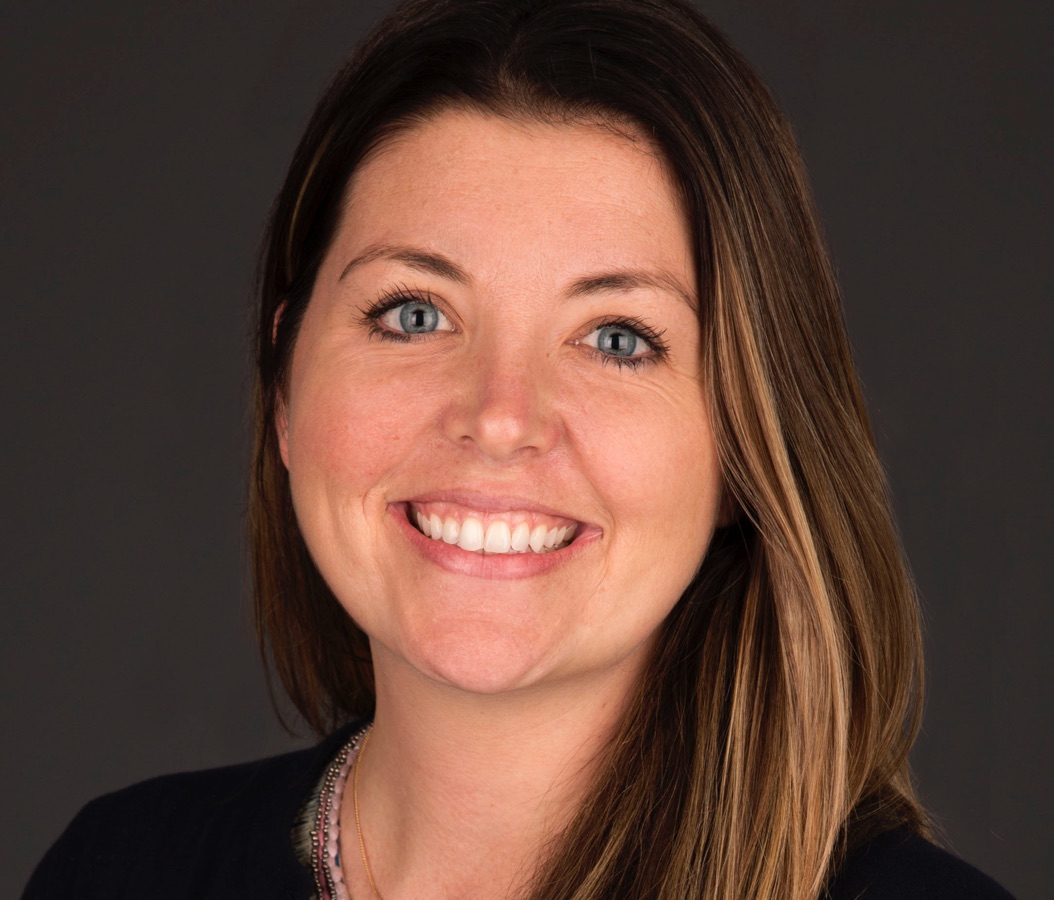
Blake Shewey became CEO in 2025 after serving as president. Brenda Snow remained founder, and the company kept the same premise: listen first.
The 18-hour problem
The most useful way to understand the model is through a treatment that refuses to fit into a thirty-second commercial. Optune Gio is a medical device used for glioblastoma, an aggressive brain cancer. Patients may need to wear it for at least 18 hours a day. The challenge is not simply knowing what the device does. It is learning how to live while doing it.
Snow and Novocure built three connected programs: one-to-one Buddy calls with experienced users and caregivers, live educational webinars, and regional open houses with patient ambassadors, healthcare professionals and device demonstrations. In 2024, the Buddy Program engaged 384 prospects and completed 266 calls. Twenty-three webinars drew 326 registrations and 222 attendees. The ambassador network grew to 40 trained patients and caregivers.
Peer support, counted
Those are modest numbers by mass-media standards, which is precisely the point. A person deciding whether she can wear a cancer-treatment device through sleep, work and dinner does not necessarily need an impression. She may need another person who has already solved the problem of the cord, the backpack and the curious stranger. The program won a 2025 PM360 Trailblazer Gold award for persistence and adherence. Its method was not mysterious: pair clinical education with someone credible enough to answer the Tuesday-afternoon questions.
What changed, and what did not
In 2018, Omnicom Health Group acquired Snow for undisclosed terms. The attraction was straightforward. Pharma companies were moving “patient first” from a statement of belief into a commercial practice, and Snow had spent seventeen years building the practice. The agency joined a network that could bring it into larger, more complicated client assignments.
In May 2025, Blake Shewey became chief executive. Brenda Snow and longtime operating leader Corbin Wood stepped away from their executive roles, with Snow remaining as founder. That year the agency also joined forces inside Omnicom Health with YuzuYello and YuzuZest, adding behavioral-learning and adherence capabilities. The company reported 59 account wins, 100 active business clients, 249 brand-product accounts and work on 25 product or indication launches during 2025.
The business model remains project-based. About 80 percent of the 2025 mix was patient engagement and 20 percent patient support. Its competitive set includes specialist patient agencies, large healthcare networks and the in-house advocacy teams of pharmaceutical companies. Snow's difference is not that it alone believes patients matter. It is that the company has built one integrated shop around the awkward consequences of taking that belief seriously.
The useful parts to steal
Most companies do not need a Patient Ambassador program. Nearly every company, however, has a version of Snow's original mistake available to it: treating the person with the most practical knowledge as the last person in the process. The fix is less poetic than “customer obsession.” It is a sequence.
- Bring experience in early. Listen before the strategy and language become expensive to change.
- Treat participation as expertise. Set expectations, compensate fairly and make disclosure plain.
- Co-create the artifact. Do not ask for authenticity and then rewrite the human out of it.
- Design the boring infrastructure. Consent, privacy, review, scheduling and follow-up are what make trust repeatable.
- Stay after launch. A relationship that ends when the asset ships was probably extraction with nicer stationery.
The approach is not universal. It depends on people who want to share, a client willing to hear inconvenient detail, and a program capable of protecting sensitive information. It should not be copied where participation could expose or pressure vulnerable people, where the brand wants a scripted endorsement rather than an honest account, or where no one is prepared to maintain the relationship.
Snow Companies began with one patient discovering that the system had plenty to say to her and too few ways to hear from her. Twenty-five years later, the company employs more than 375 people and works across nearly 200 disease states. The scale is notable. The reversal is better: the audience moved to the front of the sentence.