In the beginning there was Calcium. This was 2012, and the name was a neat little piece of agency reasoning: healthy brands, strong bones, nourishment. Steven Michaelson, who had already built Wishbone, gathered former colleagues for another run at healthcare advertising. The joke was memorable enough to survive a merger, a buyback and a change in ownership. Then something more interesting happened. The joke became an organization chart.
Today the New York-headquartered business has five specialist divisions. Calcium handles pharmaceutical advertising. Amino takes oncology. Vitamin MD does medical education and scientific communications. PRotein handles public relations. Cobalt works on commercial planning, payer marketing and market access. Above and through them runs an integrated strategy group combining brand, medical and engagement thinking. In July 2026, the company added NORA, a proprietary AI platform meant to accelerate how the work is planned, created and delivered.
It sounds, at first, like a naming spree. It is better understood as an answer to the peculiar social life of a medicine. A new therapy may need to explain itself to a physician, reassure a patient, withstand a regulator, make economic sense to a payer and remain coherent in public. Those audiences do not merely want different messages. They use different standards of proof. The pharmaceutical marketer is therefore less like an advertiser than an interpreter at a dinner party where nobody quite shares a language.
The seam is the product
Most agencies describe their capabilities as a list. Calcium+Company's more useful claim is about the spaces between the items. A medical educator knows the study. A brand strategist knows the market. A PR team knows the conversation. A market-access specialist knows the reimbursement obstacle. If they meet only at the final handoff, the client has paid for four kinds of expertise and received four versions of the truth.
Calcium+Company's structure tries to make the handoff itself valuable. The divisions retain sharp identities - oncology is not treated as generic advertising with darker photography - while shared strategy is supposed to keep the work from fracturing. That places the business between two familiar alternatives: the boutique with deep expertise but a narrow toolkit, and the vast holding-company network whose toolkit may require a map and three procurement calls.
“We don't just advertise brands. We grow them.”Calcium+Company
The numbers give the claim some outline. For 2024, the company reported 41 active business clients and 58 brand-product accounts, up from 36 clients and 51 accounts a year earlier. Thirteen account wins arrived during the year. The work leaned toward healthcare professionals, 65 percent, versus 35 percent patient-facing. Engagement and digital represented the largest service slice at 45 percent; brand strategy and creative were 25 percent, medical communications 20 percent, and public relations 10 percent.
Where the work went
Reported 2024 service mix
The company changed shape before it changed its name
Calcium's route was not a tidy founder-to-exit arc. The Star Group acquired Calcium NYC and Vox Medica in 2014, combining them with Star Life Sciences as Calcium USA. In December 2015, Michaelson and Judy Capano bought the agency and its assets back. The business then posted more than 70 percent growth in 2020 and 38 percent in 2021. NexPhase Capital invested in November 2021, while the existing management stayed in place.
That transaction is the pivot. Leadership later described 2021 as the year the broader strategy was forged: keep the traditional agency core, then add specialist capabilities around it. Vitamin MD opened the medical-education lane. PRotein and Amino arrived in 2023. The acquisition of CSG Health Group that June was especially telling. CSG was not folded into a new acronym and left on a shelf; its scientific-communications team joined Vitamin MD, adding healthcare-professional education where Calcium wanted genuine depth. The purchase price was private. The strategic logic was unusually legible.
Calcium begins. Steven Michaelson reunites former Wishbone colleagues around a healthcare agency.
The buyback. Michaelson and Capano purchase the agency and its assets.
The pivot. NexPhase invests; a diversified communications group starts taking shape.
The cabinet fills. Amino and PRotein launch; CSG joins Vitamin MD.
Access arrives. Cobalt adds payer marketing and commercial planning.
NORA switches on. AI becomes an explicit layer across planning and production.
What a milk carton knows about constraints
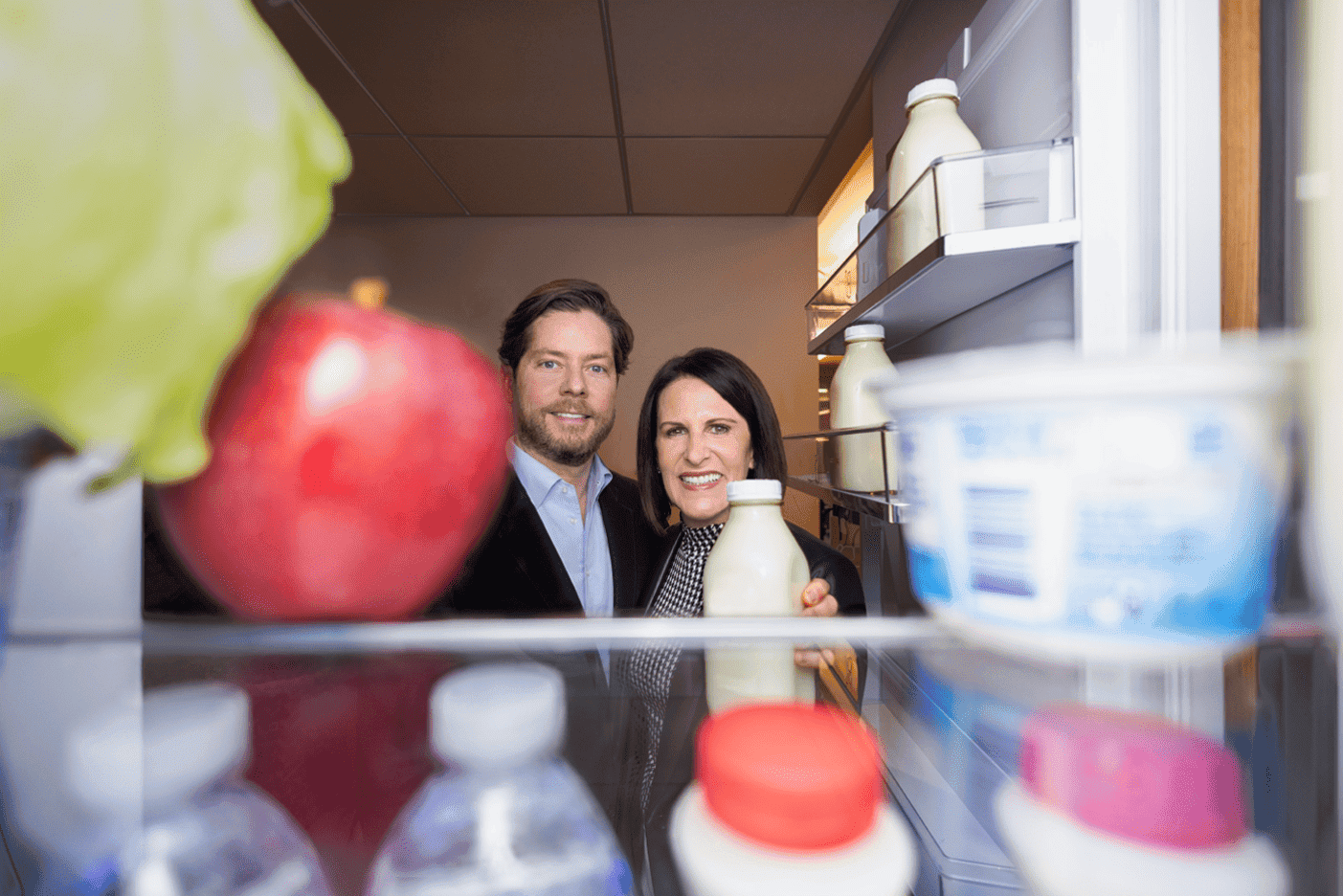
Healthcare creativity lives inside rules, and rules can make agency work dreary. Calcium's best counterexample is almost absurd: it built and displayed a website on a physical milk carton. The project became a 2025 Best Launch finalist. The carton was not a distraction from the brand metaphor. It was the interface. The constraint supplied the joke, the navigation and the reason to remember any of it.
That instinct appears again in the group's rare-disease work, which introduces rarity through a camellia, a vaquita porpoise and one of two Mercedes-Benz 300 SLR Uhlenhaut Coupes before turning toward delayed diagnoses and treatment frustration. It is an old explanatory trick, used well: begin with what the reader can picture, then move toward what matters.

NORA is the newest test of that discipline. The company says it combines advanced AI with proprietary data, specialist tools and collective expertise. The sensible word there is combines. In consumer advertising, a plausible first draft may be enough to keep a meeting moving. In health communications, plausible can be the dangerous setting between correct and obviously wrong. The platform's value will depend less on how much copy it produces than on whether it makes evidence, review and revision easier to see.
A model worth borrowing - carefully
There are three useful things to copy. First, name specialist units after the problem they solve, not the internal department they escaped. Amino immediately promises oncology focus; Vitamin MD promises scientific education. Second, centralize the thinking that must travel. Calcium+Company's integrated strategy group is the connective tissue, joining brand, medical and engagement strategy rather than asking clients to reconcile them later. Third, acquire for missing depth. CSG strengthened an existing medical-communications practice instead of creating an ornamental sixth logo.
The model asks a great deal from its seams. It is strongest when a client has a genuinely cross-functional problem - a launch, a rare-disease journey, an oncology story, a payer barrier - and when specialists are allowed to work early enough to change the answer. It is less useful for a narrow production assignment, or wherever integration means five teams attending the same call and sending five invoices. The nutrition cabinet works only if someone understands the dosage.
Calcium+Company's public client list has included Genentech, Pfizer, Bristol Myers Squibb, Incyte, Sun Pharma, Organon and Blueprint Medicines, along with wins such as Abivax, Amgen and Guardant Health. The services stretch from pre-launch products to large established brands. That range explains why the company does not market one signature deliverable. It sells continuity across a medicine's commercial life.
And perhaps that is the point of the name after all. Calcium is rarely the whole meal. It is one element in a system, useful because of what it supports. The agency began with a nutrient and built a cabinet. Its next challenge is to prove that the cabinet opens with one handle.