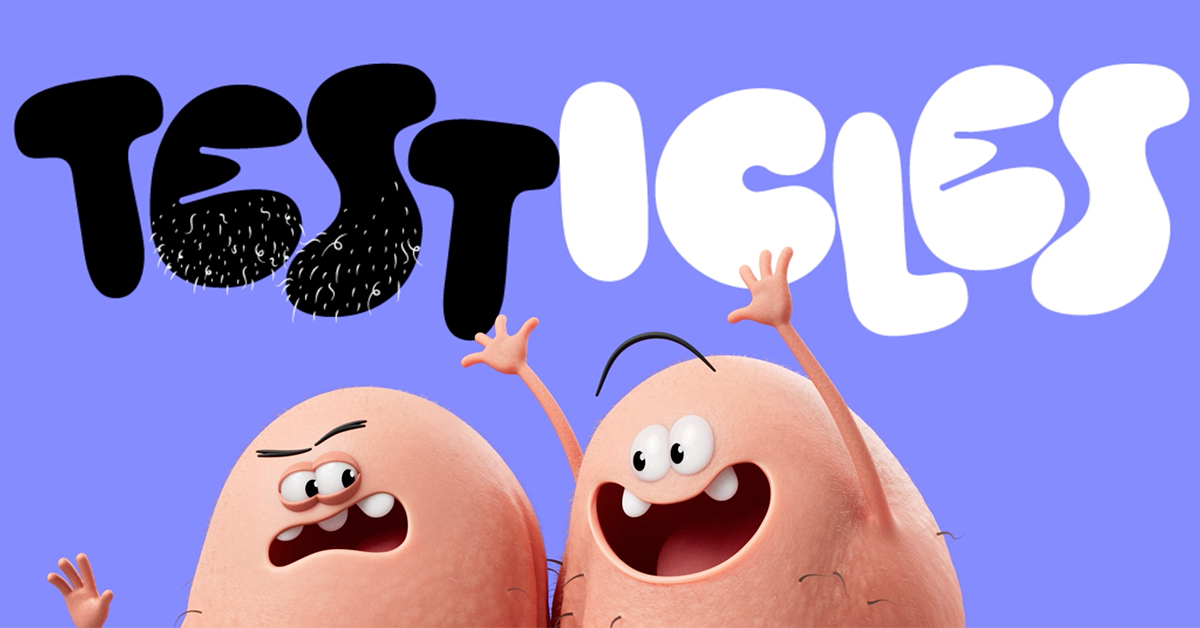
The cheapest object in one of Ogilvy Health’s most discussed campaigns was the point. A home pregnancy test costs less than five dollars. It is easy to find, easy to use, and, for a young man, sufficiently odd to mention to a friend. In TEST-ICLES, Ogilvy Mexico, Ogilvy Health New York, and Fundación de Alba asked men to use that familiar stick as an early warning for testicular cancer. Some testicular tumors produce hCG, the hormone pregnancy tests detect. A positive result is not a diagnosis; it is a reason to call a doctor.
The idea is funny for about three seconds. Then the mechanism clicks. Embarrassment had been keeping young men away from appointments and self-examination. So the team did not make a more solemn lecture. It made the first action private, inexpensive, and tellable. The campaign paid no influencer fees and bought no digital media, yet creators carried it into a national conversation. In 2025 it collected a One Show Merit, a D&AD Wood Pencil, and major recognition at the Saniss Awards.
Good health marketing does not make the science smaller. It makes the next move clearer.A useful rule hidden inside the work
The meeting with six chairs
Advertising usually worries about two things: the brand and the audience. Healthcare adds several more people who can stop the work. A scientific claim must be defensible. A regulator must permit it. A payer must see value. A physician must trust it. A patient must understand it. And somebody who did not wake up hoping to see an oncology campaign must notice it.
Is it true?
Is it allowed?
Is it worth it?
Is it useful?
Is it clear?
Will I notice?
Ogilvy Health’s business is arranged around that crowded table. Its service map covers brand development, data and strategy, experience and innovation, public relations and influence, medical education, and market access. The Innovation Lab adds AI, virtual reality, touchless experiences, and games. Oncollab puts behavioral economics, science, and creativity around cancer journeys. This is not software sold by the seat. It is expert labor sold through projects and longer agency-of-record relationships.
The customers are the institutions that live inside this complexity: pharmaceutical and biotech companies, consumer-health brands, hospitals, payers, government health bodies, and nonprofits. Ogilvy Health publicly shows relationships with names including Pfizer, Bristol Myers Squibb, AbbVie, Johnson & Johnson, Dexcom, Gilead, Genentech, Haleon, Sanofi, and the NIH. Their needs range from launching a medicine to teaching clinicians, earning reimbursement, building a patient-support experience, or changing a public behavior.
Born from a handoff problem
The present company’s useful origin story is not a garage. It is a merger. In 2010, WPP combined Ogilvy Healthworld and CommonHealth into Ogilvy CommonHealth Worldwide: more than 1,100 people in 64 offices across 33 countries. The wager was that clients would rather have medical education, market research, managed-care marketing, public affairs, digital work, and advertising connected than passed down a line of separate shops.
The first full year supplied evidence for the wager. The network reported 72 significant agency-of-record assignments and more than 160 awards across its first two years. In 2014 it bought Element Marketing Group to deepen payer and market-access expertise. Then came the revealing reversal. In 2018, WPP began phasing out the Ogilvy CommonHealth name in the United States and folded the capability into Ogilvy. The specialist business had become more valuable as part of the whole.
What failed first was the old handoff - and, later, the old gatekeeper. Healthcare marketing once revolved largely around the physician. Search, patient communities, creators, advocates, and direct-to-patient services gave consumers more leverage. Ogilvy Health’s 2026 “Healthfluence” thesis is a response: credibility now moves through an interaction of experts, communities, culture, and experience. Valuable information is not enough if it arrives in a form nobody uses.
The menu is long because the journey is long
- Build the promise. Position, name, and develop the brand; map the audience and the moments that matter.
- Make the evidence travel. Create scientific narratives, train speakers, engage experts, and work through congresses.
- Clear the economic gate. Shape value propositions and communications for payers, reimbursement, and patient access.
- Design the encounter. Connect CRM, field teams, social content, customer experience, and emerging interfaces.
- Earn attention and trust. Work with media, advocates, employees, creators, and communities around reputation and disease awareness.
- Measure what moved. Use segmentation, journey data, dashboards, attribution, and campaign optimization.
This places Ogilvy Health against IPG Health, Publicis Health, Omnicom Health Group, VML Health, and dozens of specialist medical-communications or market-access firms. The pitch is not that Ogilvy invented each discipline. It is that a client can connect them to the larger Ogilvy system - brand advertising, PR, consulting, experience, and influence - across local markets. The advantage is one shared table. The tax is obvious: a very large table can become a meeting.
A connected network helps when the problem crosses audiences, markets, and disciplines. It is less convincing when a brief is narrow, speed matters more than orchestration, the client cannot align its own medical, legal, access, and brand teams, or an independent specialist has deeper expertise in the one problem that matters.
What a smaller team can steal
The useful parts do not require 64 offices. First, invite the vetoes in early. A payer objection discovered in week one is strategy; discovered after production, it is waste. Second, design the next action before the message. TEST-ICLES worked because the object was cheap, private, and available. Third, give every specialist the same human problem. Oncollab’s point is not its name; it is that the behavioral scientist and the oncologist look at the same journey.
Finally, separate “simple” from “simplistic.” A pregnancy test detecting hCG is an arresting bridge to care, but it cannot rule cancer in or out. The boundary is part of the idea. Health communication earns trust when the invitation is memorable and the limitation is plain.
Mario Muredda, Global CEO since October 2024, is an unusually literal embodiment of the company’s bet. He studied drug resistance in non-small-cell lung cancer, then spent nearly two decades in advertising and marketing, supporting more than 30 product or indication launches. His career crosses the same distance as the firm: molecule to market, evidence to behavior.
That distance is Ogilvy Health’s market. Plenty of agencies can make a line famous. Plenty of medical shops can make a claim safe. The valuable work sits between them, where accuracy must become something a person can remember and act upon. Six people are still in the room. The company succeeds when they hear one idea, not six compromises.