The first thing M Health wants you to know is that it does not trust the first thing you tell it. Not because the brief is wrong, exactly. Briefs are full of correct facts. They are also full of inherited language, channel habits and answers that arrived before the question. The Philadelphia healthcare consultancy has built its identity around pausing at that moment. It asks what is really driving behavior, then works outward from the answer.
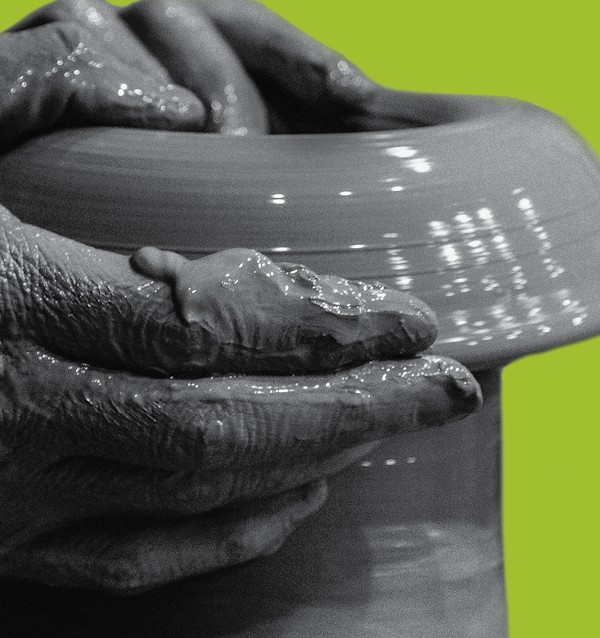
This is called “Handmade Thinking,” a phrase that sounds almost antique beside omnichannel dashboards and automated content engines. But the underlying proposition is practical. Healthcare decisions are made by people who occupy different systems at once: the physician who reads the evidence, the payer who prices it, the patient who lives with it, the caregiver who schedules around it and the policymaker who shapes access. M Health sells the work of seeing those perspectives together.
Founded in 2010, the privately held firm has roughly 25 employees, a headquarters on Chestnut Street in Philadelphia and a second office at the University of Sussex in England. It works for pharmaceutical, biotechnology, diagnostics and health-technology organizations. Public case studies name Novo Nordisk, Siemens Healthineers, Pfizer and CSL Behring. The outputs range from brand identities and advertising to evidence plans, advisory boards, congress experiences and patient education.
The valuable bit is the handoff
Most agency categories describe where the work stops. A research firm delivers the insight. A strategy consultancy turns it into a plan. A creative agency gives the plan a voice and a face. A medical communications shop protects the science. M Health’s niche is the distance between those stops. It discovers the insight, builds the medical or brand strategy and makes the thing.
That continuity matters because healthcare communication often fails in translation. A subtle finding becomes a slogan. A clinically accurate deck becomes unusable. A patient truth gets flattened into a stock photograph of a person gazing heroically through a window. M Health’s answer is not a single aesthetic. It is to keep the people who found the problem near the people designing the solution.
Find the friction
Map journeys, listen to stakeholders and test what is actually moving behavior.
Name the choice
Turn evidence into a value proposition, narrative or engagement plan.
Choose the form
Build the tool, film, workshop, experience or content system the choice demands.
“Every project begins with a simple question: what’s really driving behavior in this situation?”M Health, on its working method
A resin needle beats another adjective
Consider the awkward assignment M Health describes for Novo Nordisk’s Alhemo. The market favored less frequent dosing. Alhemo used a daily-dose regimen. A conventional response would search for language strong enough to make “daily” feel less daily. M Health instead developed tactile launch materials: a pen display box and a resin needle comparison that allowed healthcare professionals to see and feel the patient experience.
The first obstacle was not lack of information. It was the frame through which sales teams were being asked to explain it. The physical comparison changed that frame. According to the agency, the materials quickly captured attention and helped sales teams convey the product’s advantage. No public budget is attached to the work, but the lesson is free: if the benefit is sensory, do not trap it in copy.
A hemophilia-friendly video library offered practical value before asking patients to opt into brand communication. Opt-in rates beat every benchmark, the agency says.
Whitepapers, podcasts, videos and sales kits became a thought-leadership ecosystem linked to more than 200 long-term partnerships worldwide.
A global sickle-cell strategy combined clinical, human and value narratives across testimonials, AR, advocacy and field tools.
Videos, an MSL presentation and an interactive congress experience reframed IgG in a newly competitive CIDP market.
The pattern is consistent. Start by locating the real barrier. Change the frame. Then select the medium. The firm’s more unusual offerings make the sequence visible. Brand Improv uses actors to dramatize market-research findings, forcing brand teams to encounter familiar data as human behavior. Its John and Paul workshops borrow collaboration principles from Lennon and McCartney. TRILOGY tells a medical story through three simultaneous lenses: clinical science, human impact and value delivered.
TRILOGY refuses the single story.
Clinical science explains what happened. Human impact explains why anyone should care. Value delivered explains why a system should act. Remove one lens and the narrative becomes either cold, sentimental or commercially vague.
Creativity with a lab coat on
M Health’s recent work has leaned further into Medical Affairs, a function where “creative” can sound suspiciously close to “uncontrolled.” In a webinar poll reported by the firm, half of respondents called creativity absolutely critical and another third said they used it daily. M Health’s reading is that the gap is not enthusiasm but structure. Teams need methods that permit exploration without abandoning evidence, procedure or compliance.
Its answer is a design-thinking approach tailored to evidence generation, education, pathway optimization and engagement. A preview tool called the Insight Palette sorts stakeholder observations by context and theme before anyone starts making solutions. This sounds modest because it is. The point is to prevent an expensive late correction by making the team argue about the problem early.
The same instinct appears in “Pragmatic Optimism,” the agency’s framework for communication in neurodegenerative drug development. These are fields marked by terminated programs, trial burden and accumulated skepticism. Optimism without evidence becomes salesmanship; evidence without emotional truth becomes a catalogue of disappointments. The framework treats failed programs as data, asks sponsors to communicate mechanisms and trial design clearly, reduce participation barriers and demonstrate long-term commitment beyond one molecule.
“If the tools at hand are insufficient, invent new tools.”M Health, on innovation
What you can steal on Monday
You do not need an agency budget to copy the sequence. Before commissioning an asset, write down the behavior that must change and the evidence that says why it has not changed already. Ask which stakeholder perspective is missing. Translate the desired action into a physical or observable moment. Then choose the format. If the team starts with “we need a video,” rewind.
The method depends on access. It works when a client can bring medical, commercial and audience knowledge into the same conversation; when the agency can hear from patients or professionals; and when there is room to test an assumption before production. It is a poor fit for a commodity content queue measured only by output volume. Handmade work is not automatically better work. Its advantage appears when the problem is important enough that the first answer is probably incomplete.
That is M Health’s place in the market. It is smaller than the global healthcare agency networks and broader than a pure medical-writing vendor. Its public work suggests a consultancy paid for custom projects and ongoing relationships rather than a software product or standardized menu; fees are not published. The competition is any large network, specialist medcomms shop, research firm or in-house team capable of connecting discovery to delivery. The defense is the connection itself.
There is something pleasingly defiant about calling this handmade. Medicine is becoming more data-rich, more personalized and more operationally tangled. Marketing technology promises speed at every turn. M Health’s bet is that speed does not remove the need for judgment. It only makes the cost of skipping judgment arrive faster.