In a clinic in Kabul, the first thing to fail was paper. A vaccination card could be lost, damaged, forgotten or rendered useless by distance and low literacy. The usual answer would have been a sturdier card, perhaps with a logo in the corner and an educational campaign explaining why everyone should keep it safe. McCann Health’s answer was a piece of black thread.
The thread became the Immunity Charm, a bracelet modeled on the protective amulets already worn by Afghan children. A health worker added a colored bead for each vaccine. Mothers saw a familiar sign of protection. Clinicians saw a record. The child carried the file. No screen, battery or password was required.
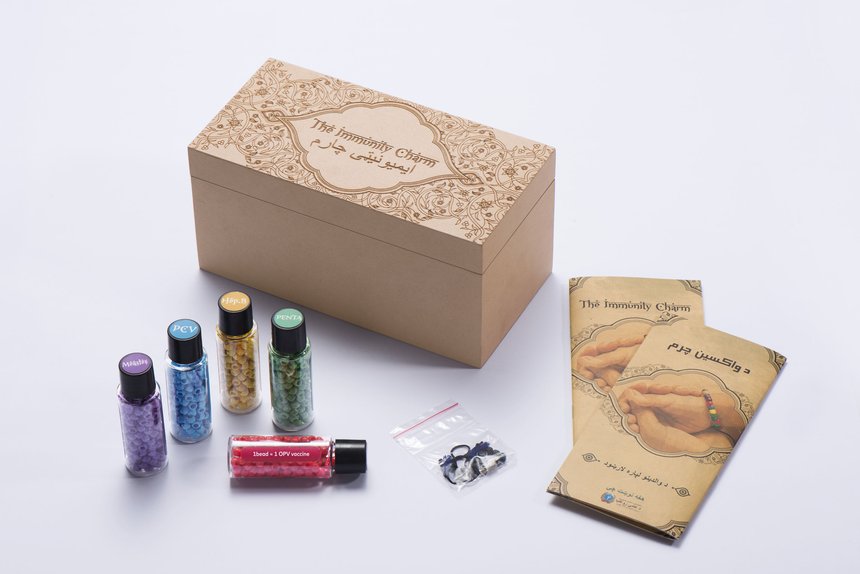
A database that jingled
McCann Health worked with Afghanistan’s Ministry of Public Health on the idea. In field testing, mothers and healthcare workers readily accepted it. The bracelet even created a social loop: mothers compared colors and discussed which vaccines their children had received. Demand ran so far ahead of expectation that the early operational problem was not persuasion. It was finding enough bracelets.
That detail matters. An award entry can end when the idea lands. A public-health tool begins there. Inventory, clinic training, a stable color code and a dependable vaccine supply decide whether a lovely object becomes infrastructure or souvenir. The campaign cost was not publicly disclosed. Nor did a Cannes trophy tell us how many children ultimately completed a vaccine schedule. What is documented is narrower and still useful: the pilot was culturally acceptable, generated enthusiasm and created demand that strained the available stock.
The useful conversion
Protective bracelet
Color per vaccine
Ask for the next bead
The campaign did not replace local custom. It gave the custom a second job.
Here is the copyable part. Begin with the behavior that survives without your campaign. Find the object, phrase or routine people already remember. Add one job to it. Then test the mechanics in the place where the behavior happens. The idea does not travel intact when the symbol is unwelcome, when workers cannot maintain the code, or when the promised service is unavailable. Cultural fluency cannot compensate for an empty refrigerator at the clinic.
The loaf with a second meaning
Three years later, another McCann collaboration found its medium in a kitchen. In Lebanon, social taboo could make direct discussion of breasts difficult. The Bread Exam, created across McCann and partner offices for Spinneys, the Lebanese Breast Cancer Foundation and AUB Medical Center, showed a traditional baker kneading and pressing dough. The gestures quietly mirrored a breast self-exam. The original film did not need to show or name a breast.
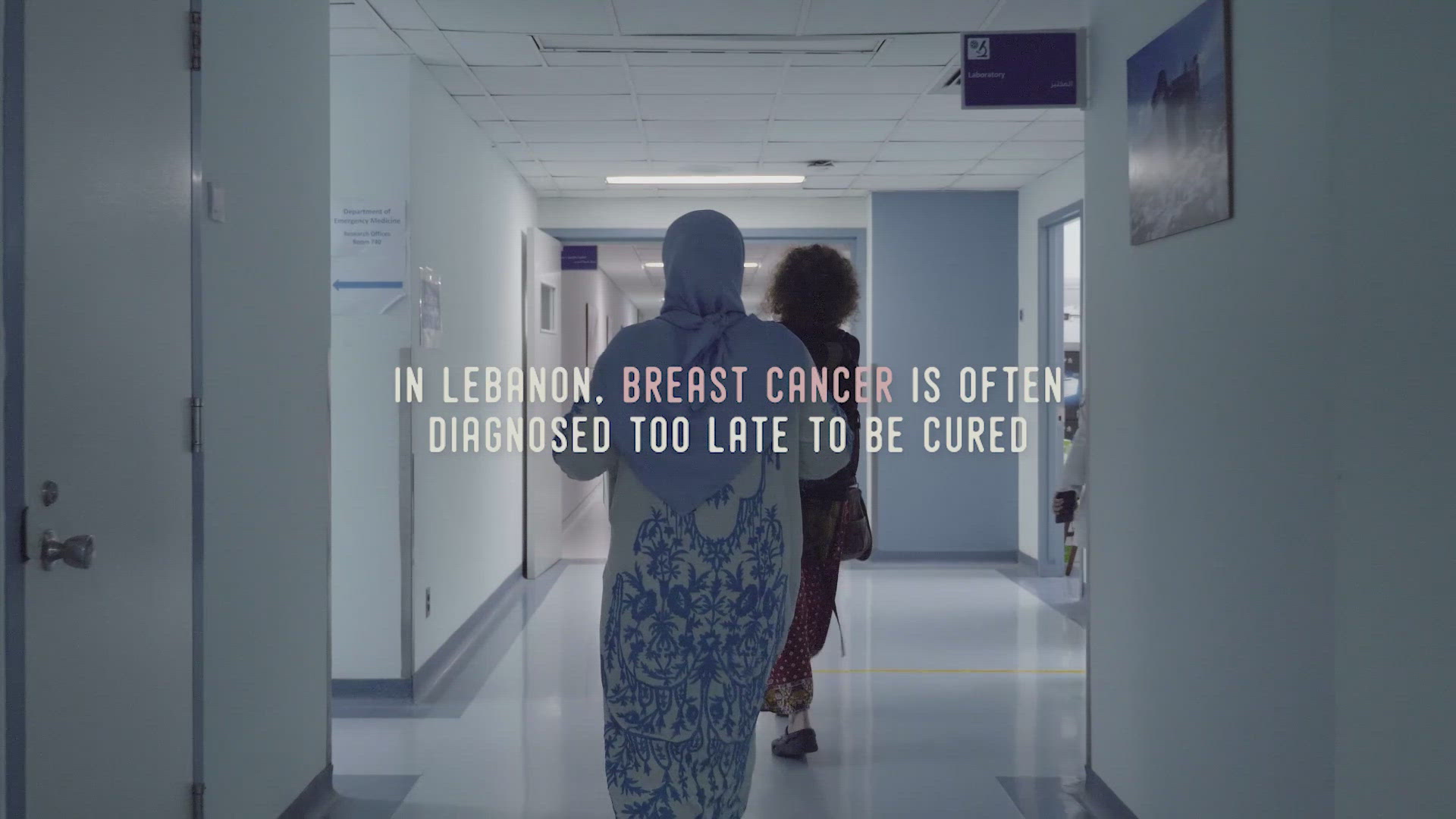
The work spread through flour packaging, market demonstrations and food influencers. Versions appeared beyond Lebanon, including Jordan, Turkey, Germany and the United Kingdom. Campaign reporting put its reach at 112 million people and said 86 percent of surveyed Arab women would associate baking with self-checking. Those are campaign figures rather than clinical outcomes, but the mechanism is plain: a private instruction rode inside a public, ordinary ritual.
McCann Health used the same instinct with different technology in China. Breath of Life turned a smartphone microphone into a COPD-awareness experience on WeChat. Blow into the phone and a digital tree grew according to approximate lung volume. A low score directed the user toward a hospital checkup. More than 10,000 people used it. The phone was not pretending to be a pulmonologist. It was turning a symptom people dismiss as aging into a reason to seek an assessment.
What the agency actually sold
The charming cases can make McCann Health look like an invention studio. Most of the business was more workmanlike. It sold strategy, healthcare advertising, medical communications, patient engagement, professional marketing, global health programs, pharmacy work and managed-markets advice. Its customers included pharmaceutical and biotech companies, consumer-health brands, governments and nonprofits. The audiences on the other end included doctors, patients, caregivers, pharmacists and payers.
The business model was agency economics, not software economics: retainers and project fees for specialist labor, creative work, research, production and execution. Revenue was not reported separately by its public parent. A supplied third-party company record estimates annual revenue around $300 million, but that is not a company disclosure. There was no seed round, no venture valuation and no founder mythology. McCann Health was built inside a holding-company system.
That system gave it range. A pharmaceutical launch might require scientific strategy, a physician campaign, patient materials, payer evidence and local adaptation. McCann Health could assemble those capabilities across its network. Competitors such as Ogilvy Health, Publicis Health, Havas Health, VML Health and Real Chemistry offered versions of the same promise. McCann Health’s differentiation was not that it alone understood science. It was the combination of global reach, specialist depth and a creative culture with an unusual appetite for making the message into an object or experience.
The merger that had no price
On July 1, 2021, owner Interpublic placed McCann Health and FCB Health under a new umbrella called IPG Health. This was sometimes described as a merger, but nobody bought McCann Health that day. Both networks already belonged to Interpublic. No transaction price was announced because the event was an internal realignment.
The logic was scale without immediately erasing the agency names. The combined organization began with roughly 5,000 people across six continents, a shared leadership team, centralized technology and access to data capabilities from Kinesso and Acxiom. Day-to-day agency teams remained in place. In 2024, McCann Health Managed Markets was still launching its own tools: PaxPort for mapping access barriers, GEMSYS for identifying local coverage influencers and AccessXPlorer for training manufacturer teams.
Then the roof changed again. Omnicom completed its acquisition of Interpublic on November 26, 2025. By 2026, the former IPG Health identity was directing people to Omnicom Health, while specialty units were being combined or renamed. McCann Health’s legacy is now distributed: in local agency brands, in successor specialty groups and in work whose authorship spans so many offices that the org chart becomes part of the creative method.
The habit is the media plan
There are four practical lessons in the archive, and none requires a 60-office network.
- Watch before naming. The best opening may be a household routine or object, not the category language in the brief.
- Reduce the cognitive toll. A bead, a kneading gesture or a growing tree makes the next step visible without a lecture.
- Design the delivery system with the message. Stock, training, referrals and follow-up determine whether attention becomes care.
- Measure the health action separately from the applause. Reach and awards can validate communication. They do not, by themselves, prove a clinical outcome.
This approach is least useful when the borrowed ritual is contested, when the metaphor distorts the medicine, or when an action needs precise clinical supervision. A bracelet can record a dose; it cannot establish whether the cold chain held. A breathing game can prompt a checkup; it cannot diagnose COPD. The restraint is part of the craft.
McCann Health’s corporate name has traveled through two umbrellas in five years. The more durable contribution is smaller: the realization that people rarely wake up hoping to engage with healthcare communications. They do, however, put bracelets on children, bake bread and breathe into phones. Meet them there, and the advertisement may become useful enough to keep.