There is a moment in every pharmaceutical advertisement when ordinary television becomes a small-print endurance sport. A person walks a dog. A family laughs in a kitchen. Somewhere below, a paragraph races past the contraindications. Yet the strangest part of the business is what happens after the commercial. The interested patient calls a doctor, the doctor consults evidence, an insurer consults a formulary, and a brand built to look beautifully simple encounters a system designed like a plate of spaghetti.
ConcentricLife made that spaghetti its subject. The New York healthcare agency creates brand strategy, campaigns, medical education, digital experiences, social programs, production and analytics for pharmaceutical and wellness companies. Its customers have included Novo Nordisk, Merck Animal Health, Jazz Pharmaceuticals, Alnylam, Takeda and Provention Bio. The audiences are the people around the medicine: patients, caregivers and healthcare professionals.
That sounds like a broad service list. The sharper idea is organizational. ConcentricLife argued that those services should not arrive as a relay race of departments. They should begin with one shared view of the health journey and stay connected from market development to launch to the long, unglamorous work after launch.
Accenture's cash purchase price for ConcentricLife on October 31, 2023. Stagwell recorded a $94.5 million pre-tax accounting gain on the sale.
The first thing to break was the handoff
Ken Begasse Jr. and Michael Sanzen founded the original agency in 2002, before either had turned 30. They were not novices playing founder. Begasse had started in medical advertising at 19; he and Sanzen had already worked on Lipitor and Viagra, two launches that taught the industry how quickly a clinical subject could become a cultural conversation. Their opening bet was prosaic and powerful: clients wanted senior people close to the work.
By 2022, a different fracture had appeared. Healthcare customers had become more demanding while the typical agency model remained divided by audience and channel. Patient strategy lived here. Prescriber strategy lived there. Data arrived late, technology arrived as a build request, and the client was left to reconcile the pieces. Begasse's diagnosis was blunt: customer expectations had outpaced the model.
The change of mind came through actual collaboration. Concentric Health Experience had increasingly borrowed specialist talent from sister agency Scout, a long-running rare-disease shop, and Scout Consumer, which worked in food and wellness. Their leaders saw that specialist knowledge produced fresher work when it crossed agency borders. In February 2023, they stopped treating that overlap as an exception and combined the businesses as ConcentricLife.
“You cannot have a separate professional strategy and a patient and a caregiver strategy. They all need to live in an interconnected manner.”Ankit Vahia, then chief strategy officer
The new company organized three specialist practices - health, rare disease and wellness - around shared experience design. Medical communications, commercial strategy, engagement, production and social sat around that center. It employed 275 people across seven cities, reported eight percent revenue growth, and served 20 active business clients across 40 brand-product accounts in its 2023 agency profile.
One campaign, then all the machinery around it
Wegovy makes the model concrete. ConcentricLife's relationship with Novo Nordisk began in 2017. For the launch campaign, a 90-second “This Is Me” television spot placed people living with obesity on a stage, turning a subject crowded with shame and bias into a public performance of momentum. After one viewing, reported brand-name recall reached 90 percent, above Comscore benchmarks. The integrated campaign collected nearly 13 million impressions in three days and averaged more than 30,000 site visits a day during its first month.
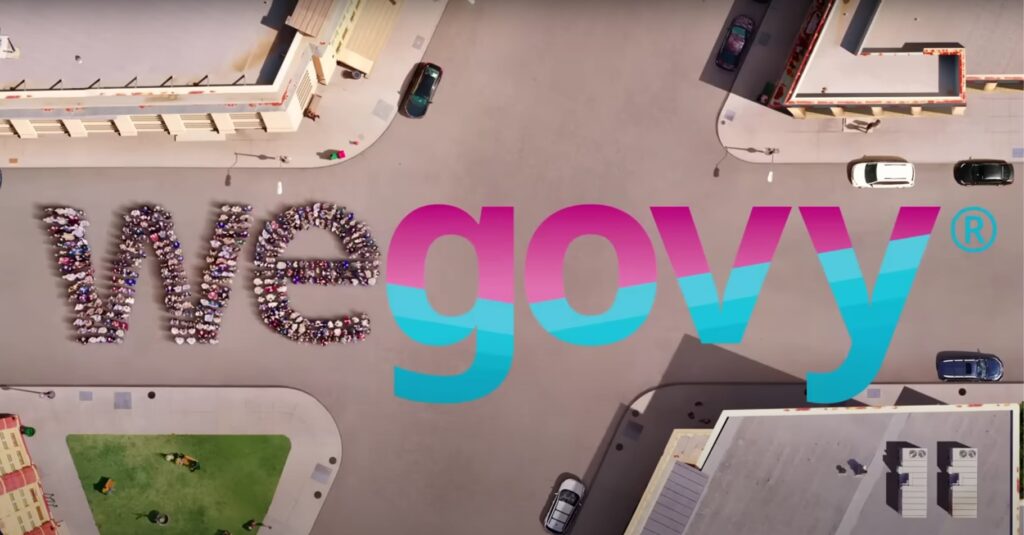
The follow-on “Power of We” campaign widened the frame. Launched nationally in June 2024, it paired a television centerpiece with digital, print and point-of-care work, showing people moving from isolated stories into a literal crowd. It later won PM360 Trailblazer gold for Video/TV. The campaign is a tidy example of the agency's pitch: creative that travels through an ecosystem instead of surviving as a single film.
Other work reveals why specialization matters. The Xywav “Elephant in the Room” campaign asked prescribers to confront the cardiovascular risk associated with the high sodium content of some narcolepsy medicines. Tzield's “More Time” launch translated the drug's ability to delay the onset of insulin-dependent type 1 diabetes into the thing a family could feel. For IBSRELA, the later “Flip the Script” work helped reframe a treatment category for professionals. Different conditions, same assignment: make difficult science legible without sanding away what makes it consequential.
Why Accenture did not buy an ad shop
Eight months after the ConcentricLife combination, Accenture Song paid Stagwell $245 million in cash for the company. The speed makes the formation look like a clever piece of packaging. The history suggests something more substantial. Accenture already had scale, technology, consulting and data. ConcentricLife brought 270-plus people with the peculiar craft knowledge of rare disease, regulated claims, medical education and pharmaceutical launch behavior.
That combination changes what is for sale. Instead of commissioning a launch campaign and finding separate firms for market access, technology and optimization, a life-sciences company can bring one group into pre-commercial strategy, positioning, brand development, content, omnichannel execution and measurement. In 2025, the broader operation said it had nearly 450 practitioners in the United States and United Kingdom. By 2026, the public identity had shifted toward Accenture Song Life, joining ConcentricLife with Bionest, Boomerang and Health Unlimited.
The business model remains professional services: fees and retainers for thinking and making, sometimes accompanied by production, media or performance arrangements. Its real competitive set now spans two worlds. There are health agency networks such as IPG Health, Publicis Health and Omnicom Health Group, and data-rich specialists such as Klick, Real Chemistry, EVERSANA INTOUCH and Avalere Health. Then there is the client's own in-house team. ConcentricLife's defense is that few alternatives can move from regulated science to a television spot to a technology build without a conspicuous seam.
“AI can remove friction, but responsibility doesn't move.”Michael Sanzen, co-founder and creative lead
The useful part is not the org chart
There is a copyable idea here, and it costs less than $245 million. Find the moment where customers feel your internal handoffs. Put one accountable discipline there. Give it access to every specialist needed to repair the journey. Measure an outcome the customer can notice, not simply the volume of work produced. ConcentricLife calls its middle experience design. Another company might call it product, service design or customer success. The label matters less than the authority.
A second lesson is to preserve specialist depth while sharing the center. The merger did not pretend that rare disease, wellness and broad healthcare were interchangeable. It let each keep its expertise, then centralized capabilities that improved all three. That is a more useful form of integration than assembling a long menu and making the client order from it.
The condition attached
This model becomes expensive choreography when the client wants only a narrow deliverable, guards its data, divides decision rights across rival teams or cannot agree on the customer outcome. It is also dangerous when speed outruns medical and regulatory review. Integration works when specialists share evidence, authority and accountability. Without those, the middle is just another department.
ConcentricLife's story is easy to reduce to a handsome exit: combine agencies in February, sell in October, collect $245 million. But Accenture was not paying for eight months. It was paying for two decades of knowing which handoff fails first, which expert must be in the room, and why a patient who remembers the ad may still never receive the medicine. The advertisement was the visible object. The real product was the connection.