The order was too large for the cars. It needed to go out in two days. Vince Ning and his co-founder, Jun Lee, had been making cannabis deliveries themselves, and now their young business had encountered a problem that could be measured in cubic feet. They bought a van with their own cash. The delivery could happen. The money, unfortunately, had somewhere else it could have been useful.
Ning later remembered the purchase as a lesson in working capital. An equipment loan would have taken longer than the order allowed; paying outright solved the transport problem while creating a financial one. Entrepreneurship had supplied a practical examination. The fee was a delivery van.
There is something revealing about this episode in the life of a software engineer. Ning had already worked at Microsoft and co-founded a developer platform that would be acquired by Amazon Web Services. He understood businesses built from code. With Nabis, the company he built alongside a childhood friend, he was learning how much of a platform begins with moving something heavy.
A programmer’s interest in the space between things
Before the delivery routes came Scaphold. Ning and Michael Paris, friends from the University of Virginia, worked on a service that helped developers build applications using GraphQL. They had both taken jobs at Microsoft. The startup developed alongside those jobs, occupying the hours when sensible people might have been pleased to stop looking at a screen.
In May 2016, Ning published Scaphold’s launch announcement. The proposition was to remove some of the setup work between an application idea and a working product: an API, permissions, integrations, and the machinery behind an interface. He wrote for people who wanted to build something and were spending too much time assembling its foundations.
The pair entered Y Combinator’s fellowship before joining its Winter 2017 batch. A functioning prototype had to become a product with users. The accelerator experience pushed them toward launching, watching growth, and talking to customers. Technical elegance could attract attention; people still had to find the service useful enough to return.
Scaphold was acquired by Amazon Web Services. Ning had completed a familiar technology trajectory unusually early: engineering job, startup, accelerator, acquisition. His next venture would ask him to leave the comfortable abstraction of a software interface and find out what happened after someone placed an order.
YC Winter batch
YC Winter batch
A developer platform, then a wholesale business. Both depended on making someone else’s work easier.
The friend who was there before the pitch
Lee belonged to an earlier part of Ning’s life. The two had been friends since childhood, long before there was a company to divide into responsibilities. Ning has described working with him as the fulfillment of a shared ambition. Their history included the sort of childhood mischief that becomes more entertaining once everyone involved is employed.
They explored ideas together. One involved a coffee shop with a cannabis twist, inspired by a trip to Europe. The economics did not cooperate. Researching the possibility, however, helped them see another opening: businesses needed a more dependable way to get cannabis from producers to stores.
The partnership brought together two people with engineering experience and a relationship that predated their professional identities. A startup can consume a surprising amount of time explaining what a colleague means. Long friendship gives that negotiation a different starting point. It also means the person beside you remembers your earlier, less polished proposals.
Ning began helping a friend with a pre-roll business. Driving products across California brought him into contact with manufacturers and retailers. The work exposed a gap he could encounter repeatedly, rather than merely describe in a pitch. More brands needed the same service. A favor began to acquire the shape of a business.
California, one delivery at a time
Current company biographies date Nabis’s founding to 2018. Its early life involved Ning and Lee carrying out deliveries in their personal vehicles. Before there was a substantial organization to manage, the founders were responsible for getting the next shipment where it needed to go. Customer research came with mileage.
The work offered access to several sides of the same transaction. A manufacturer needed a dependable collection. A retailer needed stock. Between them sat storage, scheduling, documentation, payment, and the possibility that somebody’s expectation would fail to match what arrived. Software could help, provided its designers understood those obligations.
“Meet people in the industry and hear what problems they have.”
Vince Ning, on advice for cannabis operators
That advice sounds modest beside the grander language available to a founder. It is also specific about where useful information lives. Ning’s early method put him in the rooms where products were made and sold. Driving an order meant encountering the consequences of a plan, including the occasional discovery that the car was too small.
Nabis subsequently joined Y Combinator’s Winter 2019 batch. Ning had returned to the accelerator with a business whose moving parts were literal. The company would combine its software with warehouses and delivery operations. Any promise made through the platform still had to survive the trip to a retailer.
The family chat receives an investor update
There was another audience Ning had yet to bring fully into the business: his family. He wanted to establish that the company could work before discussing his cannabis career at home. Microsoft was easy enough to explain. A venture involving cannabis, deliveries, and an unfamiliar industry invited a longer conversation.
His father shortened the timetable. After seeing a Forbes article about Nabis, he put the link in the family group chat. That was how the wider family learned what Ning was doing. His mother called soon afterward. A public account of a funding round had become a surprisingly efficient household announcement.
Ning recounted the episode again in March 2026. He said the article and the funding helped make the business more acceptable within his family. The detail is a useful reminder that professional credibility travels through intimate channels too. A customer may ask about delivery reliability. A parent may reasonably begin somewhere else.
The work hidden behind a click
As Nabis grew, the work widened. Its services came to include a wholesale marketplace, fulfillment, payment processing, financing, and analytics. These are different jobs, but they meet inside an order. Finding a product is one stage. Receiving it, paying for it, and knowing what remains in stock are others.
In 2023, the company opened an 87,000-square-foot distribution warehouse in Woodlake, California. The facility gave physical scale to the proposition Ning had been testing on the road. A warehouse is an unusually candid piece of infrastructure: however elegant the ordering process, inventory needs somewhere to wait.
Nabis’s Woodlake distribution facility, opened in 2023.
The company expanded into Nevada and launched in New York in 2024. Ning joined Fast Company’s Impact Council that year, adding another business forum to a career that had already brought Forbes 30 Under 30 recognition. His public biography contains another competitive detail: a Junior Olympic gold medal in table tennis.
By July 2026, Nabis said it was processing more than $1 billion in annual wholesale cannabis commerce. That figure describes the flow through the business. Its everyday substance is still inventory, orders, and relationships. The number becomes easier to understand when imagined as many ordinary transactions that all need to go correctly.
- 01BrandProducts enter inventory
- 02NabisMarketplace + fulfillment
- 03RetailerOrder reaches the shelf
Simplified view of the wholesale relationship. Payments, financing, and data support the work between each stage.
Another state, another set of doors
In January 2026, Nabis announced the acquisition of selected assets from Humble Cannabis Solutions, alongside investment and financing. The aim was to strengthen its California operations and bring incoming partners onto its marketplace. Expansion involved taking responsibility for existing relationships as well as adding capacity.
In May came a different geographical opportunity. Nabis announced a partnership to acquire Hudson Distribution Services’ New Jersey cannabis distribution license and warehouse lease. The planned entry paired Ning’s software and wholesale business with infrastructure from a family of distribution companies whose history reaches back more than a century.
The announcement anticipated a launch in the second half of 2026. For Ning, New Jersey offered another market for brand and retail partners. The transaction also supplied a neat historical meeting: a company born in the era of online platforms borrowing a running start from the older business of getting printed products to readers.
The next job on the loading dock
That July, Nabis introduced a premium service tier with hands-on sales support in California. Bloom was a founding portfolio brand partner. Ning’s company was extending its role beyond the mechanics of distribution to help brands develop their commercial reach. A product could arrive reliably and still need someone to persuade a retailer to stock it.
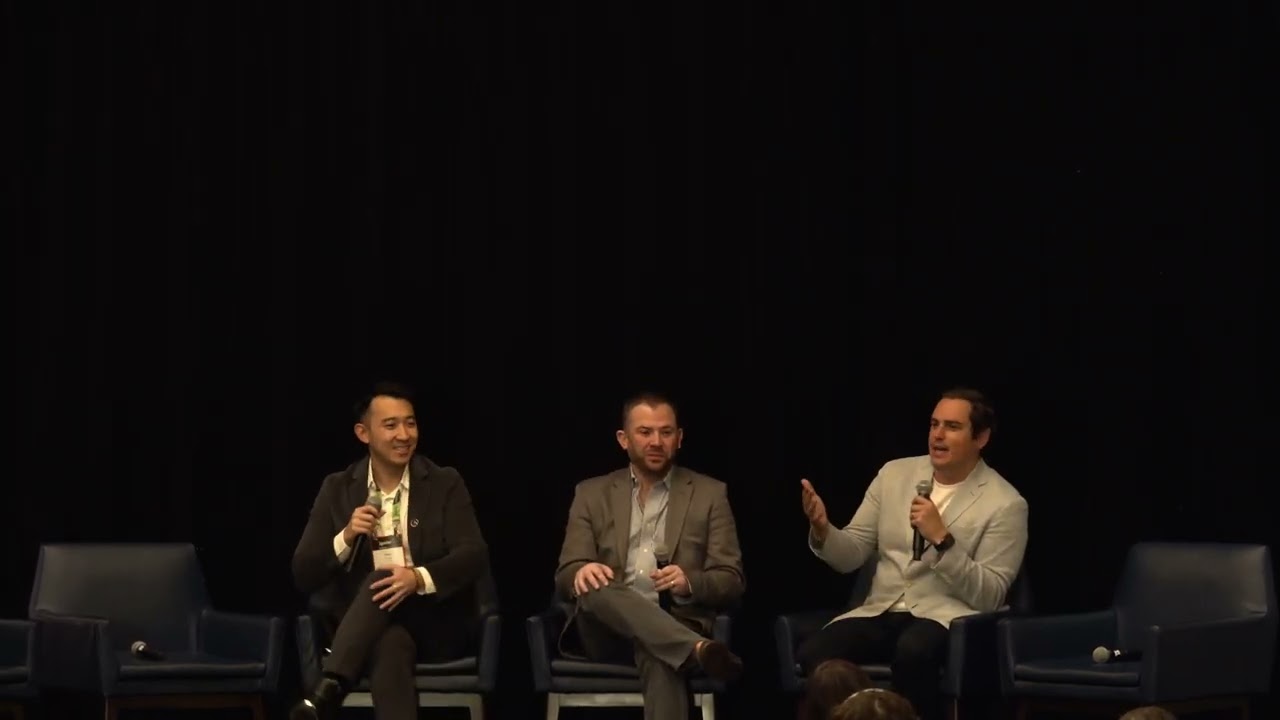
Ning’s public discussions of federal reform have kept returning to operating discipline. At a 2026 New Jersey panel, he expressed optimism while warning against assuming policy changes would repair businesses automatically. Banking, state boundaries, and regulation could change the conditions. Companies would still need to manage their own finances and execution.
The position fits the earlier van purchase. An external solution may eventually arrive, but an order has its own deadline. Ning’s ambition is to give brands and retailers infrastructure they can share as they grow. The test remains close to the ground: whether that infrastructure makes the next transaction easier to complete.
His career now contains developer tools, warehouses, a childhood friendship, and a family announcement delivered by hyperlink. Through it runs a persistent interest in the awkward distance between wanting to do something and being able to do it. Years ago, that distance turned out to require a bigger vehicle. He and Lee went out and bought one.
Follow the route
Interviews, writing, and places to find Ning.