The order was too big for the car. That was the immediate problem. Vince Ning and Jun Lee had cannabis to deliver within two days, and their personal vehicles could no longer carry the load. So they bought a van. They paid cash, out of their own pockets. The delivery problem disappeared. The cash problem arrived.
- Nabis connects cannabis brands with licensed retailers, then handles the work between order and payment.
- Its software sits on top of real warehouses, delivery routes and collections.
- The useful lesson: watch where a transaction gets stuck. Build there.
A van, paid for in cash
In a 2019 interview, Ning remembered the purchase with unusual candor: “It definitely hurt the cash flow of the company.” Waiting for a loan would have taken too long. His conclusion afterward was practical: financing productive equipment could preserve money the business needed elsewhere. A successful order had exposed a weakness.

Nabis, founded in 2018, grew out of that kind of proximity. Ning had helped a friend deliver pre-rolls across California. He and Lee, childhood friends with software backgrounds, made deliveries themselves before hiring. They encountered the industry through manufacturers, retailers and the space between them. The opportunity became visible through the windshield.
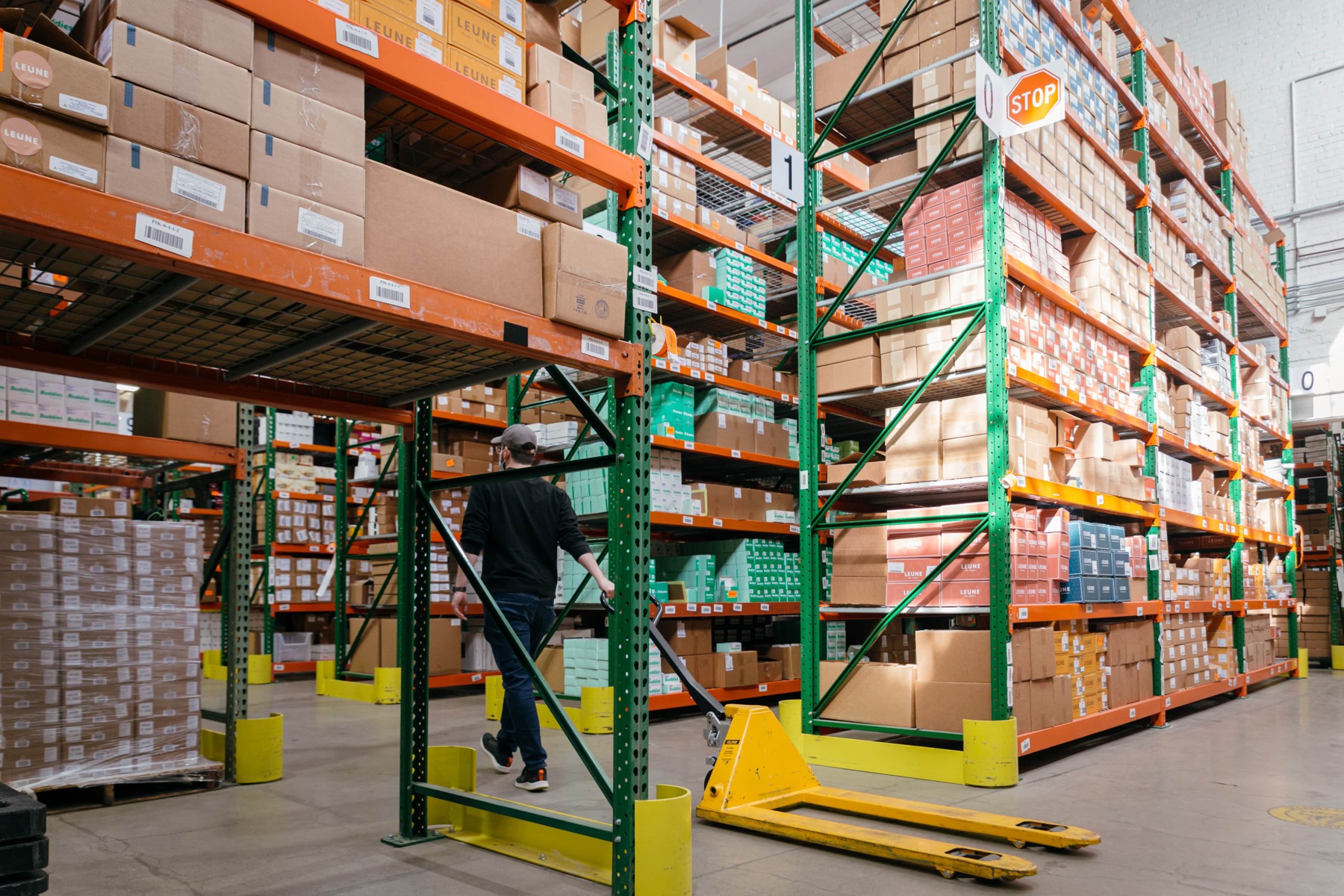
That origin helps explain a business that can look confusing from a distance. Nabis is a licensed cannabis wholesaler with a marketplace, logistics operation and financial tools. Its customers are businesses: brands that need products moved and dispensaries that need shelves stocked. The shopper at the counter arrives much later.
The catalog has a loading dock
Consider the gap between finding a product and receiving it. A retailer needs available inventory, batch information and documentation. A brand needs storage, transportation, delivery confirmation and someone to chase the bill. Putting a catalog online solves only part of that assignment.
Nabis joins those steps. Brands use its portal to manage inventory and orders; its operation provides storage, pickup, testing coordination and fulfillment. Analytics show product and account performance. The company’s about page reports more than 400 brands and 3,500 weekly wholesale orders. Those figures describe the traffic through the system.
- 01BrandInventory enters
- 02NabisStore + fulfill
- 03RetailerReceive + pay
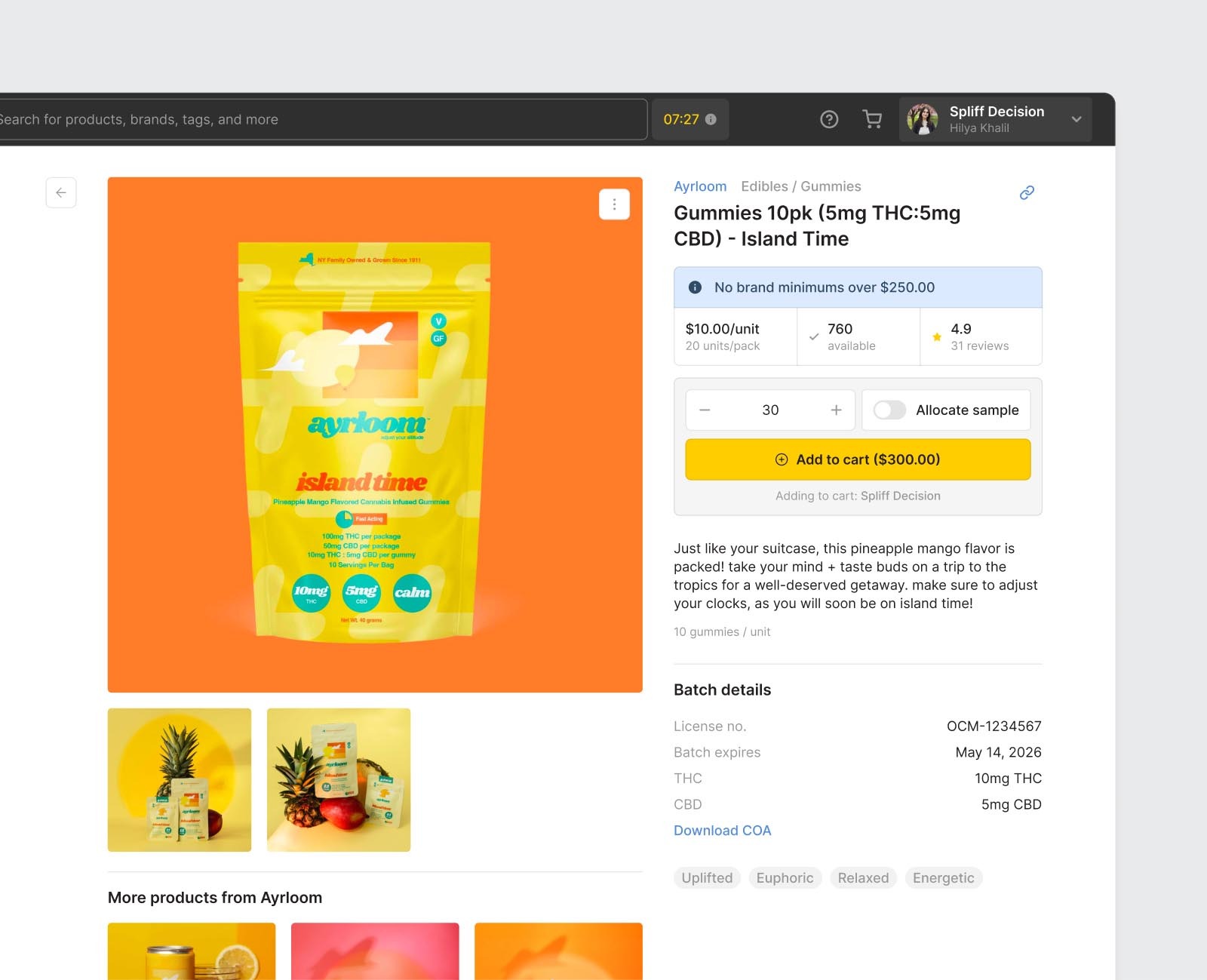
For the dispensary buyer, Marketplace brings ordering into a familiar shopping interface. Product listings show live inventory, expiration dates, potency and certificates of analysis. Tracker brings delivery and payment status together. Nabis says most orders in California and New York arrive within two days. Availability differs by market.
LeafLink offers another wholesale marketplace and financial tools. Regional distributors offer another route to physical shelves. A brand can also organize its own operation. Nabis’s proposition is the combination: the ordering system is connected to the people handling the goods and collecting payments. Customers must judge that bundle against the cost of assembling the pieces themselves.
The invoice is part of the product
A delivered order can still leave a brand short of cash. Retailers buying on payment terms receive goods before paying for them. Meanwhile, the brand may need to fund another production run. The van story has returned, wearing an accounts-receivable costume.
Nabis Capital lets brands sell eligible invoices for earlier payment, less applicable fees. Its published examples show factoring fees of 2.5% for excellent-credit retailers, 3.5% for good credit and 5% for fair credit. Actual pricing depends on credit and financing duration. These are transaction costs; they are not annual interest rates.
Credit matters because an invoice’s face value says little about the likelihood of collection. Nabis uses transaction and payment behavior in its retailer ratings. Its FAQ also describes circumstances requiring a brand to repurchase a receivable, including disputed invoices or retailer default, despite the service’s non-recourse description. The agreement deserves attention.
Nabis earns distribution and related service fees, with software, storage and factoring charges also appearing in its public materials. Its reported annual cannabis commerce exceeds $1 billion. That measures product value handled. Company revenue is the money earned for doing the work; confusing the two would turn a wholesaler into a much larger business on paper.
A national business, assembled locally
The infrastructure required capital. Nabis raised a $5 million Series A, followed by a $23 million Series B in 2021. Backers in the latter round included FJ Labs, Artemis Growth Partners, Silverleaf Venture Partners, Liquid 2 Ventures and DoorDash co-founder Stanley Tang.
Expansion also required places to put things. Nabis launched New York distribution in November 2024 with facilities in the Bronx and Rochester. The Rochester operation occupied a repurposed Kodak manufacturing facility. Its New York digital marketplace followed in June 2025 with nearly 40 brands, including Hepworth, Central Processors NY, Jetty Extracts and Smokiez.
In January 2026, Nabis disclosed a Humble Cannabis Solutions transaction comprising $4 million in strategic investment, $4 million in distribution assets and $5 million in debt financing. In May, it announced an agreement for Hudson Distribution’s New Jersey cannabis license and warehouse lease, targeting a launch in the year’s second half. Each expansion needs local operating infrastructure.
Now help us sell it
July 2026 brought a further addition: premium sales support in California, with vape brand Bloom as a founding partner. Distribution could get products to stores. This service would help brands win and maintain shelf space. Bloom co-founder Casey Ly described the challenge as winning shelf space and holding onto it.
“In cannabis, getting on shelves and staying there is complicated.”Casey Ly / Bloom co-founder and co-CEO / July 2026
The lesson other founders can borrow is specific. Follow an order through the whole business. Notice the handoffs, the waiting and the second phone call. Nabis kept adding services around those frictions. The approach depends on reliable fulfillment, sound credit decisions and enough margin to pay for both. A lovely dashboard cannot repair a delivery that never arrives.
Follow the next delivery
Explore Nabis, its retailer tools, newsroom and blog. Find the company on LinkedIn, X, Instagram, Facebook and YouTube.
Watch: the hard truth about expanding into new statesA Hall of Flowers conversation with Jun Lee and Dustin Moore ↗