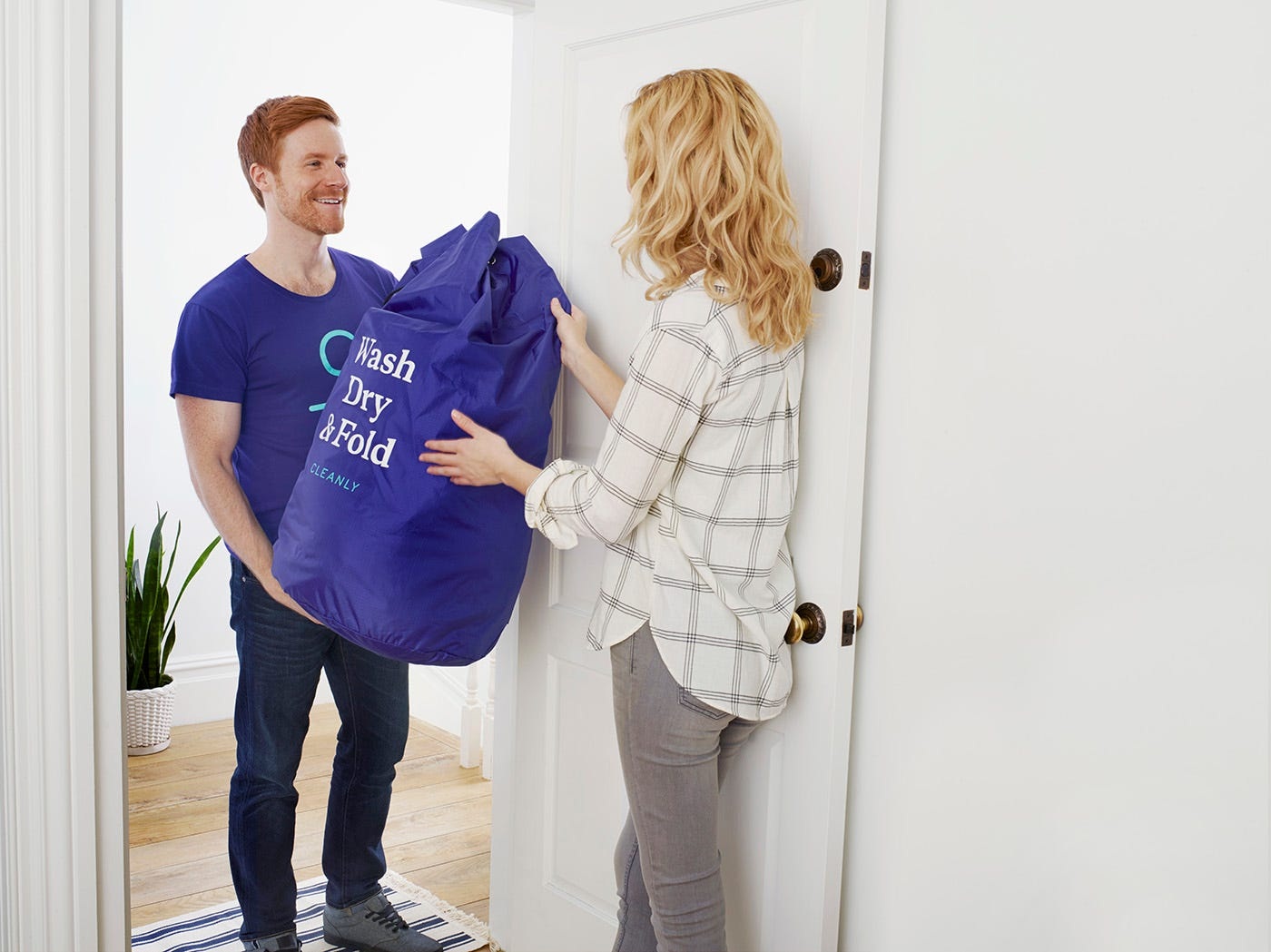
The trouble with laundry is that the clothes are only half the job. There is the bag to carry, the counter to reach before closing, the collection time to remember. In Brooklyn, Tom Harari encountered the sort of inconvenience that rarely earns a business-school case study: laundry delivery that was supposed to save him trouble and supplied fresh trouble instead. Cleanly began with a reasonable question. Could the errand surrounding the washing be made less annoying?
- Cleanly sold app-booked laundry and dry-cleaning delivery to busy city households.
- Customers paid for cleaning, with fees and optional membership layered around it.
- The 2020 NextCleaners merger created ByNext and joined technology to physical cleaning infrastructure.
The errand hiding inside the errand
Harari brought together an unusually practical founding team. Itay Forer had worked in operations at fashion company Elie Tahari. Chen Atlas supplied the technical expertise. Before a phone could summon clean clothes, the founders spent a summer carrying laundry around the Upper West Side. It was an education in the distance between an address on a screen and an actual doorstep.
The original division of labor was straightforward: existing cleaners knew how to wash clothes; Cleanly would organize the customer relationship and the journey. Local wholesale operators handled processing. For professionals, families and students, the attraction was a chore that could fit around their lives. A pickup window is a small thing until the alternative is staying home indefinitely with a bag beside the door.
Y Combinator admitted Cleanly to its Winter 2015 batch. Investors subsequently backed the business, including a disclosed $5 million Series A in April 2017. Money bought room to build and expand. It also made the question of each order’s economics harder to avoid. A delivery company can become busier while giving itself more expensive work.
A price for getting your weekend back
There was an actual price for this convenience. A December 2016 Washington review listed regular laundry at $1.99 per pound and laundered shirts at $2.75. Delivery cost $4.99 on orders below $30 and was free above that threshold. These were prices from a particular place and time, but they reveal the arrangement neatly: customers bought cleaning, and small orders helped pay for the trip.
Consider ten pounds of ordinary laundry at that listed rate. Cleaning would cost $19.90; adding the delivery fee would bring the order to $24.89. The arithmetic explains why “free delivery” deserves a second glance. Someone still pays for movement. A larger basket spreads that cost over more cleaning; a smaller basket makes the journey conspicuous.
Cleanly also introduced Reserve, a paid membership for recurring customers. The commercial idea was familiar: make the next order easier to choose than a fresh search for another cleaner. Meanwhile, the December 2017 San Francisco launch advertised morning and evening pickup windows, rush turnaround and tracking. Predictability was something the company could sell alongside clean fabric.
The hanger tells on the business
A useful account of Cleanly comes from an unexpected corner: its customer-support supplier. UJET’s 2019 case study described feedback about metal hangers leaving indentations on garments. Cleanly changed the hangers. It also adjusted pickup options in response to customers. Such details are small enough to escape a funding announcement and large enough to determine whether someone orders again.
The support system itself needed attention. Cleanly wanted communication channels and customer information together, and replaced a provider that could not supply the features it sought. UJET reported average daily voice calls falling from 46 to 17, with call waits moving from six-to-thirteen minutes to one-to-two. Those are vendor-reported results, rather than an independent audit.
The distinction matters. Fewer calls do not automatically mean fewer problems. In this account, customers could get answers through chat and text instead. The transferable lesson is to inspect the handoff: can the person answering a question see the order, understand its urgency and act? Making somebody repeat the story of a missing shirt is a peculiar way to sell time savings.
The app meets the cleaning plant
Cleanly’s public operating philosophy put customer affection beside the economics of each order. Harari told Crunchbase News that making customers happy had to coexist with attention to unit economics. The two ambitions can quarrel. A customer may love an inexpensive trip that leaves too little money to pay everyone involved.
“making something people love and always being mindful of unit economics.”Tom Harari, speaking to Crunchbase News in 2017
ByNext’s own history describes the recognition that quality required ownership of the cleaning process. In March 2020, Cleanly and NextCleaners announced their merger. NextCleaners brought more than 15 retail stores. Kam Saifi became chief executive of the combined company, with Harari serving as executive chairman. The company behind the interface now had a different relationship with the work behind the counter.
That change answers the strategic question. Reliability had to extend beyond arranging the pickup. Bringing cleaning infrastructure and technology together offered more control over what happened to the clothes. It also brought the obligations of operating a physical service. A plant has capacity, staff and costs whether or not the booking screen looks inviting.
What travels, and what stays local
ByNext subsequently acquired Los Angeles-based WashBox in 2021 and UK-based Love2Laundry in 2023. Those are milestones of the successor, with Cleanly’s original identity absorbed into a wider business. Today, cleanly.com leads visitors to ByNext. A customer following the old name arrives at a service offering laundry, dry cleaning and other household work.
For another operator, the copyable idea is to learn the physical job before multiplying bookings. Test the journey, make pricing legible, and listen when the hanger leaves a mark. The economics depend on conditions: repeat orders, enough nearby customers and competent processing. Scattered pickups or unreliable cleaning can consume the value of a pleasant app. The laundry still has to come home.