A grocery order is a small domestic sentence: milk, onions, detergent, perhaps a packet of biscuits added at the last second. To the customer, the verb is tap. To the operator, the grammar is warehouses, inventory, pickers, substitutions, payments, riders, traffic, and the possibility that somebody ordered the one brand of tea that just went out of stock. Kassim Shroff built his career inside that less visible sentence. Long before Krave Mart put a bright yellow icon on Pakistani phones, he was learning how commerce behaves after the button is pressed.
That education began in the Greater Toronto Area. While studying economics and public policy at the University of Toronto Scarborough, Shroff worked in operations and warehouse management at Haight and Ashbury. It was an unvarnished place to start. A warehouse makes abstraction difficult. Products occupy space. Delays accumulate. An elegant spreadsheet cannot persuade a missing parcel to arrive.
In 2011, fresh from university, he and his brother Khurram launched GoBabu, a deals site for Toronto's South Asian community. Its offers included Indian food, local events, and the familiar manicure-and-pedicure bargain. The young founder gave a wonderfully candid account to a student newspaper: “It was a bit difficult in the beginning, we didn't have a pitch and I didn't know how to run a business. It was a learning process.”
There is a whole business education in that admission. A pitch can be learned. Customers are less accommodating. GoBabu was later acquired by Buytopia.ca, giving Shroff his first founder exit and, more usefully, an intimate tour through sales, fulfillment, and the daily indignities of making a young company work.
Chapter oneThe machinery under the marketplace
Shroff next joined Demac Media, first as an e-commerce project manager in Canada and later as country head in Pakistan. He managed projects for larger retailers, helped establish the firm's Karachi operation, and crossed the bridge from doing commerce to building systems for other people doing commerce. Product, project management, business development, operations, growth, and customer experience began to look less like separate departments and more like neighboring rooms with thin walls.
The operator's route
2009
2011
2013
2018
2021
In 2018, he joined Daraz Pakistan as director of business development. Daraz was becoming a laboratory for Pakistani e-commerce at scale. Shroff worked on Daraz Shops & Hubs, fresh groceries, and express delivery, then became chief customer officer. Over the four years before he left in 2021, the platform's volume grew from roughly 10,000 orders to 4 million. The scale matters, but the job title tells only half the story. Customer experience required him to connect sellers, service teams, logistics, and the platform itself.
During a 2020 discussion about customer experience, he argued that e-commerce was larger than customer service. Seller scorecards tracked out-of-stock products, quality returns, and processing time. Small orders could receive virtual refunds. Returns could be collected. Even the people handling complaints, whom Daraz called Care Champs, had to be supported if customers were to be supported. The customer did not care which department had failed. The parcel had one company name on it.
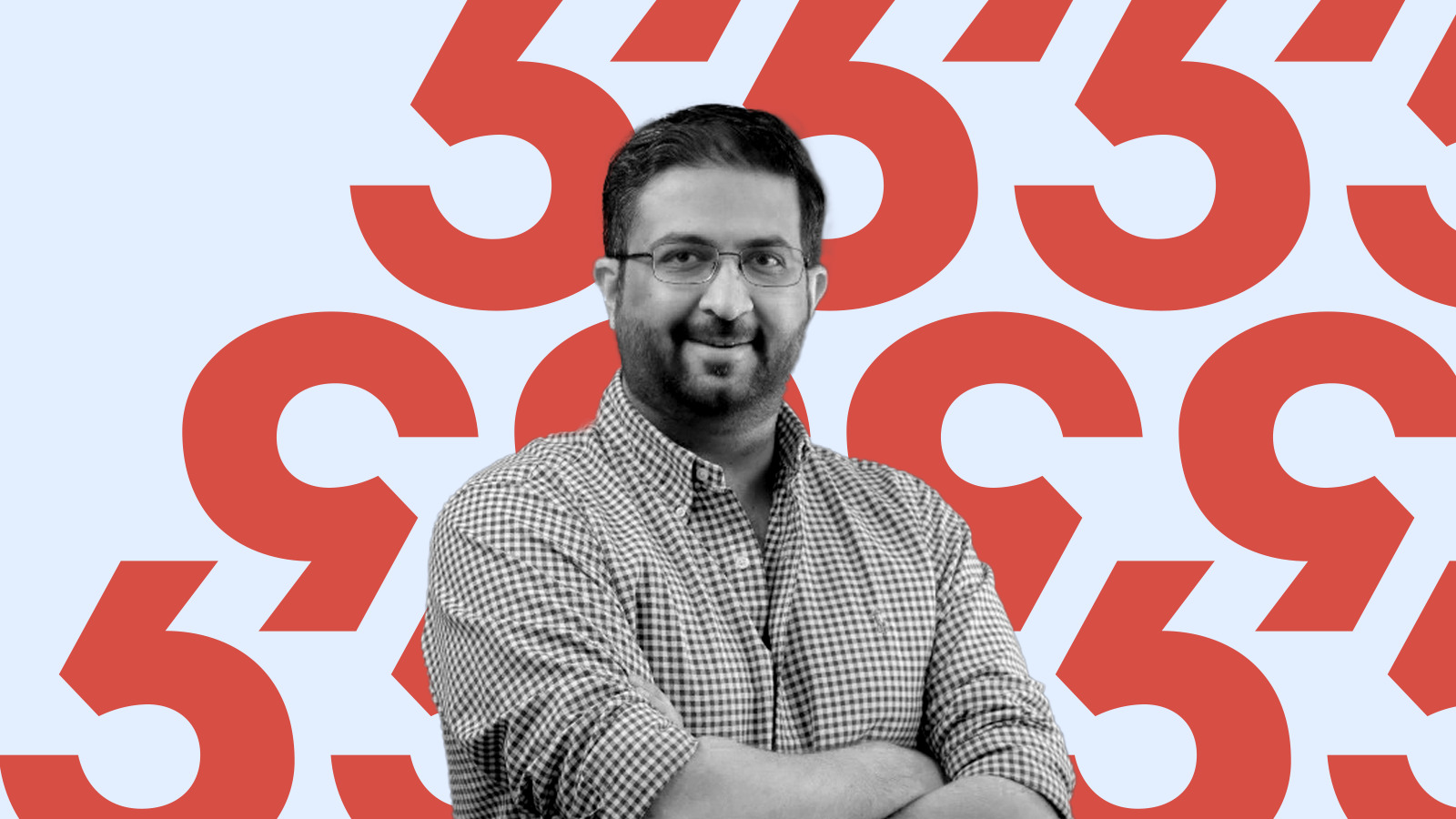
Chapter twoTen minutes meets arithmetic
Shroff co-founded Krave Mart in Karachi in 2021 with Haziq Ahmed, Mohammad Ahsan Kidwai, and Hammad Bawany. The timing was theatrical. Around the world, quick-commerce companies were raising large rounds on the promise that a dark store close to the customer could turn groceries into an impulse purchase. Ten minutes became less a delivery window than a dare.
Krave Mart made that dare too. Early coverage described a 10-minute service and plans for a dense network of dark stores, each serving a small radius. But grocery delivery is unusually resistant to slogans. A broad assortment ties up inventory. A narrow one disappoints shoppers. More stores shorten routes while multiplying rent, staff, stock, and waste. Every extra minute may offend the billboard, yet every missing rupee offends the ledger.
By December 2022, after Pakistan's Airlift had shut down and easy startup money had retreated, Shroff was explaining a different Krave Mart. “We started working on unit economics from day one,” he said. Ten-minute delivery needed either enormous capital or hundreds of orders arriving every minute. Krave Mart moved its window to 30 or 40 minutes.
Slowing a promise can look like retreat if speed is the only plot. In operating terms, it bought options. Routes could be batched more sensibly. A store could cover a more forgiving area. Krave Mart could compete on assortment and convenience without paying quite so dearly for every second. Shroff said the company had 22 dark stores, not 80 or 100, and that 10 were positive. He also said 75 to 80 percent of users paid delivery fees and that November gross merchandise value was about $1 million at a 26 percent margin.
These are a snapshot, not a permanent victory lap. They are valuable because they reveal how Shroff talked about the business when the category's costume jewelry had begun to tarnish. He did not answer a sustainability question with a vision-board noun. He answered with stores, margins, fees, and assortment.
Chapter threeThe useful luxury of restraint
Assortment became Krave Mart's more durable promise. A shopper might admire speed once, but a household returns for the correct cooking oil, baby care product, batteries, cleaning supplies, or late-night snack. Private-label products offered another lever. They could improve margins while giving customers a reason to open this app instead of another. By 2026, Krave Mart described a catalog of more than 7,500 products and roughly 30-minute delivery across Karachi, Lahore, and Rawalpindi.
The company's public personality remained yellow, playful, and promotional. Shroff's own posts often returned to the people doing the delivery. After an Eid shopping rush in 2023, he thanked customers who had made riders smile. In 2025, he wrote that riders working through heat, rain, and traffic kept the business running, adding plainly that Krave Mart would not exist without them. It is an obvious statement that consumer technology often manages to obscure. The app travels at the speed of software. The groceries travel at the speed of a person in traffic.
Krave Mart joined Y Combinator's Summer 2022 batch and accumulated investors across several rounds. The useful part of that badge was not cosmopolitan decoration. It gave a Pakistan-focused company a network while Shroff kept insisting that capital should follow execution. In later founder conversations, he returned to team quality, measurable traction, and the ability to endure pressure. His first startup began without a pitch. His second reached an accelerator famous for pitch preparation. The intervening decade was the real application.
Chapter fourAn exit, with groceries still to deliver
inDrive first invested in Krave Mart in December 2024. The partnership widened in January 2026 as the ride-hailing company expanded into groceries in Pakistan, including an inDrive.Groceries launch in Lahore. On March 11, after approval from the Competition Commission of Pakistan, inDrive confirmed that it had acquired Krave Mart in an all-stock deal. The financial terms stayed private.
The structure is an intriguing fit. Ride-hailing and grocery delivery share maps, local demand, payments, driver networks, and a daily argument with traffic. inDrive brought a large consumer platform and ambitions beyond rides. Krave Mart brought grocery inventory, dark-store knowledge, supplier relationships, and local operating muscle. The Krave Mart and inDrive brands continued in Karachi while the combined grocery offering expanded.
For Shroff, the acquisition marked a second founder exit, this time after a far more intricate operating journey. It did not end his role. Public company materials continued to identify him as CEO, now leading Krave Mart inside the inDrive ecosystem. The question changed from whether quick commerce in Pakistan could survive its first fever to how groceries might fit inside a broader everyday-services network.
His career offers a compact principle for builders: learn the whole machine before choosing the sentence printed on its front. Warehouse work taught physical constraint. GoBabu taught selling and improvisation. Demac taught systems. Daraz taught scale and the indivisibility of customer experience. Krave Mart forced all of it into one order bag.
The memorable decision was not to abandon speed. Thirty minutes is still quick enough to rearrange a household evening. It was to refuse speed as the sole measure of ambition. A dependable half-hour, a wider shelf, and a fee customers will pay can be more consequential than a breathtaking promise repeated at a loss.
Some founders build mythology by making time disappear. Shroff's more interesting move was to put a little time back, then ask what the business could do with it. The answer, eventually, was keep delivering.