BREAKING
Founder Profile

David
Arrambide

Co-founder & CEO of Calii - the Stanford-engineered, Y Combinator-backed platform quietly rebuilding how 600 million Latin Americans buy their groceries.

Y Combinator W19 Stanford Bioengineering Series A - $22.5M San Francisco / Monterrey
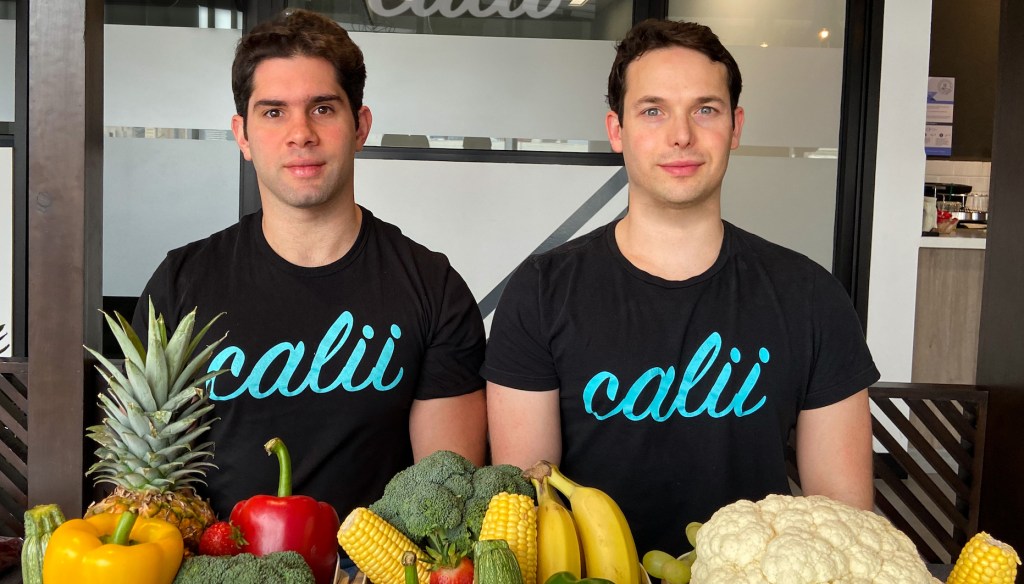
David Arrambide and Maurizio Calo, co-founders of Calii

David Arrambide & Maurizio Caló, co-founders of Calii — TechCrunch / Calii

$35M Total Raised
2h Delivery Window
5,000+ Products Offered
3x Less Food Waste
01
The Story

Building a grocery OS for Latin America - from the inside out

Two thousand orders. Every day. From a single city in northern Mexico. That was Calii in Monterrey before the Series A - before the expansion plans, before the $22.5 million check, before anyone outside Latin America paid much attention. David Arrambide was already deep in the work.

Arrambide is a co-founder and CEO of Calii, a full-stack grocery delivery platform he built with Stanford classmate Maurizio Caló Caligaris. The company entered Y Combinator's Winter 2019 batch and has since grown to 330+ employees, operating across multiple markets in Mexico. The model: bypass distributors, connect directly with producers, run your own micro-fulfillment centers, and get fresh produce to someone's door in under two hours at prices that match or beat Walmart.

That last part - the Walmart pricing - is not incidental. It is the thesis. Most Latin American grocery delivery startups tried to win on convenience for the affluent. Calii bets that the only way to move at scale in a $1 trillion market is to serve everyone.

"To truly crack the $1 trillion groceries market in LatAm, we understand that we cannot be a premium service."
David Arrambide, co-founder & CEO - Calii

The path from Stanford's Bioengineering program to running a grocery logistics company in Monterrey is not an obvious one. Arrambide graduated from Stanford between 2008 and 2012, spent time on technology ventures in healthcare with a startup called Clinea, then turned his attention to a problem that lives at the intersection of broken infrastructure, inefficient middlemen, and a billion-dollar daily need.

Before Calii reached its first public funding milestone, the team spent their first two years exclusively in just two markets - refusing to expand until the unit economics and the user experience were locked. That deliberateness is baked into how the company operates.

02
The Model

Not a delivery layer.
An entire supply chain.

The word "full-stack" gets used carelessly in startup pitches. At Calii, it means something specific: the company controls every node in the chain from producer to customer. No third-party warehouses. No wholesalers marking up tomatoes. No dark stores leasing space from someone else. Calii runs its own micro-fulfillment centers and uses demand-management algorithms to minimize overstock and spoilage.

"By cutting middlemen and reducing inefficiencies, we generate more profits for producers and pass on greater savings to our users."

The result is a food waste reduction of up to 3x compared to traditional supermarket supply chains - a number that matters both financially and as a competitive moat. Lower waste means better margins. Better margins mean competitive pricing. Competitive pricing means mass-market reach. And mass-market reach is the only path to winning in a market that serves hundreds of millions of people spread across cities, suburbs, and corridors that traditional grocery infrastructure has never served well.

The 5,000+ SKU catalog includes produce, meat, seafood, prepared items, and everyday packaged goods. Average order value exceeds $40 USD. The company grew revenue more than 300% in a twelve-month window. When the Series A closed in January 2022, Calii had a clear signal: the model was repeatable.

Calii's average order value exceeds $40 USD - at prices matching or beating Walmart, with delivery in under two hours and 3x less food waste than traditional supermarkets.

03
The Opportunity

A trillion-dollar market that supermarkets never fully served

Latin America's grocery market sits at approximately $1 trillion annually. It is massive, fragmented, and largely unchanged by the logistics revolution that reshaped retail in the United States and Europe. Supply chains are long. Cold chains are unreliable. Middlemen stack margins at every step. Consumers, particularly outside Mexico City and Sao Paulo, have limited options and inconsistent access to fresh food.

Calii is not trying to be a faster version of existing grocery infrastructure. The bet Arrambide and Caló made is that connecting producers directly to consumers via owned fulfillment creates a structurally different cost and quality profile - not just an incremental improvement. The fact that the company launched in Monterrey, a large but non-obvious first market, signals that the strategy is about depth and replicability, not chasing the obvious headline cities first.

The expansion roadmap from the Series A called for 14+ cities across Mexico and multiple Latin American countries within six months of closing. A planned fintech feature - Calii Pay, a buy-now-pay-later product - pointed toward building financial infrastructure for the customer base, not just serving them groceries.
$35M to rebuild Latin
America's food stack

CALII CAPITAL RAISED
Seed Rounds
$3.2M
Early capital including Y Combinator W19 backing and pre-seed rounds to validate the model in Monterrey
Series A - Jan 2022
$22.5M
Co-led by Dalus Capital & JAM Fund. Backed by Forerunner Ventures, Streamlined Ventures, Base10 Partners, and Y Combinator
Total Raised
~$35M
Across all rounds as of early 2022. Deployed toward market expansion, micro-fulfillment infrastructure, and team growth
Dalus Capital
JAM Fund
Forerunner Ventures
Base10 Partners
Y Combinator
Streamlined Ventures

Numbers that
don't need spin

Revenue Growth
300%+
Headcount
250%
Daily Orders (MTY)
2,000+
Avg. Order Value
$40+ USD
Waste Reduction
3x

Calii's first 24 months were intentionally claustrophobic. Two markets. Same model. Iterated until the numbers were stable. It was the kind of patience that Silicon Valley playbooks rarely budget for, but that Latin American infrastructure demands.

Producers earn more. Consumers pay less. The supply chain generates less waste. All three at the same time. That compression - cost out, quality in, waste reduced - is what makes the model worth $35 million in bets from some of the most discerning investors in consumer and LatAm tech.

From Stanford labs
to Monterrey fulfillment centers

2008-2012
Stanford University - Bachelor of Science in Bioengineering. Builds a foundation in systems thinking and engineering at one of Silicon Valley's most connected research universities.
~2016
Founded Clinea - A healthcare technology platform connecting providers with patients. First major founder experience in Latin American markets, tackling a fragmented industry with a technology-driven approach.
2018-2019
Y Combinator W19 - Accepted into YC's Winter 2019 cohort with Calii. Co-founders David Arrambide and Maurizio Caló Caligaris formalize the model and begin building investor relationships that define Calii's cap table.
2019
Calii launches in Monterrey - Opens first micro-fulfillment center and begins delivering in Nuevo León. The founding team commits to staying in two markets for a full two years before any expansion.
2019-2021
Proving unit economics - Scales to 2,000+ daily orders in Monterrey. Revenue grows 300%+ in a 12-month window. Headcount expands 250%. The model is validated before a dollar of Series A hits the bank.
Jan 2022
$22.5M Series A closed - Co-led by Dalus Capital and JAM Fund, with participation from Forerunner Ventures, Streamlined Ventures, Base10 Partners, and Y Combinator. Total funding reaches ~$35M. Announces expansion to 14+ cities across Mexico and Latin America.
2022-present
Scaling across LatAm - Executing on the multi-city expansion roadmap. Building out Calii Pay fintech feature. Company grows to 330-750 employees across markets.

Three sentences that
define the strategy

💬

On pricing strategy

"Our products are priced at par or lower than traditional supermarkets, such as Walmart."

🔗

On supply chain

"By cutting middlemen and reducing inefficiencies, we generate more profits for producers and pass on greater savings to our users."

🌎

On market strategy

"To truly crack the $1 trillion groceries market in LatAm, we understand that we cannot be a premium service."

What a full-stack grocery platform actually means

$1T
The size of Latin America's grocery market - largely untouched by the logistics and e-commerce revolution that reshaped retail in the US and Europe. Calii is attacking it from the supply chain up, not the consumer interface down.
🏭

Owned Infrastructure

Calii operates its own micro-fulfillment centers rather than leasing dark store space from third parties. Control over the physical layer means control over speed, freshness, and cost.

🌱

Direct Sourcing

Purchasing directly from farms and producers eliminates 2-3 layers of distribution markup. Producers earn more. Customers pay less. The math works because middlemen disappear.

🤖

Demand Algorithms

Proprietary demand-management systems optimize inventory to minimize spoilage - reducing food waste up to 3x versus traditional grocery supply chains while improving freshness.

Calii's pitch to investors was not "we are faster than X" or "we have better UX than Y." It was structural: if you control the entire supply chain - producers, fulfillment, last-mile delivery, and eventually payments - you can price at mass-market levels, reduce waste, and scale without depending on any single third-party partner. The first two years in Monterrey were the proof of concept. The Series A was the signal that the proof held.

Arrambide, as CEO, is the operator behind that model. The role is not primarily a product or growth function - it is a logistics and systems engineering function dressed in startup clothes. Getting produce from a farm in Sinaloa to a doorstep in Monterrey in under two hours without marking up the price requires a different kind of obsession than building a consumer app.

Links & profiles

Share this profile