At eight in the evening, most retail businesses are winding down. Rinse is beginning its rounds. A customer hands over a bag of clothes; a valet takes it away. The transaction is almost aggressively ordinary. Yet the hour matters. Put enough nearby customers into the same evening window and a domestic nuisance becomes a route that someone can run economically.
- Rinse connects doorstep pickup with experienced local cleaners.
- Scheduled routes and employed valets underpin its service model.
- Customers pay for clothing care and convenience; speed and subscriptions have their own terms.
The company arrived in 2013, when an app could make almost any errand sound like a venture opportunity. Laundry had the necessary ingredients: a recurring need, impatient customers, and a fragmented collection of neighborhood shops. Rinse’s distinctive choice was to give that need a timetable. A taxi customer needs a car immediately. A household with a growing pile of socks usually needs a dependable arrangement.
The cleaner already existed
James Joun had grown up helping in his parents’ South San Francisco dry-cleaning business. His co-founder, Ajay Prakash, brought an interest in removing the little inconveniences embedded in everyday services. In Prakash’s account, the idea came together over breakfast at Union Cafe in Cow Hollow. The people who could clean the clothes were already there. Getting customers to them, and clothes back again, was the opportunity.
An early trial was modest: roughly a dozen friends let the founders collect their laundry, take it to Joun’s parents, and return it. The useful discovery was willingness to hand over the chore. Customer interviews then exposed a longer list of irritations: choosing a cleaner, navigating opening hours, guessing when an order would be ready, and finding someone accountable when it went wrong.
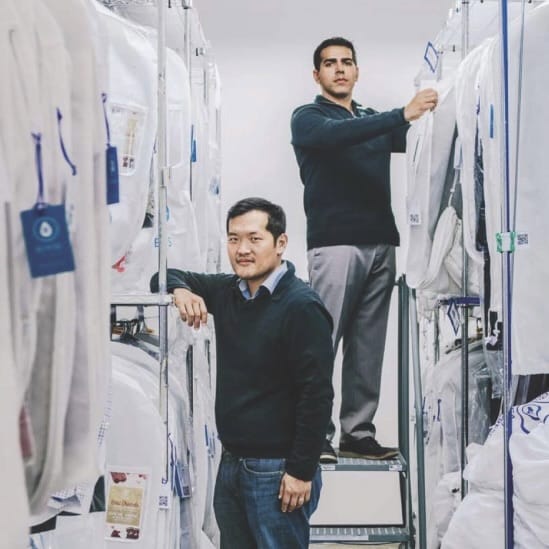
That experience gave Rinse a place between the corner cleaner and the customer’s phone. It coordinates the relationship rather than asking every household to manage it. For cleaning partners, the proposition is additional volume, supported by tools, training and feedback. For consumers, it is one recognizable service across a collection of otherwise separate businesses.
A shirt makes six stops
Rinse’s explanation of its evening window follows a garment through pickup, warehouse intake, a cleaning partner, another collection, warehouse checkout, and home delivery. This is a considerable itinerary for something that spends its working life on your back. Each handoff creates work. Each scattered stop creates travel. Grouping orders lets the company repeat those operations in batches.
- 01Home pickup
- 02Rinse intake
- 03Local cleaner
- 04Rinse inspection
- 05Home delivery
The standard residential window is 8pm to 10pm, seven nights a week; paid priority windows can include an earlier hour. Traffic has generally eased, and more customers are home. Rinse Drop permits contact-free collection or delivery at a doorstep or concierge. Predictability does much of the work that a promise of instant arrival would otherwise demand.
Washio, a contemporary competitor, closed in 2016; Rinse subsequently bought its assets. That sequence is useful context, but it does not establish a single cause of failure. Rinse’s own early explanation emphasizes that it chose scheduled service from the outset. Its founders describe learning what customers valued, rather than discovering a sudden reason to abandon their original approach.
The price of a free Saturday
The product is practical. Wash & Fold returns everyday laundry folded, with socks paired. Dry Cleaning and Launder & Press handle garments returned on hangers. Hang Dry gives clothes that should avoid a tumble dryer a separate path. Customers choose preferences and sort by service; dry-cleaning items are photographed so there is a record of what entered the system.
$45Flex bag
About one basket
$75Full bag
Two or more baskets
These are convenience purchases. The bag price is not the complete decision: pickup and delivery, optional rush service, and relevant minimums belong in the calculation. Standard turnaround is three to four days. Next-Day Rush is available for Wash & Fold and Hang Dry. Someone who needs a particular outfit immediately should plan around the confirmed return date.
Rinse Go waives specified service fees without requiring a monthly bag allocation. Existing Rinse Repeat subscribers have a different arrangement, with Full bags allocated each month. The distinction matters because subscription terms move: the FAQ says new rollover bags and banked pounds stopped accumulating on June 10, 2026. The sensible buying habit is to compare today’s quote with how often you actually send laundry.
The people at the door
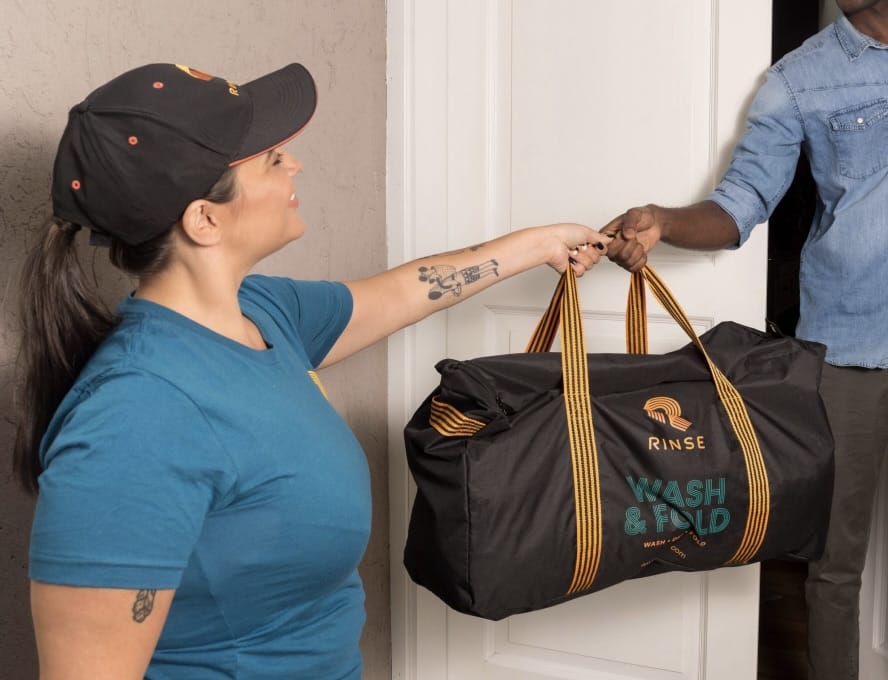
Rinse calls its drivers valets and classifies its U.S. valets as W-2 employees. Its stated principle is “Make Mom Proud.” The company lists paid sick time, paid breaks, mileage reimbursement and other employment benefits. Those costs are part of the service, alongside cleaning, support and transport. The person collecting a customer’s clothes needs enough training to handle instructions and represent the business.
“Make Mom Proud”Rinse’s stated guiding principle
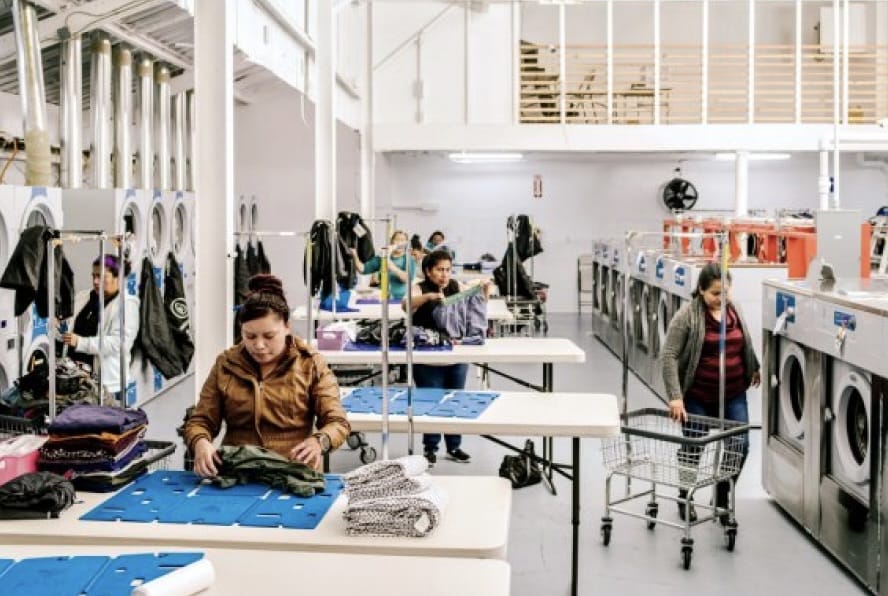
Quality also depends on the partner doing the washing or stain treatment. Rinse offers free re-cleaning for unsatisfactory results, with reimbursement terms for lost or damaged items. Those terms include limits and a reporting deadline. Its environmental claims deserve similar precision: avoiding PERC in dry cleaning is a specific practice. Calling any cleaning process chemical-free would obscure more than it explains.
A bigger map, the same chore
In February 2025, Rinse announced a $23 million Series D led by LG Electronics. It reported more than 100 million garments handled and thousands of customers. Toronto followed in September, its first international market. Commercial services widen the customer base to buildings, employers and businesses with towels, linens or uniforms to keep moving.
The transferable idea is fairly plain: test a recurring service with real customers, use existing expertise, and organize demand before promising more speed. That approach needs enough nearby orders and reliable cleaning capacity. Sparse routes, urgent one-off needs, or a household unwilling to pay for convenience make a harder fit. Rinse’s achievement is to make the weekly pile somebody else’s scheduled work. The socks still need pairing.