Jessica Wu encountered an awkward detail on her way through quantitative finance: a sophisticated business could still depend on someone repeatedly operating old brokerage software. The mathematics might be advanced. The clicking was decidedly less so. She tried existing automation tools and found the exercise difficult even with a computer science background. Here was a problem with an unusually good disguise. It looked like ordinary office work.
Wu is now the co-founder and CEO of Sola, a New York company that turns recorded computer workflows into software agents. Her subject is the work between applications: moving information, updating portals, filling forms, checking documents. These are jobs that acquire impressive collective importance while remaining almost impressively unphotogenic. Nobody frames a successfully reconciled invoice. An unpaid one, however, attracts an audience.
That mismatch gives her story its shape. She has worked in institutions associated with financial sophistication and studied in a place associated with technical invention. The company she chose to build concerns a stubbornly everyday activity: helping information finish its journey across a business.
A finance education, including the clicking
Wu’s background crosses mathematics, computer science, finance, product, and design. Her career includes work at Citadel, GoldenTree, and Thrive Capital. Those names describe several different vantage points on a business: trading, quantitative research, and venture investing. Before Sola, she also worked with early-stage companies. The common thread in her eventual company is an interest in both how systems function and how people actually use them.
The brokerage experience mattered because the obstacle was practical. A person could complete the task on a screen; making software do it required considerable effort. The apparent simplicity of the human action concealed the complexity of automating it. A button, a document, a portal, a changed interface: each could add another condition to a process that looked straightforward when someone demonstrated it.
There is a useful business question inside that experience. If a technically trained employee struggles to remove a repetitive task, what happens to the colleague whose expertise lies in freight operations or compliance? Asking that question shifts attention toward the person at the keyboard. Their familiarity with the work becomes something the product ought to capture.
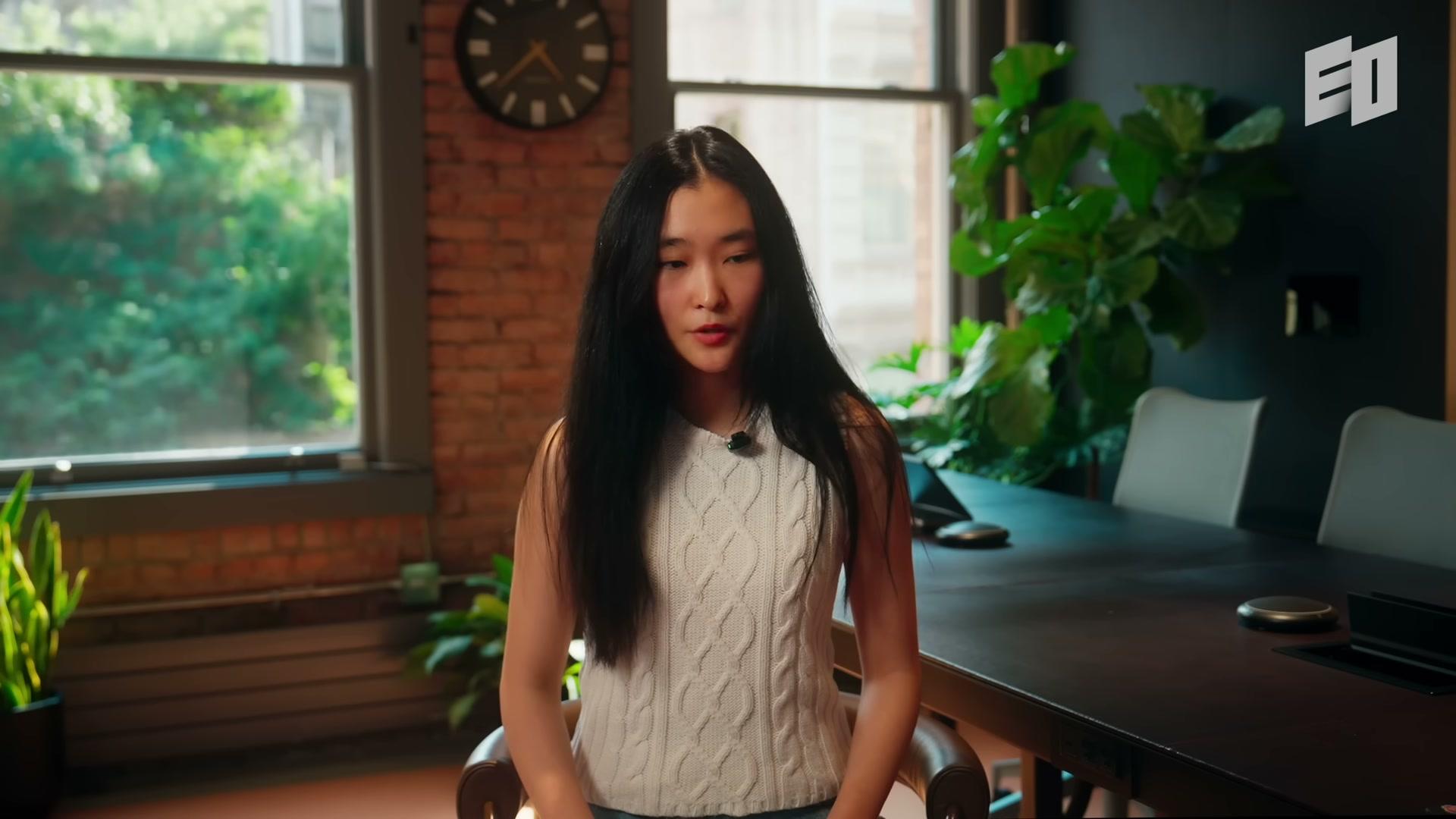
The friend from freshman year
At MIT, Wu studied mathematics and computer science. She and Neil Deshmukh became close friends during their freshman year and collaborated before starting Sola. Their original company introduction describes a friendship that preceded the business. That detail is easy to pass over in a funding announcement. It matters more when the work involves making repeated decisions together, with incomplete information and customers waiting for answers.
Deshmukh brought a computer science and AI research background, including work at the MIT-IBM Watson and Quest for Intelligence labs. Wu brought finance experience alongside engineering and design work. Their early account of Sola gives room to all of those disciplines. Research provides possibilities. Engineering makes them repeatable. Design determines whether the intended user can get anywhere near them.
They left MIT to build the company and joined Y Combinator’s Summer 2023 batch. Their launch used a revealing comparison: a visual workflow environment with the accessibility of a design tool, and an ambition resembling generalized spreadsheet macros. It placed the starting point within reach of someone who already understood a process. The person doing the work could demonstrate it, rather than first becoming its software engineer.
“First try and sell something, see if it works.”
Jessica Wu
Wu has described the uncomfortable early lesson of testing demand before finishing a product. Her account of meeting an early customer includes telling them plainly that the software did not yet exist. The exchange was an experiment in whether the problem deserved a company. Even an excellent technical answer needs someone willing to use it.
Let the operator demonstrate
Sola’s proposed entry point is a screen recording. A user shows the process, the platform builds an automation, and a visual editor makes the steps available for inspection and adjustment. Wu’s August 2025 announcement described a business that could begin with the applications it already had. For an operations team, that is an important qualification. A new tool must fit into an existing working day.
Consider the difference in what the customer is being asked to supply. A specification requires someone to translate experience into requirements before engineering begins. A demonstration starts with an activity the operator already knows. There are still exceptions to understand and outcomes to check. But the initial conversation can take place around the actual work, with its inconvenient details intact.
Wu’s company addresses both browser and desktop work. Its product materials include document processing, workflow editing, orchestration, and monitoring. That breadth follows the shape of an operations job: a document arrives, information gets extracted, a system needs updating, and somebody needs to know whether the sequence finished. The useful unit is the completed process.
It also explains why making a screen interaction work once is only the beginning. A company needs to run the process again, observe it, and handle the next variation. Sola’s product presents those activities together. The design challenge reaches beyond a clever demonstration into the quieter territory of ownership and maintenance.
The arithmetic behind the announcement
In August 2025, Sola announced $21 million in total funding. That comprised a $3.5 million seed round led by Sarah Guo’s Conviction and a $17.5 million Series A led by Andreessen Horowitz. Wu’s announcement named Kimberly Tan and Jennifer Li in connection with the Series A. The distinction between the round and the total is worth keeping straight: a headline number can otherwise do rather more work than the arithmetic permits.
Two rounds. The total includes both.
At the time of the investment, Tan reported fivefold revenue growth since the start of 2025 and workflow volume doubling month over month. Those were dated growth figures, describing the business at that point. The more interesting implication was repeated use: customers were finding additional processes for the product, extending adoption beyond the first workflow.
Tan had met Wu and Deshmukh shortly after they left MIT, roughly two years before that announcement. The relationship therefore stretched back before the Series A. For Wu, the funding connected a technical proposition to a group of people prepared to support its continued development. The next obligation remained familiar: give customers a reason to keep running the software.
A customer’s clock runs differently
By May 2026, Wu was sharing the experience of WSI, the logistics business founded in 1966. Its brokerage team faced carrier onboarding, vetting, compliance, data transfer, and customer-system updates. Wu’s description of the work emphasizes the operational complexity that accompanies growth. More business creates more administrative work unless the underlying process changes.
In the accompanying customer account, Dave Stone described a test involving shipment-status updates. The team needed customer portals to reflect changes in its transportation management system. He said the sandbox workflow was built in ten minutes, and customers quickly noticed more timely updates. The example is specific enough to be useful: one task, existing systems, and an outcome visible to somebody outside the company.
To build WSI’s initial sandbox workflow, according to its customer account. A specific example, rather than a deployment promise for every process.
Freight makes the timing concrete. A load moves; the information about it needs to move too. The distance between those events becomes someone’s follow-up task. Wu’s interest in that gap gives the product a human point of reference. The customer already knows what a late update costs in attention, even before anyone prepares a presentation about productivity.
Building past the first demonstration
In December 2025, Sola’s work with Amazon Nova Act became public. Wu described the company as an early design partner with Amazon’s AGI team. Her explanation of the integration focused on complex enterprise interfaces, reliability, and turning multistep processes into smaller actions. The technology was being judged against the demands of repeated business use.
By December 2025, Wu said customers were running business-critical processes hundreds of thousands of times per month. That scale changes the meaning of a convenient interface. The visible simplicity must be supported by infrastructure that can carry repeated executions. An operations analyst may care very little which model handles a step, while caring enormously whether the step completes correctly.
The next phase is also visible in the people Sola wants to hire. An October 2026 solutions-engineering posting describes moving beyond a largely founder-led sales effort and working with chief revenue officer Alex Latraverse to develop the sales organization. The company reports more than 20 enterprise customers and seven-figure deals there. The figures describe Sola’s own assessment of its business at that hiring stage.
For Wu, that is another change in the work itself. Starting a company requires making the first case personally. Building an organization requires helping other people make it, deliver it, and improve it. The brokerage software that frustrated her supplied a concrete beginning. Sola’s continuing test is equally concrete: whether the person responsible for an ordinary, necessary task gets some of their working day back.
Follow the work
Continue with Wu’s public writing, conversations, and company updates.