BREAKING: Avoca hits $1B valuation on $125M+ Series B Led by Meritech & General Catalyst From MIT poker night to the trades 800+ service businesses and counting The AI workforce for plumbers, roofers & HVAC BREAKING: Avoca hits $1B valuation on $125M+ Series B Led by Meritech & General Catalyst From MIT poker night to the trades 800+ service businesses and counting The AI workforce for plumbers, roofers & HVAC
Founder / Co-CEO, Avoca

Tyson Chen

He picked up the phone at his mom's acupuncture clinic as a kid. Two decades later he is teaching machines to do it for an entire trillion-dollar economy.

MIT, Computer Science Ex-Nuro / BCG Y Combinator W23 New York, NY
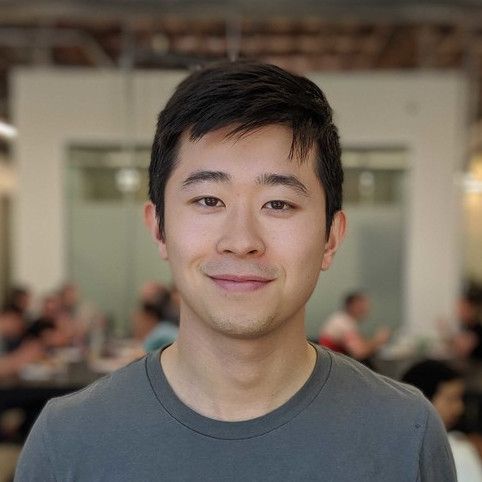
Tyson Chen, co-founder and co-CEO of Avoca

// The guy betting that the phone still matters

The Dispatch

Right now he is selling software to plumbers

Tyson Chen runs Avoca, an AI company that answers the phone, books the job, and chases the estimate for the people who fix your furnace at 2 a.m. In April 2026 it became a $1 billion company. The Fortune 500 was never the point.

$1BValuation
$125M+Series B
800+Customers
~3 yrsZero to unicorn

The Story

A $40,000 phone call

There is a number Tyson Chen likes to repeat, because it reorganized his entire company. When a restaurant misses a call, it loses a $30 or $40 order. When a heating-and-air company misses a call, it can lose a $30,000 to $40,000 HVAC install. Same missed ring. Three zeroes of difference.

That gap is the whole thesis behind Avoca. Chen and his co-founder Apurva Shrivastava did not arrive at it from a whiteboard. They backed into it. The two met at an MIT poker night - two engineers who would later discover their origin stories rhymed. Chen had grown up answering the phone at his mother's acupuncture clinic in Pennsylvania. Shrivastava had run communications for his parents' small business in Michigan. Both knew, in their bones, what a ringing-and-ignored phone costs a family business.

So they built an AI system to catch missed calls. Their first instinct was restaurants. It is the obvious move - lots of them, lots of phones, lots of orders slipping away. They were wrong in the most useful way possible.

At a restaurant conference in Texas, a Dallas company called Rescue Air found them in the hallway. Rescue Air does heating and air, not tacos. One afternoon with that crew rewrote the plan. The founders spent three months in 2023 building a custom product for that single HVAC company. Rescue Air, in turn, opened the doors to their first real customers. The restaurant idea was quietly retired.

The Pivot

Toward the economy nobody wanted

Silicon Valley spends its days courting enterprise software buyers in glass towers. Chen went the other way, on purpose.

"Everyone's trying to build for the Fortune 500," he says, "but there's this giant, trillion-dollar economy no one is touching." Plumbing. Roofing. Electrical. HVAC. The trades that keep buildings standing and warm and dry, run - as Avoca's own founders put it - on "heroics, spreadsheets, and a stack of vendors taped together."

Picture a Saturday morning at a 30-person HVAC shop. The phones ring. Nobody picks up because everyone who could is on a roof or under a house. Ad spend burns. Leads evaporate. The owner is in the field too, because the front desk is short-staffed again. That scene is the enemy Avoca was built to kill.

The pitch is not subtle: an AI workforce that answers 100% of the calls, books appointments, runs outbound campaigns, follows up on estimates, and coaches the humans in real time. Work that used to need four separate vendors and a dedicated coordinator now lives in one place. The promise is that a small shop can run like a national franchise without hiring like one.
The Other Half

The poker partner

Avoca has two founders, and Chen rarely tells the story without the other one. Apurva Shrivastava is a second-time founder, also an MIT computer scientist, with AI product stints at Apple and Sunshine and engineering time at Retool behind him. Where Chen came up through consulting and self-driving cars, Shrivastava came up through shipping product at companies that take craft seriously.

What bonded them was not a market. It was a memory. Both had spent part of their childhoods as the de facto front desk for a parent's small business - fielding calls, juggling appointments, watching a missed ring turn into a missed customer. When two engineers who grew up doing that decide to build an AI company, the target practically chooses itself.

They split the top job. Chen is co-founder and co-CEO; in some org listings he carries the President title too. The point is less the label than the shape: a two-headed company where both names are on the door and both founders are accountable for the same number.

The Machine

What Avoca actually does

Strip away the valuation and the platform is refreshingly concrete. Avoca's AI agents work across voice, text, and email, around the clock. They answer inbound calls when the humans cannot. They run outbound campaigns to win back leads that went cold. They book appointments, send estimate follow-ups, and feed dispatch.

There is also a coaching layer - real-time analytics and feedback aimed at the humans still on the phones, so the good ones get better and the new ones come up to speed faster. For a small shop, the appeal is arithmetic: the work that once demanded four separate vendors plus a dedicated coordinator now runs from one system. That is how a regional plumbing outfit starts to operate with the discipline of a national brand without the national headcount.

By 2026 the company employed roughly 80 to 85 people in New York and served more than 800 customers - the kind of growth curve that turns a YC seed into a billion-dollar headline in about three years.

Everyone's trying to build for the Fortune 500, but there's this giant, trillion-dollar economy no one is touching.
- Tyson Chen, co-founder & co-CEO, Avoca

Before The Trades

Self-driving cars, then service calls

MIT

Studied computer science with a machine-learning bent. His research touched generative AI for drug discovery - a long way from dispatch boards, but the same toolkit.

BCG

Two years consulting in New York, building AI projects for Fortune 500 companies. He saw up close what big-budget software looked like, and who it left out.

Nuro

About three years as a product manager on autonomous goods delivery. He went from self-driving vehicles to self-answering phones - both, in the end, are about removing the human from the boring part.

The Timeline

How three years became a unicorn

MIT

Computer science; generative AI research for drug discovery.

~2 years

Consultant at BCG, New York - AI work for Fortune 500 clients.

~3 years

Product Manager at Nuro, building autonomous delivery.

2022

Co-founds Avoca with Apurva Shrivastava.

2023

Y Combinator (W23). Meets Rescue Air in Texas; pivots from restaurants to home services.

2024

Closes seed round; scales to hundreds of customers.

2026

$125M+ Series B at a $1B valuation, led by Meritech & General Catalyst.

The Backers

Who is funding the phone

Series B '26
$125M+
Total raised
$125M+
Valuation
$1B
Customers
800+

Investors: Meritech, General Catalyst, Kleiner Perkins, Amplify Partners, Y Combinator.

When a home service business misses a phone call, that could be a $30,000, $40,000 HVAC install they're missing.
- Tyson Chen on the number that built Avoca

The Bet

Value lives in tribal knowledge

Plenty of founders chase the biggest pile of training data they can find. Chen and Shrivastava argue the opposite. The most durable value, they say, accrues at the application layer - inside workflows built on "tribal knowledge and operator instinct rather than terabytes of available training data."

In plain terms: the way a great dispatcher reads a panicked homeowner, decides which job to send the truck to first, and turns an estimate into a signed install is not sitting in a public dataset. It lives in people's heads. Capture that, and you have something nobody can scrape.

The Quirks

Things that make him him

  • Met his co-founder at an MIT poker night, not a pitch competition.
  • His fascination with call centers is genuinely childhood-deep - it started at his mom's clinic.
  • Went from building self-driving cars to building self-answering phones.
  • Spent three months hand-building software for one HVAC company before it was a real business.
  • Chose plumbers over the Fortune 500 - and the market agreed.

The Stakes

The unsexy frontier

It is easy to miss how contrarian this is. The loudest AI stories of the decade are about chatbots, code, and frontier models trained on the entire internet. Avoca's frontier is a roofer in a parking lot trying to call back the homeowner whose ceiling is leaking. The technology underneath is genuinely advanced - voice agents that hold a conversation, book a slot, and route a truck - but the customer could not care less about the architecture. They care that the phone got answered.

That is the discipline Chen keeps coming back to. He has worked on glamorous problems before. Generative models for drug discovery at MIT. Autonomous delivery at Nuro. AI for Fortune 500 giants at BCG. He left all of it to go where the demos are less impressive and the dollars are more real. The trades do not need a science project. They need the phone answered, every time, and a system that turns a panicked call into a booked job.

The Horizon

An AI workforce, not a feature

Chen and Shrivastava do not describe Avoca as a call-answering tool. They describe it as the AI workforce for service businesses - a deliberately bigger frame. The bet is that the same agents now handling phones will keep absorbing the operational glue of a contracting business until a 30-person shop runs with the leverage of a 300-person one.

The April 2026 Series B is fuel for exactly that ambition: $125M-plus at a $1 billion valuation, with Meritech and General Catalyst leading and earlier backers Kleiner Perkins and Amplify Partners staying in. The names matter less than the mandate they signal. Investors are betting that the trillion-dollar services economy - the part of America that fixes furnaces and unclogs drains - is finally getting software built for it, by a founder who learned the value of a ringing phone before he could drive.

The Margins

Notes from the field

Origin

Both founders ran communications for a parent's small business - Tyson's mom's acupuncture clinic in Pennsylvania, Apurva's parents' shop in Michigan. The empathy was pre-installed.

The pivot

A hallway encounter with Dallas-based Rescue Air at a restaurant conference flipped the entire company from food to furnaces.

The promise

Avoca's whole product is summed up in one unglamorous boast: answer the phone 100% of the time.

The stack

It replaces "heroics, spreadsheets, and a stack of vendors taped together" with a single AI workforce.

Watch

Tyson, on the record

The AI Call Center Revolution with Avoca Founder Tyson Chen Avoca AI Founder Tyson Chen Wants To Change the Home Services Game