The shipping charge arrives late in the conversation. A customer has found a product, considered the price and clicked toward buying it. Then comes the cost of getting it home. That small line of arithmetic can make a carefully assembled sale fall apart. Victor Maes built his working life around helping merchants get past it.
As co-founder and CEO of SuperFrete, Maes works on a problem with very little theatrical appeal. Parcels need prices, labels, tracking and a route to the buyer. Nobody frames a shipping label. Yet for a small online shop, those details can determine how far the business can reach. His story begins with an attempt to help local brands sell, followed by a decision to concentrate on the obstacle their customers kept encountering.
The marketplace supplied the clue
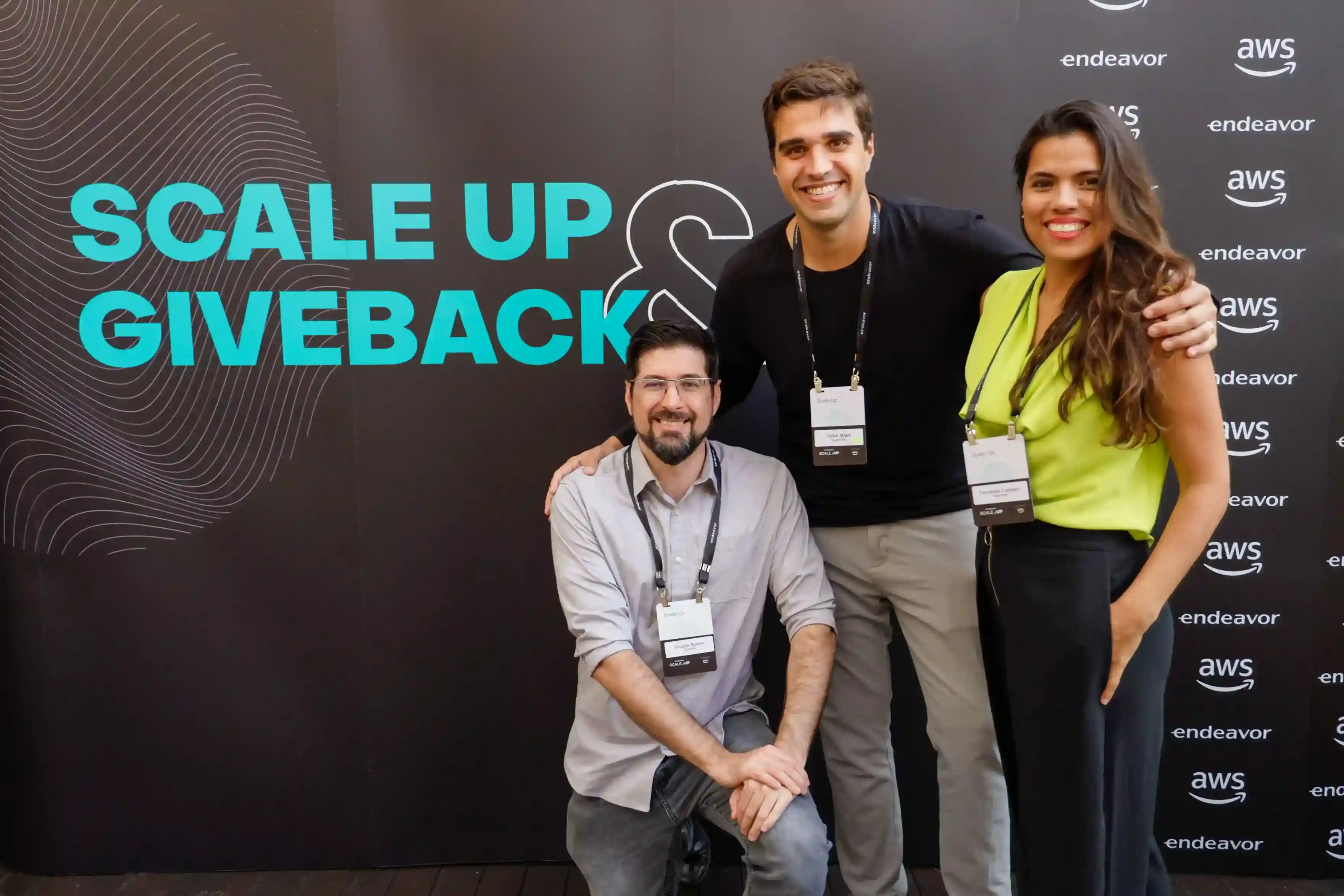
In 2016, Maes joined Fernanda Clarkson and Douglas Ianitsky to create a marketplace for local brands. The initial project put the three founders close to merchants trying to develop online businesses. They could work on the storefront and the offer, but conversations with clients kept bringing them back to freight. Shipping was expensive, and smaller brands had limited bargaining power.
There is an awkward little comedy in that discovery. Help a shop find customers, and the next problem is how to reach them. The checkout has a way of editing a founder’s plans. For Maes and his colleagues, listening to sellers changed which part of the transaction deserved their attention. The marketplace became the route to a more specific business.
Research and testing followed. SuperFrete launched in 2020, with the company tracing its beginnings to a garage in Rio de Janeiro. The address makes for an appealing origin story, but the consequential detail is the decision behind it: the founders kept the small merchant at the center while changing the service they were building. The customer remained familiar. The job became more precise.
An engineer learns where the sale stops
Maes studied at the Pontifícia Universidade Católica do Rio de Janeiro from 2007 to 2011. Engineering came with an additional qualification in entrepreneurship. His academic profile also records a robotics project, involving the construction of a robot, that received academic distinction. Before the shipping application, there was a machine to build.
Those details give his career a pleasingly practical starting point. Engineering involves getting separate parts to cooperate. Entrepreneurship adds people who have their own ideas about the instructions. At SuperFrete, the work brings merchants, software and carriers into the same transaction. The application may look straightforward to its user; making the arrangement dependable is the continuing assignment.
His career also included experience in financial markets, a chapter he discussed in his January 2025 appearance on Papo de CEO with Dario Perez. The conversation covered his route into startups and the difficulties along the way. It places SuperFrete within a longer working life, with earlier attempts and accumulated experience before the business that now carries his public identity.
That matters when reading a founder’s biography. A launch date can compress years of adjustment into one tidy anniversary. Maes’s path has an earlier marketplace, a technical education and experience outside logistics. The eventual focus on shipping came through contact with a commercial problem. It was a direction arrived at through work.
A seat at the shipping table
Maes has described the gap between large retailers and sellers just beginning online. Big retailers have shipment volume and technology on their side. Small merchants need access to useful conditions before they have grown large enough to negotiate them independently. His ambition is to help those merchants compete beyond the limits of their immediate surroundings.
“Queremos colocar o microempreendedor para competir com as grandes varejistas.”
Victor Maes, 2024
“We want to put microentrepreneurs in a position to compete with large retailers.”
SuperFrete’s service gathers the working pieces of shipping into a platform. A merchant enters parcel information, compares delivery options and generates a label. Tracking keeps the order visible afterward. The service can be used through an application or a browser, with integrations for online stores. Its advertised discounts reach up to 80 percent; the actual option depends on the shipment.
For Maes, freight belongs inside the discussion about selling. A delivery promise is part of what the buyer evaluates. Price matters, but so do the available carrier and the expected arrival. A merchant offering an attractive product still has to make the whole purchase feel workable. The journey from interest to payment contains several opportunities for doubt.
- 01ComparePrice and delivery time
- 02IssueA paid shipping label
- 03FollowThe parcel’s progress
The company was selected for Endeavor Brasil’s Scale-Up 2023.2 program. It also appeared among the 100 Startups to Watch. These were milestones for a team pursuing a fairly concrete proposition: make the logistics available to a small business more useful to that business. Recognition gives a founder an occasion to celebrate. The next merchant still needs to send an order.
A company spread across the map
Helping independent businesses has also meant managing a company whose own people work at a distance. SuperFrete describes a fully remote team distributed across Brazil. In a public discussion of that arrangement, Maes acknowledged that building culture remotely presents a greater challenge. Simply reproducing office practices in a remote setting, he explained, does not work.
It is a revealing admission from someone leading a technology company. An application can remove steps from a shipping process. Human coordination rarely becomes simple because everyone has acquired a laptop. People need to understand how colleagues work, what decisions they can make and where the company is trying to go. Distance makes those questions harder to leave to chance.
For the planning of 2026, Maes brought together 35 leaders in Rio for three days. His account included difficult decisions, learning and teamwork. He named colleagues who helped prepare the gathering, including Clarkson, Daiane Dias, Lívia Rigueiral and Ianitsky. Roni Cunha Bueno facilitated the process, and Marcela Zaidem contributed a session on leadership.
The gathering ended with a celebration of SuperFrete’s fifth anniversary. There is a human scale to that sequence: discuss the future, make decisions, thank the people who helped, then mark the years already spent together. A company spread across a country still needs occasions when its members can occupy the same room.
The next version of the founder’s job
By 2026, the organization was changing again. In June, André Abadesso arrived as chief technology officer. Ianitsky stepped away from direct leadership of technology to contribute to the board. Maes remained CEO as the company reorganized responsibility for the next stage of its work.
The appointment came with plans to extend the use of artificial intelligence and improve operating efficiency. Pricing, service and freight management were among the areas under discussion. For a founder trained in engineering, this is another kind of construction problem: create a management structure that can support more activity without requiring the original team to hold every decision themselves.
Different measures of the business: monthly shipment volume, active clients and cumulative downloads.
In the first half of 2026, SuperFrete reported more than a million shipments per month and over 150,000 active clients. The figures give substance to the distance travelled from the founders’ early project. They also describe different things. A download is an introduction. A shipment is work passing through the system. An active client is a business returning to use it.
Maes’s public comments that year put delivery experience alongside product and price in the competition for customers. The argument has remained consistent with the original discovery. The seller’s task continues after attracting attention. A customer wants to know what the order will cost and when it is likely to arrive.
One million businesses, one parcel at a time
During planning for 2026, Maes set out a further ambition: impact one million small businesses. It is a statement about the reach he wants the company to achieve. As with any public goal, its significance will depend on the work that follows it. The individual merchant has a more immediate timetable.
His advice about seasonal demand brings the conversation back to that timetable. Holidays alter buying patterns, and merchants need to prepare their operations. The buyer wants delivery expectations that make sense. Inventory and dispatch have to keep pace with a promotion. A calendar can be surprisingly stern company for an entrepreneur with ambitious sales plans.
For a small seller, preparation includes deciding what can be promised before orders accelerate. Maes has emphasized that a rise in demand can expose an operation that was not ready for it. The point connects his advice to the business he leads. A shipping tool sits inside a wider routine of stock, packing and communication, all of which have to support the promise made at checkout.
That practical register suits the story Maes has built so far. The robot at university, the marketplace with his co-founders, the change toward freight and the work of managing a distributed team all involve getting a system to function with other people inside it. The measurements change. The need to make the parts cooperate remains.
The next order will be smaller than the ambition. It will require a price, a label and a credible promise about arrival. Somewhere, a merchant will be waiting to see whether the customer completes the purchase. That is where Maes’s original observation keeps finding its next test: at the last click, with the shipping charge finally on the screen.