The first awkward question arrived after the students had moved in. Waterloo had put aspiring entrepreneurs together in a residence. They were building things. Then a term ended. Where, exactly, were their companies supposed to go?
That small logistical headache became a defining habit at Velocity: find the next obstacle and build support around it. A dorm needed a successor. Software desks needed hardware workshops. Scientific ideas needed laboratory benches. Today, the University of Waterloo’s incubator occupies the Innovation Arena in Kitchener, supporting founders who need to turn technical possibility into something a customer will buy.
Velocity’s current tally is substantial: more than 500 companies, more than 1,200 founders and $40 billion in collective enterprise value. The last number belongs to the companies it has supported. It is neither the incubator’s valuation nor money sitting in a fund. The distinction matters. Velocity’s own product is the help that arrives before those impressive numbers are possible.
A dorm, a watch and a moving-out problem
The program opened in 2008 at Minota Hagey residence. Its creators, Sean Van Koughnett and university administrator Bud Walker, saw students already experimenting with digital technology and wondered what would happen if they lived together. Waterloo’s anniversary history places the residence at the beginning of a sequence that later included the Garage, a funding competition and science facilities.
One early resident was Eric Migicovsky, who would found Pebble. At the opening event, he described a watch that would connect to a BlackBerry. It is a lovely period detail: the future announcing itself through a handset that now dates the scene. Soon, promising ventures needed somewhere to continue after residence. Velocity’s oral history describes the resulting move into 1,500 square feet at Communitech.
“Coming up with ideas is a very social act”
Sean Van Koughnett, founding director
But the original pitch had a flaw. Advertising a gathering of exceptional students convinced some prospective applicants they were not exceptional enough to apply. Van Koughnett later acknowledged that unintended effect. He also concluded he was not the right person to keep running the program and handed it to Jesse Rodgers in 2010. This was an institution learning to revise its own assumptions, including who should be in charge.
The useful lesson is less photogenic than a launch party. An entrepreneurship program needs somewhere for people to go after its first promise works. Otherwise, it has arranged a promising introduction and left the participants to sort out the practicalities.
The moment a laptop stopped being enough
By 2014, physical technologies were forcing another adjustment. The Velocity Foundry opened for hardware, materials and life-sciences startups, with more than 20 companies already working there. Director Mike Kirkup explained the need in practical terms: the university was producing more ventures that required equipment and facilities suited to their products. A desk and an internet connection could only carry them so far.
The expanded Garage later reached 37,000 square feet. Kitchener supplied $500,000 for a science lab, and Google contributed furniture after moving to another local office. Those details in the university’s 2016 announcement reveal the machinery behind the offer. A founder could receive space without paying for it because other institutions had paid to make that space possible.
The next move was larger. Waterloo opened the Innovation Arena on November 15, 2024. The entire facility contains 90,000 square feet; that is a building figure, not the size of Velocity’s office. It brings product-development facilities into the university’s Health Sciences Campus, near relationships with hospitals and other commercialization organizations. The incubator’s remit still extends across software, manufacturing, clean technology and other sectors.
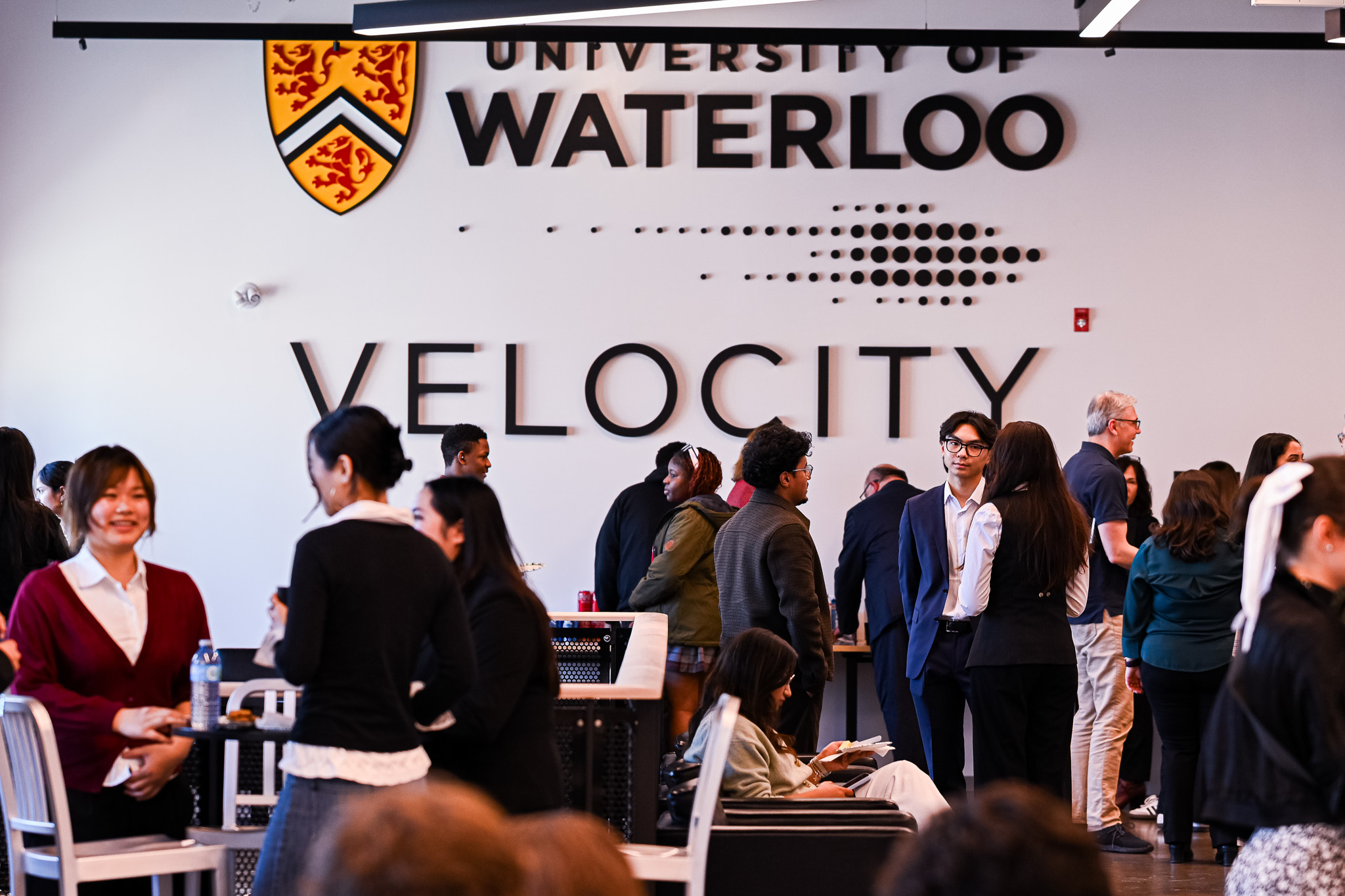
Velocity’s advertised space in its current home, with hardware resources and laboratories alongside founder workspaces.
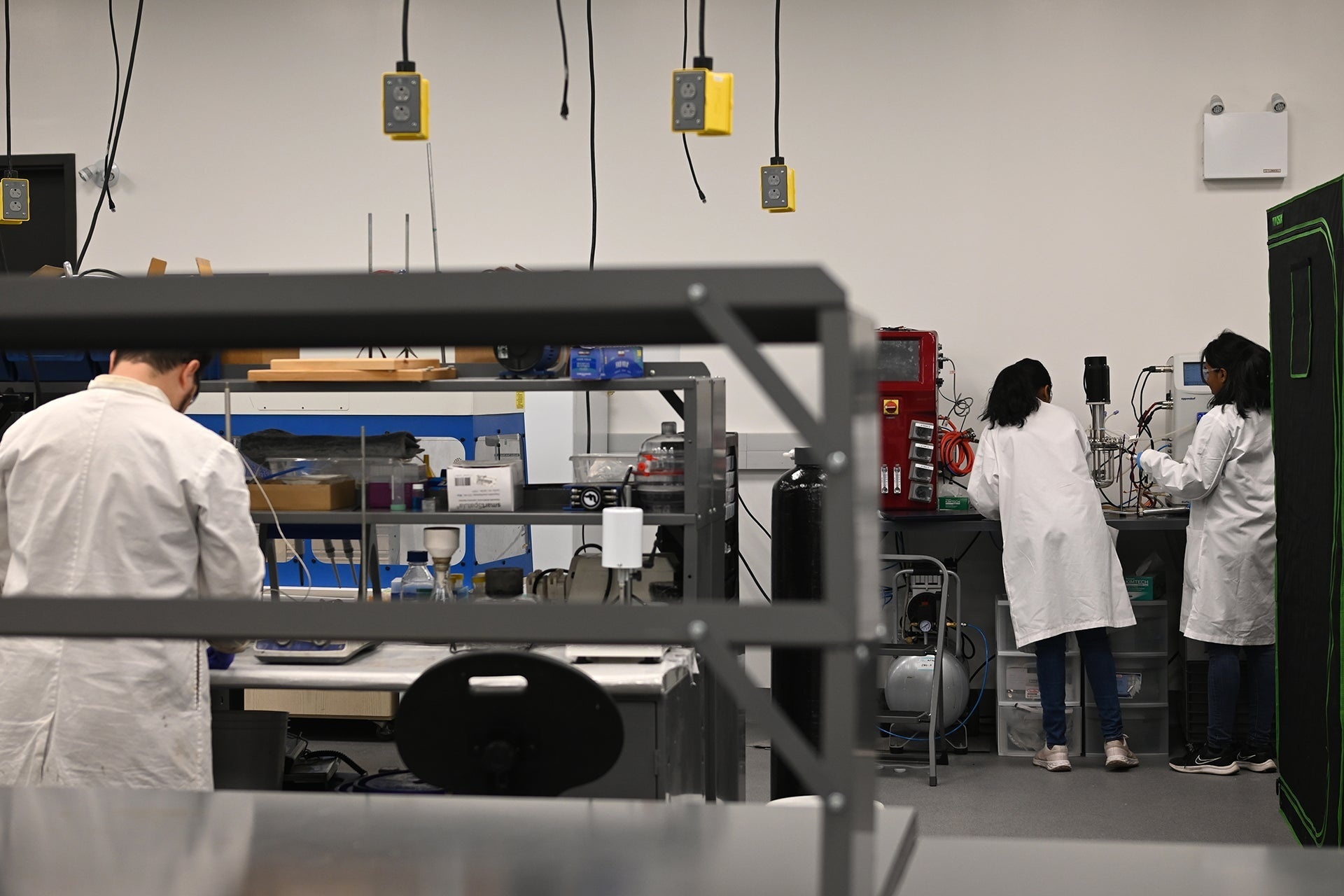
Velocity’s current offer includes laser cutters, 3D printers and laboratories with more than $1.5 million in analytical and testing equipment. That is a different kind of support from a calendar of networking events. Shared tools can let a young company test a technical assumption before purchasing a facility around it. The economic advantage is straightforward: expensive capacity can serve several experiments.
A camera makes the case better than a slogan
Consider Vena Medical. Michael Phillips and Phillip Cooper founded the company during their final undergraduate year, with support that included Velocity Science. Their work involves tools for minimally invasive neurosurgery, including a camera small enough to look inside blood vessels. In a 2022 account, Phillips credited the weekly peer meetings with teaching the team things it could not have learned as quickly alone.
That same account records a less celebratory episode: Velocity Science temporarily closed in 2020 because of the pandemic and was preparing to reopen in 2022. Physical infrastructure offers capabilities a video call cannot reproduce. It also creates exposure when access disappears. For science founders, a community is valuable partly because it has working rooms, equipment and routines.
This is where Velocity fits in its market. Waterloo’s entrepreneurship directory describes an incubator for pre-seed technology startups, including founders from outside the university. It combines business guidance with means of making and testing products. Commercial coworking offers a place to work; a laboratory offers somewhere to experiment. An incubator has to connect those activities to the work of forming a business.
Free to join is not free to run
Velocity says its incubation services and space cost founders nothing and take no equity. The broader model depends on support from the university, public partners and philanthropy. Its 2025 Momentum report records Kitchener’s $8.5 million investment in the Innovation Arena. That contribution is facility support, not a venture round raised by Velocity and not a cheque handed to each startup.
Cash for individual founders has its own routes. The current grants program lists $10,000 Momentum Grants and $15,000 Up Start awards. Eligibility differs by award. These sums address the period when a founder may have a credible experiment but little income. They do not make an expensive technology business fully funded; they can buy time to establish the next useful fact.
The fund is a separate proposition. On May 13, 2025, Velocity Fund II announced a US$10 million first close. General partners Akash Vaswani and Ross Robinson manage it independently. Its backers include the University of Waterloo, Graphite Ventures and the AngelList Systematic Fund of Funds. Admission to equity-free incubation should not be read as a promise of investment or a description of the fund’s terms.
There is also a statistical trap. In Velocity’s 2019 investment analysis, five companies accounted for about 76 percent of the capital raised in its sample. The incubator published that concentration itself. A community can produce consequential companies while its aggregate figures say little about the likely outcome for the next applicant.
Five companies / All others in the sample
Historical capital concentration, not a current success rate.
The admission ticket is evidence
The application guidance puts customer conversations ahead of decorative market forecasts. Applicants are asked to show whom they have spoken with and what they have learned. Founders must concentrate on the business full-time. New teams are expected to work from Velocity at least one day a week for their first three months. The advertised acceptance rate is roughly 10 percent.
For a founder elsewhere, the transferable practice is simple: write down the people you need to learn from, speak with them, and record what would make them buy. Then revise the product or the target customer when the evidence demands it. A rejection is more useful when it identifies an assumption to test. A compliment is less useful when it leaves the buying decision untouched.
Students still exploring can approach a different entrance. Cornerstone is a two-week sprint built around customer discovery. Its current rules require a team member from Waterloo, Wilfrid Laurier or Conestoga. The distinction between exploratory student programming and full-time incubation helps explain why one organization can welcome tentative ideas while demanding commitment from companies occupying its incubator.
In a Waterloo EDC interview, managing director John Dick describes three programming streams: discovery, sales and fundraising. The Accelerator Centre and Communitech belong to the surrounding network of support, rather than a neat list of enemies. Different stages demand different help. An incubator should be judged partly by how well it prepares a founder to need the next organization.
The next room is a market
Velocity’s September 2025 agreement with Novel-T in the Netherlands extends that thinking abroad. The exploratory collaboration aims to connect founders with market validation, mentors and pilots across the Atlantic. Its commercial logic is understandable: a local contact can help test whether a promising product has a buyer in another country. Signing the agreement establishes an opportunity, not proof of export revenue.
Closer to home, an August 2026 update describes provincial and sponsor backing for the Summer Accelerator. It addresses an old vulnerability in a new form: the moment when graduating students must choose between a startup and a more predictable livelihood.
The limits follow from the design. A founder who cannot commit full-time or participate locally will struggle to use this incubator as intended. Shared facilities cannot create demand for an unwanted product. And copying the rooms without the university, partners and engaged founders would copy only the visible part. Velocity’s more useful example is the habit that began with students moving out: notice where progress stops, and build the next piece of support there.