Vel Dhinagaravel wanted to design engines. At General Motors, he found himself assigned to materials, planning, controlling and logistics instead. It put an aspiring mechanical engineer close to the practical questions that would later occupy him as an entrepreneur. A car could be beautifully designed and still require somebody to arrange how its parts arrived.
“Before that I’d never even heard of procurement,” he recalled. He liked it immediately. GM’s Indian operation offered the kind of responsibility a larger organisation might have kept away from a newcomer. He worked on truck movements and helped reduce logistics costs by 30%. The interesting machinery turned out to include the organisation surrounding the engine.
Today, as Beroe’s co-founder and CEO, Dhinagaravel works on the information behind those decisions. What should a buyer pay? How reliable is a supplier? When does a changing market justify changing a contract? His career has followed the questions behind the transaction, rather than stopping at the price printed on it.
The engine department had other plans
Dhinagaravel grew up in Madurai and studied at BITS Pilani, earning degrees in mechanical engineering and chemistry. He went on to North Carolina State University for a master’s in operations research. The combination gives his route a particular texture: physical things, quantitative problems, and then the awkward business of getting organisations to make decisions.
At NC State, he worked with supply chain professor Robert Handfield. The relationship required some persistence at the outset. “I think I sent him 27 emails before he responded,” Dhinagaravel remembered. A future collaborator had apparently begun as a demanding item in the professor’s inbox.
He enjoyed working on different problems. Research and consulting put him close to companies trying to understand the markets in which they bought goods and services. That exposure would prove consequential. Before he built a business to answer procurement questions, he had spent time hearing how people framed them.
One dollar across the table from 105
A software company considering an entry into procurement provided the opening. Dhinagaravel and his collaborators spoke with procurement leaders about what they needed. The enthusiasm the software proposal required failed to appear. The interviews pointed toward something more basic: buyers felt less informed about supply markets than the suppliers selling to them.
The follow-up research produced Beroe’s founding number. Procurement’s spending on market information stood at one dollar for every 105 spent by suppliers’ sales organisations. It was a finding from that early research, rather than a measurement of every negotiation today. Yet it offered a concrete explanation for the buyers’ unease.
Beroe was established in 2006, with Handfield among its co-founders. The proposition was straightforward: give procurement people a better understanding of the world outside their own company. Internal spending records could tell them what they had paid. Market intelligence could help them judge what that payment meant.
The company’s subsequent development involved learning how to organise expertise. Its research model moved toward category specialists. Someone repeatedly studying metals could build knowledge that a generalist, moving from one unrelated request to another, would struggle to accumulate. The buyer’s advantage would depend partly on the analyst’s ability to remember, compare and ask a better next question.
A good year against whom?
Dhinagaravel tells a dinner story that helps explain his later thinking. A beverage company’s procurement team had beaten its savings target. Sales had missed its own target. Yet procurement’s budget was cut while sales received more money. The procurement leader asked the CFO what the function had to do to earn greater respect.
The CFO’s reply turned toward market share. Sales had an external reference point alongside its internal targets. Where was procurement’s equivalent? A department could congratulate itself for improving on last year while its competitors improved faster. Dhinagaravel took that question seriously enough to make it part of his business orientation.
It is easy to see why the distinction appeals to him. A savings target supplies a finish line. A competitive position keeps moving. In his view, procurement should monitor the markets around it continuously and judge decisions against the company’s objectives, which may include speed, resilience or sustainability alongside cost.
“Procurement is going to be on the front lines, creating competitive advantage for the corporation.”
Vel Dhinagaravel · Art of Procurement, September 2025
His 2025 conversation with podcast host Philip Ideson returned to this shift from occasional savings to ongoing value. It also addressed the practical limits of AI tools. That pairing matters. A more ambitious measurement system requires useful information, and useful information requires some discipline about what the technology can actually support.
The Friday experiment
The same interest in measurement appears in a different corner of his company. In 2017, Beroe tested a four-day working week. Its eight-person leadership team was divided. They agreed to a three-month pilot and would judge it by whether productivity held steady or improved.
“We found we were actually doing 129% output,” Dhinagaravel said in 2024. He traced some of his interest to a meeting in Finland that had impressed him with its concentration. The appeal lay in the amount accomplished during the meeting, rather than the ceremony of being occupied for a long time.
By 2023, Beroe’s Monday-to-Thursday week was still in place, with full pay and benefits. Its HR leadership described measuring the quantity and quality of what clients received. The approach asks managers to become specific about the work they need. Hours are convenient to count; usefulness takes more thought.
OFF
Three-month pilot. The test: maintain or improve productivity.
A shorter week is a conspicuous policy. The quieter change is the management question underneath it: what are people expected to produce? Dhinagaravel had also moved the commercial model away from charging for individual analysts’ time toward charging by category. His interest in outcomes reached both sides of the employment contract.
Teaching the data to travel
Beroe’s delivery methods have changed with its ambitions. Dhinagaravel described its first decade as custom research. A digital platform followed, and the company began investing in its conversational assistant in 2020. Customers’ willingness to ask questions through that interface encouraged further investment. The answer had to become easier to reach.
In March 2025, Beroe announced the acquisition of nnamu, a business applying game theory and AI to negotiations. It brought a different kind of capability into the company: support for deciding how a negotiation should proceed. The combination linked information about a market with the practical structure of bargaining inside it.
The acquisition of Forestreet followed in September 2025, adding AI-based supplier discovery. That month, Beroe also announced a $34 million primary funding round. The amount belongs to the company’s financing history. Its strategic purpose was to expand the capabilities connecting procurement information with the choices buyers make.
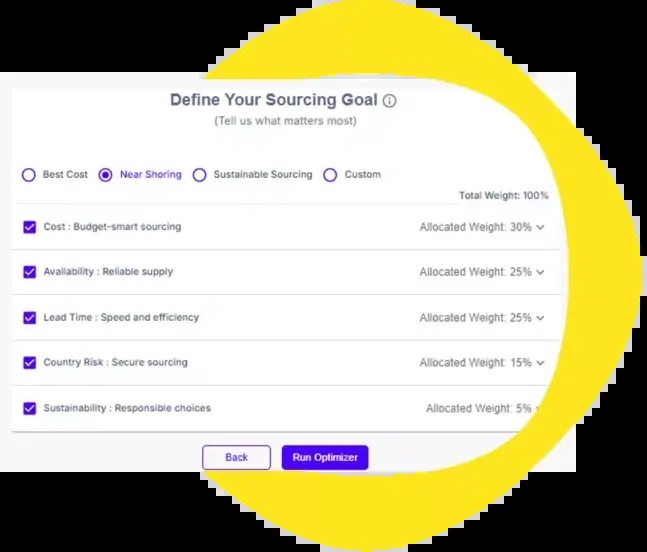
On June 3, 2026, Beroe and Kearney launched MAX at DPW NYC. Designed with input from a council of 13 procurement organisations, it combines market intelligence with consulting methods and a customer’s own spending, contract and supplier context. The intended result is a recommendation that responds to changing conditions.
A new tariff or a commodity price movement can affect an existing purchasing decision. MAX is designed to reassess the relevant categories and flag where attention is needed. That is the company’s stated design; the ambition should be judged through the decisions customers can make with it.
September 2026 brought another extension, Bilateral Negotiations, aimed at situations involving a single supplier. The announced product scores six approaches and develops a modifiable plan for successive negotiating rounds. The buyer retains control. It is an extension of the original concern with the buyer’s position, now reaching into the conduct of the deal itself.
A longer view from Chennai
Dhinagaravel returned to India in 2019 after several years in Raleigh. His public commitments in Chennai extend into education. He chairs the board of the American International School Chennai and is an SVP India partner, with a stated interest in education and vocational training. His interests also include running, reading and travel.
There is a useful candour in his recent explanation of Beroe’s own development. After acquisitions and launches, he acknowledged that customers could encounter a collection of products without understanding how they fitted together. The company’s response was to organise them around intelligence, analysis and advice. Even a business devoted to clarity can make its own offering difficult to read.
He has also argued that validation should precede automation. A quick recommendation still has to survive a buyer explaining it to a supplier, a finance colleague or a boss. Speed can shorten the wait for an answer. It leaves the responsibility for that answer very much alive.
The engineer who expected to work on engines has spent his career looking at the arrangements around them: information, incentives, people and decisions. His questions have become larger, but they remain practical. What does the buyer know? What has the team accomplished? And when the score looks good, what exactly has been counted?
Keep the conversation going
- Beroe · company website
- Vel Dhinagaravel · LinkedIn
- Watch · ProcureTEX interview on YouTube
- Listen · Art of Procurement, episode 832
- Read · The origins of Beroe at NC State
- Read · The four-day-week experiment
- Read · June 2026 MAX announcement
- Read · September 2026 negotiation launch
- From Vel · What Beroe is building
- Community · SVP India
- Read · His engineering-to-procurement career
- Read · Beroe’s 2025 funding announcement
- Read · The continuing Friday policy
- Education · School board biography