A purchase order is an unlikely place to look for a founder’s story. It has no charisma. Nobody applauds when it arrives. Yet Vivek Tiwari built much of his working life around the proposition that buying things could be organised better. In 2015, he and Ketan Malkan launched Medikabazaar. The business began in a one-room Mumbai office, with the ambitious task of persuading an established trade to conduct its business through a new doorway.
Almost a decade later, the documents at the centre of Tiwari’s story had changed. There were employment agreements, shareholder agreements, a termination letter and competing allegations. The entrepreneur who had spent years explaining how a purchasing system should work was arguing over how his own company had been governed. His career offers an unusually concrete question about entrepreneurship: what happens when the organisation becomes harder to manage than the problem it was built to solve?
The work before the website
Tiwari came to the business with experience in sales and distribution. His earlier employers included Telenor and Tata Sky, where he worked in sales development. He studied at the University of Calcutta and IIM Calcutta. His professional background also included operating work at AMRA, before Medikabazaar became the enterprise associated with his name.
Those details matter because a marketplace founder has two jobs that can look deceptively similar on a presentation slide. One is making a product available. The other is persuading people to change the way they buy it. A career in distribution provides plenty of opportunities to discover the distance between those two achievements.
In his early account of Medikabazaar, Tiwari described a market in which online business platforms often provided information and advertising. He wanted transactions, procurement and logistics to happen through the same system. That required a buyer to trust more than a listing, and a supplier to participate in more than a directory.
The first work was persuasion. Tiwari described reaching prospective customers through direct contact and digital campaigns. Some early team members came through personal references. The familiar startup image is a small group writing code until something catches on. His account includes the less cinematic business of explaining, repeatedly, why anyone should try the service at all.
Six centres, thousands of postcodes
By September 2018, Tiwari was describing a company with six fulfilment centres and business across more than 16,000 Indian postcodes. These were his figures at the time, rather than a description of the company today. They show the shape of the undertaking: the website was only one part of a business that had to move physical goods.
He also had a precise answer about geography. Asked whether he intended to expand abroad, he said India offered ample room and that overseas expansion was not the immediate plan. The answer would change in later years. At this stage, his attention was on extending domestic operations.
By January 2020, the plans included a delivery fleet called MBGO Captains and more fulfilment centres, with an emphasis on smaller cities. The proposed service promised delivery within 24 hours. These were expansion intentions, not proof that every promised location or delivery target had been achieved. They nevertheless reveal what occupied Tiwari: local coverage, delivery time and the difficult economics of distance.
A digital catalogue can travel anywhere a connection reaches. A parcel requires a rather more literal itinerary. The fleet and fulfilment plans made visible the physical commitments behind the online proposition. Each additional location represented a decision about where demand justified keeping stock and arranging deliveries.
The ambition inside the stockroom
Delivery was only part of his argument. Tiwari also wanted customers to make better decisions about what to order. In 2018 he discussed developing an inventory tool that would use consumption patterns to guide purchasing. The commercial problem was straightforward: money committed to unnecessary stock cannot be used elsewhere.
His proposed answer involved analysing past use, planning purchases and managing working capital. That moved the relationship beyond an occasional transaction. A business that helps a customer decide when and how much to buy has a role in the customer’s routine operations.
The inventory software VIZI subsequently became part of Medikabazaar’s product offering. In June 2021, the company received a national patent for a system and method for inventory management. The distinction belongs to the technology and company; it should not be casually converted into a personal patent claim about Tiwari.
In the same year, the business described a catalogue exceeding 400,000 products and a presence across about 20,000 postcodes. These historical claims suggest why inventory had become such a recurring subject. More choice creates more decisions. A growing catalogue makes finding an item useful; understanding whether to buy it becomes useful in a different way.
When the cheques became larger
Capital gave Tiwari’s plans another scale. Medikabazaar announced a $75 million Series C round in September 2021, led by Creaegis alongside CDC Group and other investors. In April 2022, Lighthouse led a further $65 million round, contributing $30 million itself. Existing investors also participated.
The two announced rounds totalled $140 million. That is money raised by the company across those transactions, rather than Tiwari’s personal wealth or a tally of money already spent. The stated uses included technology, the supplier network, distribution and international expansion.
across these two rounds
Overseas markets had now entered the picture. The company discussed operations in the Middle East and North Africa, alongside further ambitions in Asia. The founder who had earlier concentrated on India was considering a multinational business. Such changes are part of a company’s development, but they also change the management job: more places, more partners, more decisions beyond one person’s direct view.
Tiwari spoke publicly about recruitment and execution. In 2022, he described a workforce of more than a thousand and plans to add people. His leadership prescription favoured initiative, risk-taking and setting an example. Those are his stated preferences, not an independent verdict on what every employee experienced.
“Having a good idea and a great plan is never enough.”
Vivek Tiwari, 2022
It is a revealing sentence because it puts the emphasis on what follows the pitch. Recruiting, delegation and consistent execution were already part of the story he told about building the business. The later dispute would make those subjects considerably less comfortable.
A different set of documents
In July 2024, a management reshuffle put Tiwari’s departure from an operating role into public view. A review had identified weaknesses in internal controls and processes, and the company said it was strengthening them. The employment termination he later challenged was dated August 23, 2024. His subsequent removal from the board was reported in April 2025.
The distinctions matter. Leaving daily operations, termination of employment and losing a board position are separate events. Compressing them into a single dramatic exit obscures the sequence and the different rights involved.
The company alleged financial misreporting and misconduct. Tiwari denied the allegations and challenged the process used against him. He said he had sought stronger oversight and had not received a fair opportunity to answer the case. The company maintained that it had followed due process using independent agencies, external counsel and corporate forums.
By April 2025, Delhi Police had registered an FIR concerning allegations against Tiwari. He rejected them. Later that year, a separate Mumbai FIR followed his complaint alleging wrongdoing by management and investor representatives. The company denied those allegations. These were competing complaints and positions, with serious consequences for the people involved; their existence does not establish the alleged conduct.
By May 2025, the Delhi High Court directed the contractual dispute into arbitration with both sides’ consent. The proceeding concerned agreements governing employment and shareholder rights. The court expressly left the merits open. Arbitration created a route for the dispute to be heard, without deciding which account was correct.
- Tiwari and Ketan Malkan launch Medikabazaar.
- Two announced rounds bring $140 million to the company.
- Leadership changes; an August termination becomes contested.
- The dispute reaches arbitration; competing police complaints follow separate tracks.
The founder keeps returning to the business
What makes Tiwari’s response distinctive is his continued attachment to the original undertaking. Asked in April 2025 what he would do if given another chance, he said he would build Medikabazaar again, with stronger systems and controls. That was a statement of intent from a founder disputing his removal, rather than an announcement of a return.
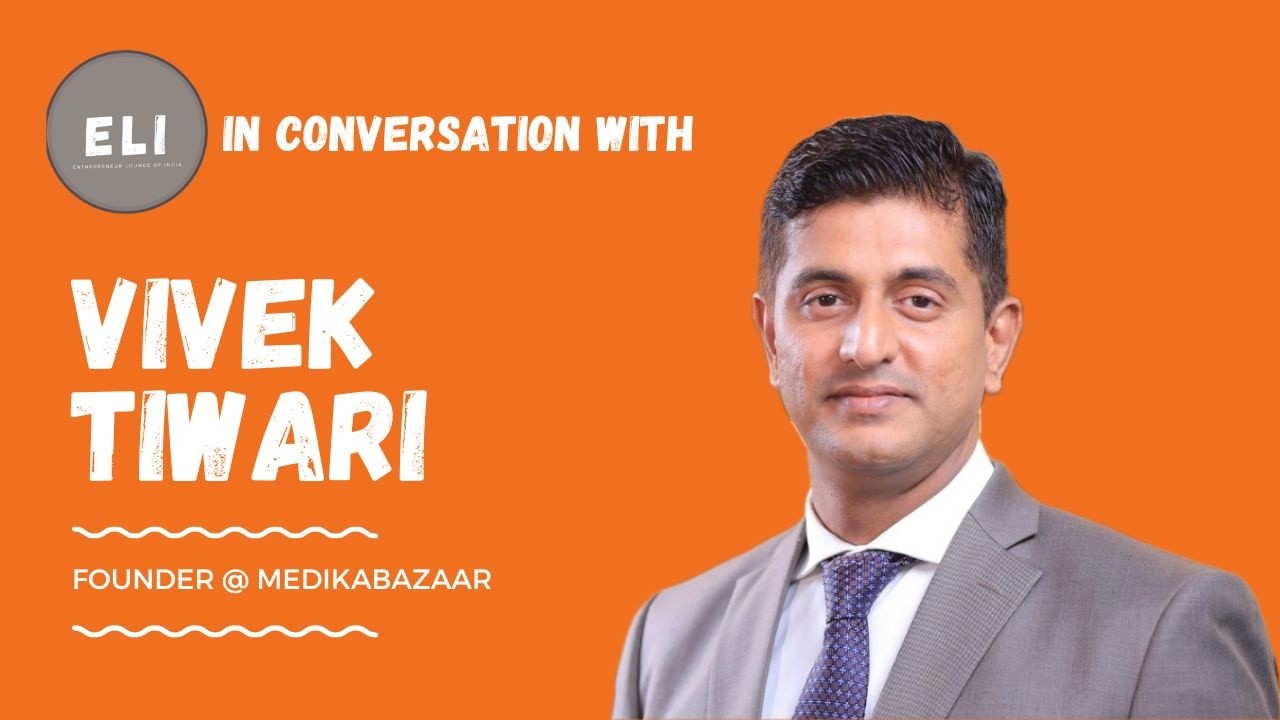
His business vocabulary also outlasted the boardroom argument. An ELI interview published as a podcast episode in June 2026 revisited the early marketplace challenge, procurement, inventory software and growth. Those subjects brought him back to the work of convincing buyers and suppliers to participate in the same system.
There is a tension between the two versions of his public career. The earlier one is full of expansion plans, distribution networks and fundraising. The later one concerns access to information, responsibility and contractual rights. Both involve the same underlying task of coordinating people whose interests and responsibilities do not perfectly coincide.
A founder can explain a purchasing problem with confidence and still face difficult questions about the organisation built around it. Tiwari’s case leaves those questions attached to named events and contested decisions. His stated wish to rebuild adds another demand: taking seriously the controls he now says he would strengthen.
The one-room office belongs to the beginning. The company, its investors and its former chief executive have since acquired much more complicated paperwork. Tiwari continues to speak about the practical business that first gave his ambition a shape. Between an order placed and an order delivered sits a great deal of work. He built a company to organise it. The argument over his own part in that company remains a separate, consequential chapter.
Conversations & further reading
- X / Twitter
- Medikabazaar
- Watch: the early business journey
- Watch: ELI interview
- Read: 2018 inventory conversation
- Read: Tiwari’s 2025 interview
- Read: the company’s response
- Read: arbitration and the court’s position
- Read: Delhi complaint and Tiwari’s denial
- Read: Mumbai complaint and company denial
- Listen: June 2026 podcast episode