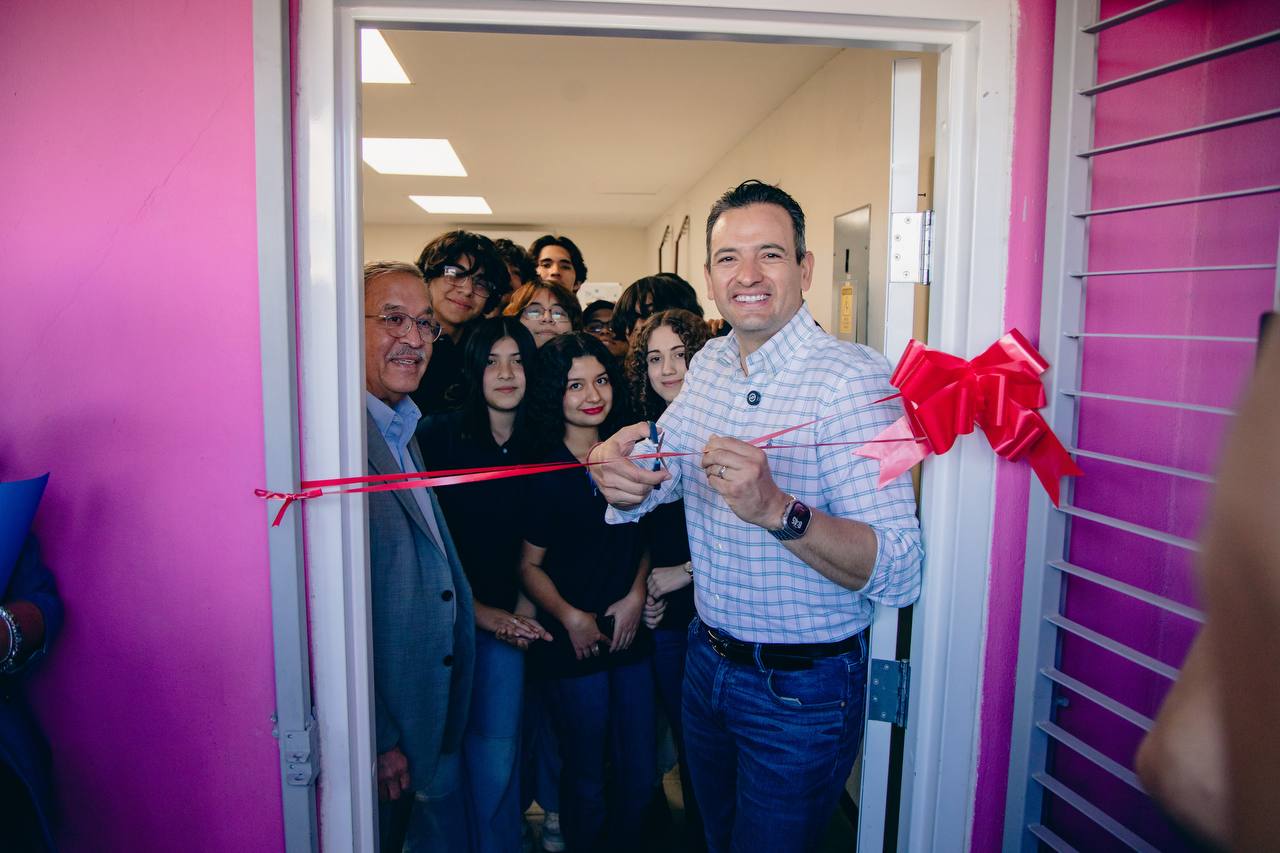
Retirement came with a precise date: January 1, 2015. Manuel Milán Reyes had spent thirty years at GCC, and the company had named his successor. The paperwork offered a tidy ending. A decade later, a photograph from Chihuahua supplied a less tidy, more interesting continuation: Milán at the opening of a classroom, with young people gathered in the doorway and a red ribbon stretched across it.
For someone whose public career had revolved around cement, the setting has a pleasing logic. A classroom is also a place where foundations are laid. The materials are less cooperative, the results take longer to inspect, and nobody can conveniently express the output in tons. Milán’s later work has taken him into precisely this territory: the patient business of helping a region develop ideas, companies and people.
The route there runs through civil engineering, industrial planning, a company’s expansion beyond Mexico and a succession that moved the chief executive’s chair to somebody else. It also runs through venture building and conversations about technologies that could unsettle established businesses. The story is easier to understand when the retirement announcement becomes a hinge rather than the final page.
An engineer learns the business
Milán studied civil engineering at Tecnológico de Monterrey’s Monterrey campus, specializing in operations research. He also earned a Master of Science at Stanford and completed IPADE’s AD-2 management program. His education combined the physical world of engineering with the analytical work of examining choices and constraints. Later, he added an executive program at Singularity University in Silicon Valley.
His early jobs were in organizations where planning had immediate industrial consequences. From 1973 to 1978, he worked as an area manager at ICATEC, part of Grupo ICA. In 1978 he joined Grupo Chihuahua as planning director for its industrial sector, subsequently becoming chief executive of some of its companies. By the time he entered cement, he had already moved between analysis and responsibility for running businesses.
He arrived at Cementos de Chihuahua in 1984 as commercial director. Three years later, he became its chief executive. In 1996 came another appointment, as chief executive of GCC. Those distinctions matter. A long career tends to get compressed into a title and a pair of dates; his involved successive jobs inside a changing organization, with the commercial role preceding leadership of the cement company and then the group.
The border becomes part of the business
During his years at the company, GCC’s geography changed. The holding company was formed in 1991. The following year, 25.9 percent of its capital was placed on the Mexican Stock Exchange, helping finance operations beyond the border, including the acquisition of a cement plant in New Mexico. Milán participated in the negotiations alongside Salvador Terrazas Baeza, Martha Rodríguez Rico and Jaime Fernández Horcasitas.
The sequence continued with construction of a plant in Samalayuca, Chihuahua, roughly 35 kilometers from Ciudad Juárez, which began operating in 1995. It was a business map drawn across the border, with financing, production and customers to connect. The institutional story contains several names for good reason. Public listings and industrial expansion require a cast; the executive biography gains little by pretending the cast was a solo act.
Expansion also brought exposure to circumstances that a production plan could not settle. In 2006, Milán publicly defended GCC’s investment in Bolivia following Evo Morales’s election. GCC had acquired a 46.6 percent stake in Soboce the previous September for US$58.2 million. The company’s position was that construction demand offered grounds for confidence. It was a judgment about a market, made in the presence of political uncertainty.
Four years later, Milán was due to lead a delegation to La Paz following the expropriation of shares in Fancesa, in which Soboce held a stake. Meetings were planned with Bolivian officials. Placed beside the earlier confidence, the episode gives the expansion story some necessary texture. Running an international industrial business could mean negotiating over investments as well as deciding where to make the next one.
A departure with a successor
GCC announced Milán’s retirement on September 5, 2014. It would take effect at the start of the following year, after thirty years of service. The board appointed Héctor Enrique Escalante Ochoa, who had headed the US division since 2000. At the time of the announcement, that division represented two-thirds of GCC’s sales. The successor’s experience matched a substantial part of the company’s operating reality.
A succession announcement has an unusually practical way of measuring a career. It records service, names the next person and turns attention toward continuity. Milán completed his chief executive tenure in December 2014. His association with governance continued: he had joined GCC’s board in 2009, and later company biographies described his participation in other business, social and academic institutions.
What followed widened the range of his work. His post-retirement activities have included businesses in real estate, private capital, technology, virtual reality, consulting and corporate strategy. Ilum Ventures lists him among its partners, alongside Omar Soto and Ángel Bañuelos. Mauricio Milán is listed separately as CEO. Here, the former industrial executive appears within a team organized around building ventures, with product, software, design, legal and other functions represented.
Disruption, with an industrial memory
In November 2022, Milán appeared on Mario Salinas’s Lateral Podcast for an episode titled El futuro ya está aquí - the future is already here. The conversation addressed preparing for major life transitions, failing quickly, explaining new technologies and the role of experienced capital in startups. A year earlier, he had discussed Chihuahua’s entrepreneurial ecosystem with Nazho Medina on Dosis.
“Haz la disrupción antes de que alguien la haga por ti.”
Manuel Milán · Lateral Podcast, 2022Disrupt before someone does it for you.
That instruction sits interestingly beside a career in an industry built around durable assets. A plant and a young technology company operate on different clocks. The public subjects of Milán’s later conversations put him near the meeting point: how people and organizations prepare for change, and how experience might become useful to businesses that have little history of their own.
His regional work supplied another setting for those questions. As president of the Centro de Competitividad Chihuahua, he spoke about continuous improvement and innovation. At a 2018 gathering recognizing successful workplace teams, the participants included GCC’s Mantenimiento Molienda and Green Savers. The names are a useful corrective to the more airborne vocabulary of innovation. Somewhere beneath the conference language, people still have to improve a process.
At the launch of a regional business cluster, he also emphasized public policy capable of attracting and retaining talent and investment. In 2019, Chihuahua Exponencial brought businesses, government and academic interests into the same regional conversation. His involvement in competitiveness institutions placed him among people trying to connect individual company performance with the conditions around those companies.
The next project has students
By April 2025, that interest in talent had a visible address: a classroom at Casa de la Juventud in Chihuahua. Milán attended its opening as president of the Academia de Matemáticas y Ciencias de Chihuahua, alongside Mayor Marco Bonilla. The space would host courses and training for young people at preparatory-school level. Milán described supporting the city’s talent as the academy’s objective.
The classroom gives a concrete scale to an otherwise expansive career. There is a doorway, a ribbon, a group of students and somewhere to hold a course. After decades in which executive responsibility involved companies and international markets, this project puts the question of regional capability close enough to photograph. Young people need somewhere to learn before a region can expect them to build its next businesses.
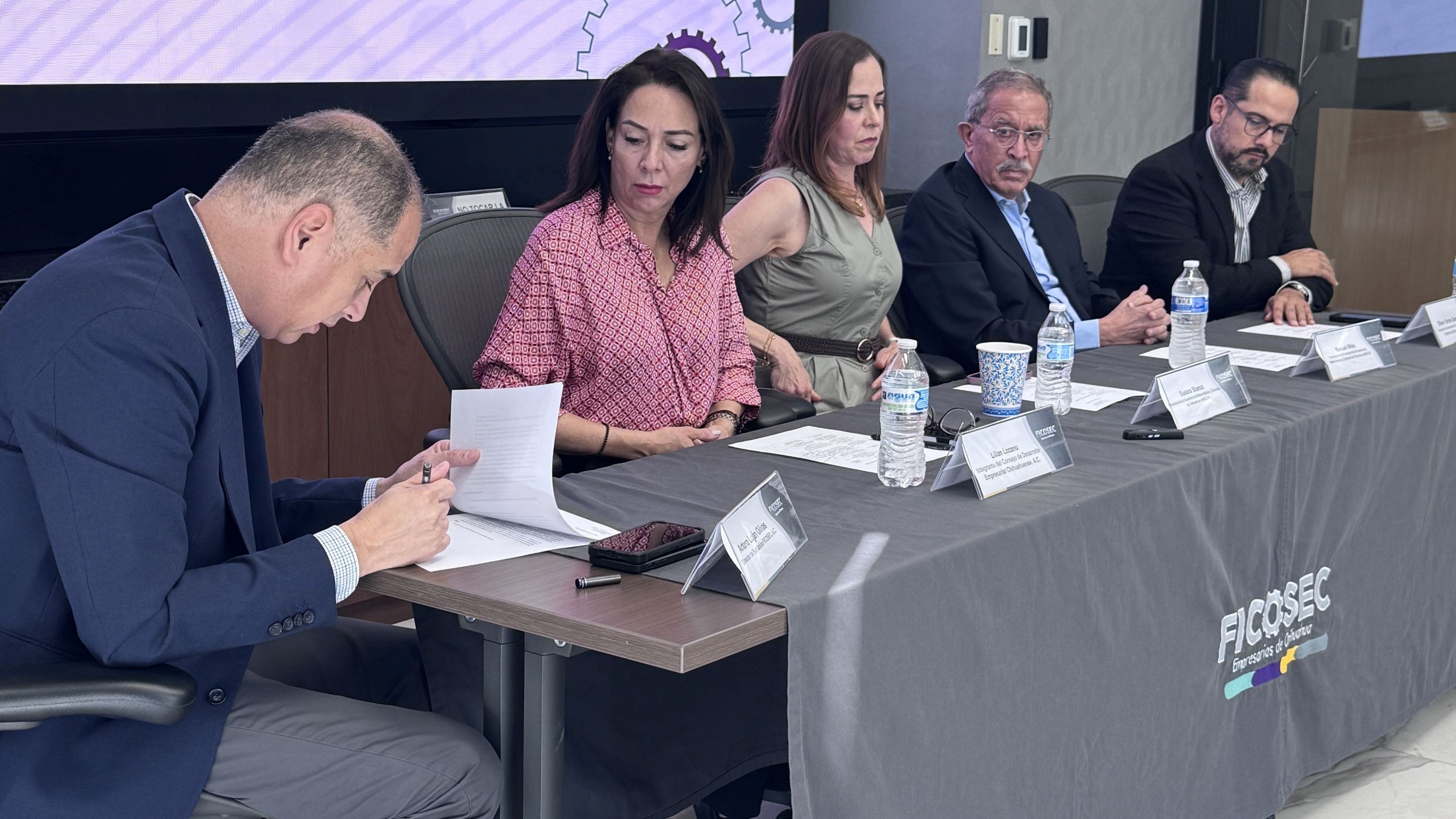
In September 2026, a further initiative brought specific commitments. The program Chihuahua competitivo: formación avanzada en talento STEM was designed to reach 29 beneficiaries in the city. Its scheduled period ran from August 2026 to April 2027. Milán appeared at the announcement as president of the academy’s council, with academy director Susana Blanco and representatives of the participating organizations.
MX$750,105Total with partners
MX$1,167,477
Program period: August 2026 - April 2027. Funding belongs to the partnership, not to an individual donor.
FICOSEC committed 750,105 pesos, within total partner funding of 1,167,477 pesos. The design included identifying students through schools, following their academic progress and connecting them with specialized companies and institutions. Those are program commitments, with outcomes still to be earned. A beneficiary count is a beginning; the work is in what happens between selection and the end of the school period.
Milán’s civic participation continued into October 2026, when he attended the signing of an alliance between Desec and México ¿Cómo Vamos? as a Fechac council member and witness. The agenda again linked regional development with the ability to understand and improve local conditions. Across these later appearances, his working life remains closely tied to Chihuahua, even after the international reach of his industrial career.
The retirement date remains accurate. It simply describes a particular job ending. The classroom photograph describes something else beginning: an engineer who spent decades in cement standing beside students at an open door. The ribbon has already received the ceremonial attention. The interesting work will happen after everyone puts the scissors away.