An old plastics machine is an awkward place to look for the future of a city. It has heating bands, cooling problems and parts that must be found somewhere. Yet this is where one of Utopia’s more revealing experiments leads: into the question of whether existing equipment in Nepal can make a different kind of bag.
- Utopia helps local founders build businesses around urban problems.
- Its programs connect early exploration with longer venture building.
- The useful lesson from Kathmandu: test the economics alongside the technology.
The company calls its local platforms CITYLABS. The name can sound abstract until you encounter the work. A city needs things collected, delivered, housed, repaired or replaced. An entrepreneur sees an opening. Utopia helps turn that opening into something that can be tested, bought and, potentially, built into a company.
The bag, the machine, the business
In Nepal, Utopia Kathmandu worked with Zero Circular and Frontier Tech Hub on bioplastics. The initial commercial proposition had an appealing thriftiness: help existing plastic manufacturers adapt their machines rather than require them to buy new ones.
The engineering demanded precision. A 2024 technical account describes improvements to heating, cooling and material preparation. Bio-based polymers needed tighter temperature control than the conventional plastics the machinery had been handling. The team locally fabricated a dryer to remove moisture before processing, and worked on the consistency of the film coming out.
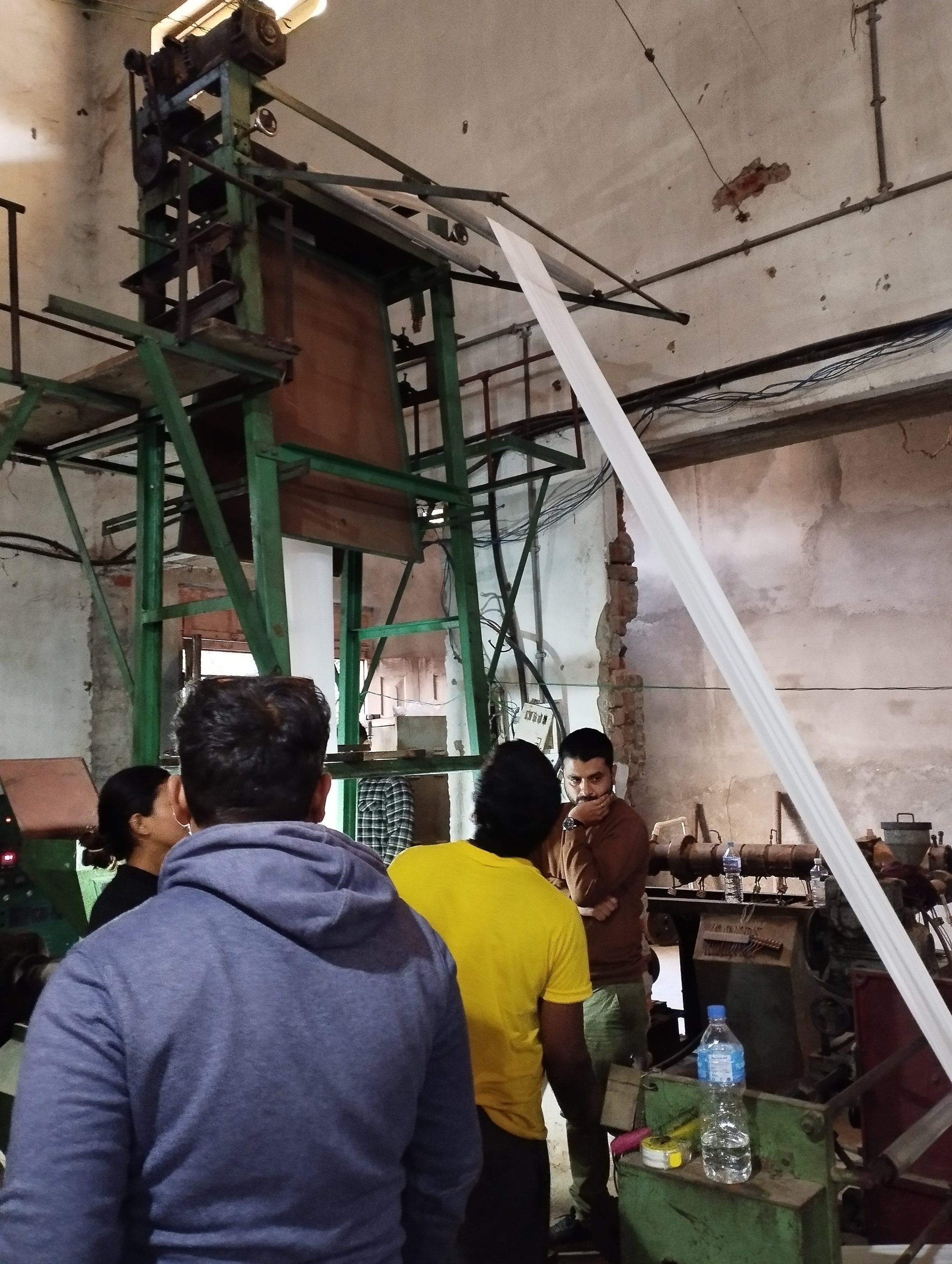
The later pilot account records the complication: retrofitting was technically feasible, but more expensive, slower and harder to repeat than anticipated. It became a longer-term research and advisory route. Follow-on support instead helped Zero Circular move toward a dedicated production line. The published account describes business customers growing from 15 to more than 80 during nine months of market work.
Business customers over nine months.
A portfolio venture’s result, not Utopia’s customer count.
The distinction matters. A successful technical test does not settle the business question. Here, the experiment changed where the team put its effort. The relevant costs included specialist components, operator skill and production time. Those demands helped make a different production strategy more attractive.
The city comes before the startup
Utopia’s founding partner, Jonathan Hursh, came to urban innovation through work with migrant communities. His earlier organization, INCLUDED, built community centers in Asian cities. A 2016 university profile describes his newly launched Utopia as focused on informal settlements. The concern with everyday urban life preceded the venture-studio language.
By 2020, its Kathmandu work was examining migration, circular waste and early childhood education. In Business 360, then managing partner Dori Nguyen offered a compact description: “We’re sector agnostic, but urban focused.” The organizing principle was the city, allowing the work to cross industries.
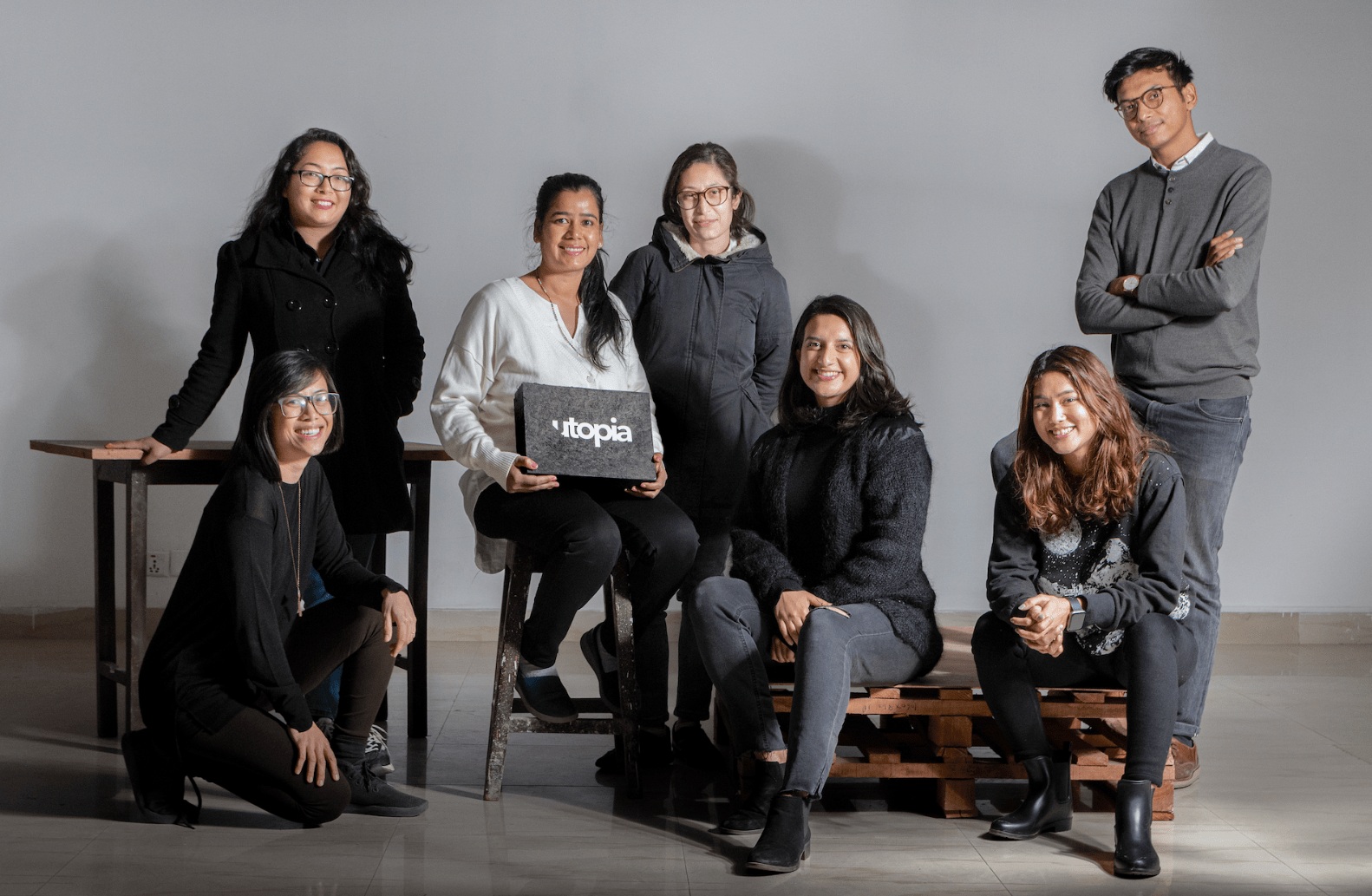
That also explains its structure. Hursh’s published managing-partner profile describes full-time local leaders connected through a wider network. It calls for entrepreneurs, designers and people with unexpected perspectives. The practical advantage is proximity: someone has to understand the local buyer, the institution and the street where a proposal will land.
Four Saturdays, then a harder test
For an aspiring founder, Utopia’s advertised entry point is refreshingly specific. Weekends brings participants together on four Saturdays, with six hours together each Saturday and four hours of work between sessions. There are challenges, peer feedback and conversations about the society participants want to help create.
The terms say no investment is given and no equity is taken. That makes it an exploration stage, with a defined time commitment. The wider pathway offers 100-day cohorts to shape an MVP, followed by a launch decision. Selected entrepreneurs can then move into hands-on venture building.
The venture launcher describes pre-seed cash and work toward the first thousand customers. Those are commitments and targets in the program design. They help explain Utopia’s position between an accelerator and a venture studio: it seeks a role in creating companies, extending beyond teaching founders how to present them.
“Tech is more of an enabler than a solution.”Dori Nguyen · The Farsight · 2022
Permission to try it on a real street
Utopia’s proposed Prototype Zones take the same logic into a neighborhood. A city designates a place where startups can demonstrate solutions for six months. The model brings city data, technical support, permits and corporate resources into the experiment, with a particular interest in climate.
For founders, that could shorten the distance between a prototype and a practical trial. For city teams, it creates a setting to examine new services before broader adoption. Corporate participants are offered access to emerging technology and opportunities for research and development. The value depends on actual cooperation among those parties.
The customer picture is therefore broader than startup founders. Utopia’s Kathmandu work also includes design, research and programs with institutional partners. Its 2024 review describes activity across entrepreneurship, human-centered design, urban work and professional development. The local studio has several ways to apply its expertise.
For a founder choosing support, the useful question is how much help the business needs between meetings. A presentation workshop serves one purpose; finding a production partner serves another. Utopia’s appeal lies in connecting those practical needs to a local network. Its market is the gap between recognizing a city’s problem and assembling the people who can build a business to address it.
Copy the test, not the answer
The most portable lesson is a sequence. Start with an observed problem. Identify who pays. Test the production assumptions. Keep the technical experiment close to the customer experiment, so a promising machine does not conceal an expensive business.
Zero Circular’s work at Le Sherpa Farmers’ Market adds another condition: adoption takes explanation, and price matters. A product can win interest while struggling against a cheaper familiar alternative. Nguyen’s 2022 interview adds the disposal question: compostable materials need people and systems that know what to do with them.
A founder can borrow that habit of looking beyond the object. A city can borrow the discipline of a bounded trial. Neither requires assuming that Kathmandu’s answer will fit elsewhere. Utopia’s proposition is most persuasive at this smaller scale: enough proximity to notice what is happening, enough support to try something, and enough curiosity to change course.