Before there was a pitch, there was a poker game. Mukul Agarwal and Marco ten Vaanholt met through their children, then began playing together. Both had arrived in America from elsewhere: Agarwal from India, ten Vaanholt from the Netherlands. Their eventual business addressed a problem they understood personally. Arriving in Silicon Valley and finding your way into Silicon Valley are two different accomplishments.
- BootUP connects overseas founders with mentors, investors and potential business partners.
- Its advertised US market-entry program runs for 10 weeks and costs $999.
- Corporate innovation work gives the network another customer: the company looking for its next idea.
A poker game, then a landing pad
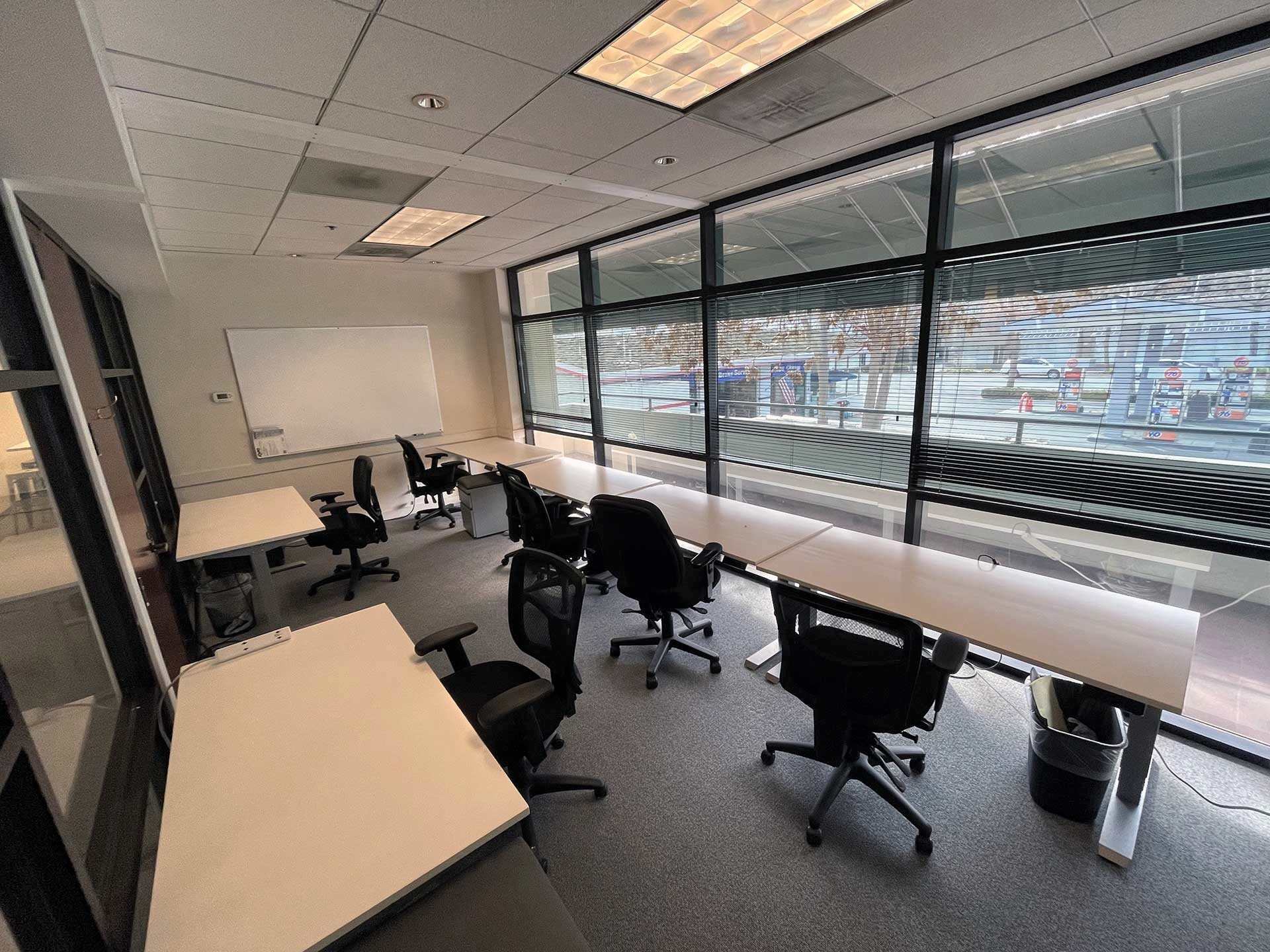
In 2014, their Hello Startups operation occupied premises previously used by robotics company Willow Garage. Some Beam remote-presence systems remained behind. The new occupants offered something more human: workspace, business services and people who could help an unfamiliar startup navigate the neighborhood. Hello Startups was a joint venture between BootUp Ventures and SOMA Central.
Agarwal called the proposition a “soft landing.” The phrase fits. A foreign founder needs introductions, but also an understanding of what the person across the table expects. BootUP’s original insight was to put that help close to the desk where the founder was working.

Ten weeks to ask better questions
Today, the company’s US Market Entry Program targets technology startups that already have traction at home. Its published offer is a 10-week program at $999, covering financial modeling, investor-pitch preparation, legal frameworks, mentorship and a US market blueprint. Those are practical subjects for a team discovering that success in one country does not automatically explain how to sell in another.
The testimonials offer a useful distinction. Several describe earlier, shorter bootcamps. Participant Davide Giacobbe of Voltest discusses learning how the Valley differs from Europe and practicing a shorter pitch. These accounts describe changed perceptions and preparation; they should be read as participant feedback, rather than evidence that the current 10-week program produces a particular financial outcome.
BootUP also rents the infrastructure of arrival. A virtual office is advertised at $99 a month, coworking at $445, private offices from $1,950. Meeting rooms cost $49 an hour. These are separate offers with separate purposes. Renting an address solves the address problem. Finding a buyer takes another conversation.
Advertised prices, October 2026. Workspace and the $999 program are distinct offers.
The bathroom is a business brief
The more revealing customer may be the corporation. BootUP describes work for enterprises that want help identifying technologies, organizing startup engagement and turning experiments into operating projects. That places it somewhere between an accelerator and an innovation consultancy. Its workspace is one entry point into a broader set of services.
Consider TOTO. BootUP’s Future Living Innovation Program invites startups working on preventive health and connected living. Its interests include analyzing body fluids, detecting biomarkers, health coaching and smart-home integration. A bathroom becomes a setting where a young technology company might test an idea with an established manufacturer. The application is specific enough to make an introduction useful.
There is a longer record here. Verizon’s own 2015 bulletin describes an accelerator at BootUp Academy for its Powerful Answers Award winners, with workshops spanning product development, business planning, communications and market strategy. BootUP also describes a six-month Volkswagen technology-scouting engagement covering autonomous-driving and infotainment technologies. The work ranges from teaching founders to helping a buyer decide where to look.
An introduction opens a door. A pilot gives both sides a reason to stay.
The practical logic of BootUP’s corporate programs
In its current positioning, BootUP reports more than $11 billion in combined valuations for startups in its ecosystem, alongside 250-plus enterprise partners. The distinction matters: the valuation belongs to the startups collectively. It tells the reader about the company’s claimed reach, without isolating how much of any startup’s success came from BootUP.
The network also serves institutions trying to create those connections for a whole region. BootUP’s delegation work includes mapping an innovation ecosystem, designing a strategy, organizing Silicon Valley immersion and providing subsequent support. Governments can approach it for national AI strategy and startup expansion programs. This helps explain why the company’s audience extends beyond founders hunting for their next funding round. An official seeking a regional development plan arrives with a different problem, even when the meetings involve some of the same people.
One concrete example comes from MENACatalyst. In 2019, it reported accompanying four Palestinian startups to a Silicon Valley program organized with MIT Enterprise Forum Pan Arab Region. They joined startups from Bahrain, Qatar and Lebanon, and the itinerary included training at BootUp Ventures. That account makes the bridge visible: a group of companies, an organized visit and a defined learning session.
Even Silicon Valley has neighbors
Relationships also created friction. In May 2016, the Cuckoo’s Nest, an associated private entrepreneurs’ club at BootUP’s former Willow Road location, paused a liquor-license application following objections from nearby residents. Agarwal attributed the decision to discussions with neighbors and the city.
The club had been conceived as a place where founders could meet investors in a more polished setting. Local residents had their own expectations for the neighborhood. The resulting pause is a revealing limit on the idea that assembling the right people makes everything else follow. A gathering space needs permission from people outside the guest list.
Borrow the sequence
BootUP’s current venture studio makes its method easier to inspect. It lays out 100 days moving through validation, building and launch, with a focus that includes vertical AI and enterprise automation. Customer conversations and initial pilots precede product iteration and investor presentations. Its team page spans technology leadership, investment, market strategy and corporate innovation.
- 01ValidateCustomers + initial pilots
- 02BuildMVP + real feedback
- 03LaunchInvestor pitch + market entry
That order is the part a reader can copy. Bring a concrete uncertainty to a mentor: which buyer, which use case, which objection? Ask a corporate partner for a bounded experiment. Judge an introduction by the decision it makes possible. A calendar full of meetings can conceal a remarkably empty sales pipeline.
The fit still depends on the job. A founder seeking US customers has a reason to examine market-entry support. Someone expecting guaranteed investment from attendance is asking a relationship business to deliver an investor’s decision. BootUP’s useful proposition is that the right conversation can be arranged. The founder still has to bring something worth discussing.