Before Jeffrey Sweeney was arranging capital, he was cutting threads on a lathe. In his family’s aerospace manufacturing business, financing was an operating problem: the company needed money, and somebody had to work out how to get it. That experience supplies a useful opening to US Capital. Its founder learned about businesses through their machinery, long before he began presenting them to investors.
- Debt, equity, and M&A advice for growing businesses.
- Assets and cash flow help determine the financing structure.
- Investor distribution combines technology with personal relationships.
The banker who knew the machines
Sweeney’s route into banking passed through equipment leasing. A company media pack records his 1998 purchase of the assets of US Capital Corporation, followed by a shift toward asset-based lending and investment banking. It is an unusually practical starting point. A machine has a price, a productive life, and a possible resale value. Those are useful things to understand when somebody asks you to lend against it.
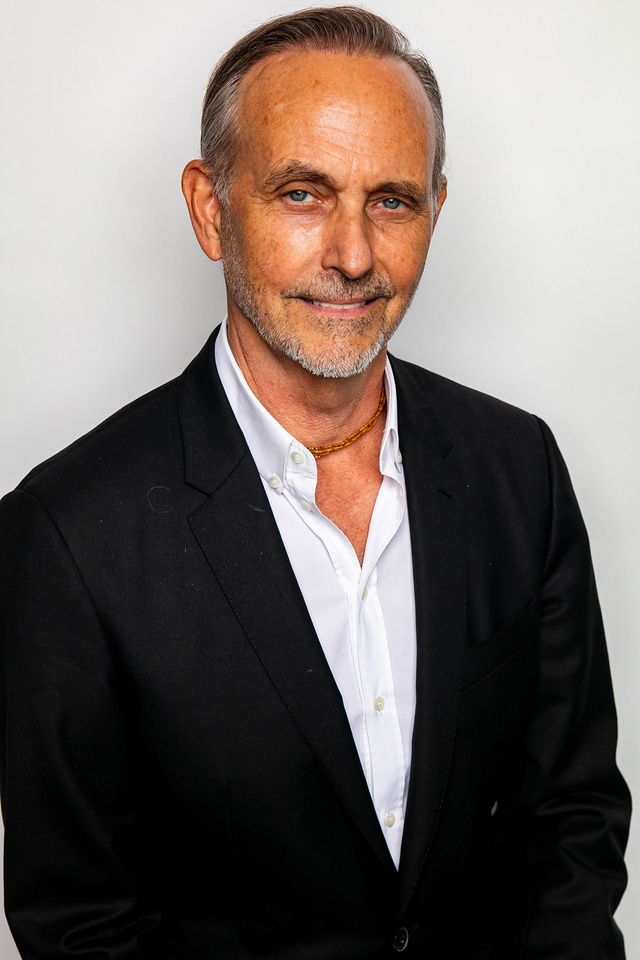
Today the US Capital brand spans corporate finance, securities, investment management, wealth management, and realty businesses. Companies can seek capital; investors can consider private offerings; owners approaching a sale can find advice. The proposition is continuity across decisions that often arrive together. Buying a business, for instance, also means deciding how to pay for it.
“We understand business from the inside, not just from a spreadsheet.”Charles Towle · Co-founder and managing partner
Start with what the business owns
US Capital’s debt practice considers receivables, inventory, purchase orders, equipment, real estate, and intellectual property. Its published approach distinguishes cash-flow lending from lending focused on collateral. That distinction matters to an owner whose business has valuable assets but an uneven earnings record. The financing conversation can become more specific than a verdict on last year’s profit.
The firm also describes unitranche structures, combining senior and subordinated debt in one loan. Its advisory work includes financial models, valuations, feasibility studies, and restructuring. Before the pitch comes the homework: US Capital says its Transaction Analysis process evaluates more than 300 scored attributes to assess funding feasibility. A score is a tool for examining a case; investors and lenders still have to accept the risks.
Illustrative sequence based on the firm’s described services.
The transferable lesson is simple enough to use before hiring an adviser. List the assets, the cash they generate, the obligations already attached to them, and the purpose of new money. A lender financing inventory and an investor backing future growth are evaluating different claims on the same business. A good financing brief makes those differences visible.
A hydrogen plant makes the roles clear
Consider Charbone Hydrogen. In June 2025, US Capital Global Securities announced that it had acted as lead adviser and facilitator on a project finance facility of up to $50 million for the Canadian company. The financing provider was a private fund managed by True Green Capital Management. US Capital’s role included connecting the parties and helping bring the structure through documentation.
That division of labor explains the business better than the word “solutions.” Charbone was developing modular green hydrogen facilities. A specialist fund supplied financing; an intermediary helped make the transaction happen. The headline amount described a facility ceiling. It did not mean US Capital had raised $50 million for its own balance sheet, or that every dollar had already been drawn.
Private capital needs an audience
On the equity side, the firm describes a combination of investor databases, digital offering pages, marketing analytics, roadshows, and direct outreach. Engagement data informs personal follow-up. It says its weekly communications reach tens of thousands of investors and advisers. That is a distribution audience, rather than a count of people who bought an investment.
In September 2026, its securities affiliate presented a proposed $33.1 million financing for Kiteville, a real estate operator repositioning hospitality properties. The proposed mix was up to $23.17 million of senior debt, $6.62 million of third-party equity, and $3.31 million of sponsor equity. The arithmetic is the point: different participants take different positions in one project. An offering announcement begins that conversation; it does not prove completion.
The services extend beyond a single capital raise. The asset-management business can establish and advise private funds. M&A bankers work with buyers and sellers, while wealth-management colleagues can serve owners after a sale. Alongside specialist lenders, placement agents, and boutique advisers, US Capital positions itself through this combination. The appeal is fewer disconnected conversations across a business owner’s financial life.
Read the price beside the promise
Financial matchmaking has a price. US Capital Global Securities’ Form CRS, dated April 12, 2022, lists brokerage commissions ranging from 2% to 8%, with private-placement compensation detailed in offering documents. That range belongs to the securities affiliate’s disclosure. It is not a quote for an acquisition mandate or a commercial loan. Investors should read the actual transaction terms and the disclosed incentives.
Scale needs equally careful reading. In June 2026, the group reported 16 completed financing and advisory transactions with $1.05 billion in aggregate value. Its definition includes transactions advised, arranged, syndicated, structured, or funded by affiliates. That measures activity across several roles. It tells you neither the group’s revenue nor its investment returns.
The model also has practical boundaries. Asset-based lending needs collateral a lender can accept; cash-flow lending needs a credible repayment case. Private investments can be illiquid and lose principal. US Capital’s useful contribution is the work between a company’s needs and an investor’s requirements. The machinery may have changed since Sweeney’s factory days. Somebody still has to make the parts fit.
Follow the next deal
Explore US Capital, its newsroom, and blog. Connect on LinkedIn, X, Instagram, or Facebook.
Watch: recent transactions explained