The oil change was supposed to take an hour. Three hours later, Ujj Nath was calling his Honda dealership, negotiating the telephone menu and trying to locate somebody who knew where his car had got to. His service adviser was at lunch. A callback was promised. It never arrived. By the time Nath went back to the store, there was one final flourish: the invoice had lost the discount from his coupon.
This happened in 2012. Plenty of customers would have complained, paid and gone home. Nath helped turn the experience into myKaarma, a software business joining dealership communications and payments. The connection between those two functions becomes easier to understand when you are the customer trying to get your keys back. The workshop may divide its work into departments. Your afternoon remains one afternoon.
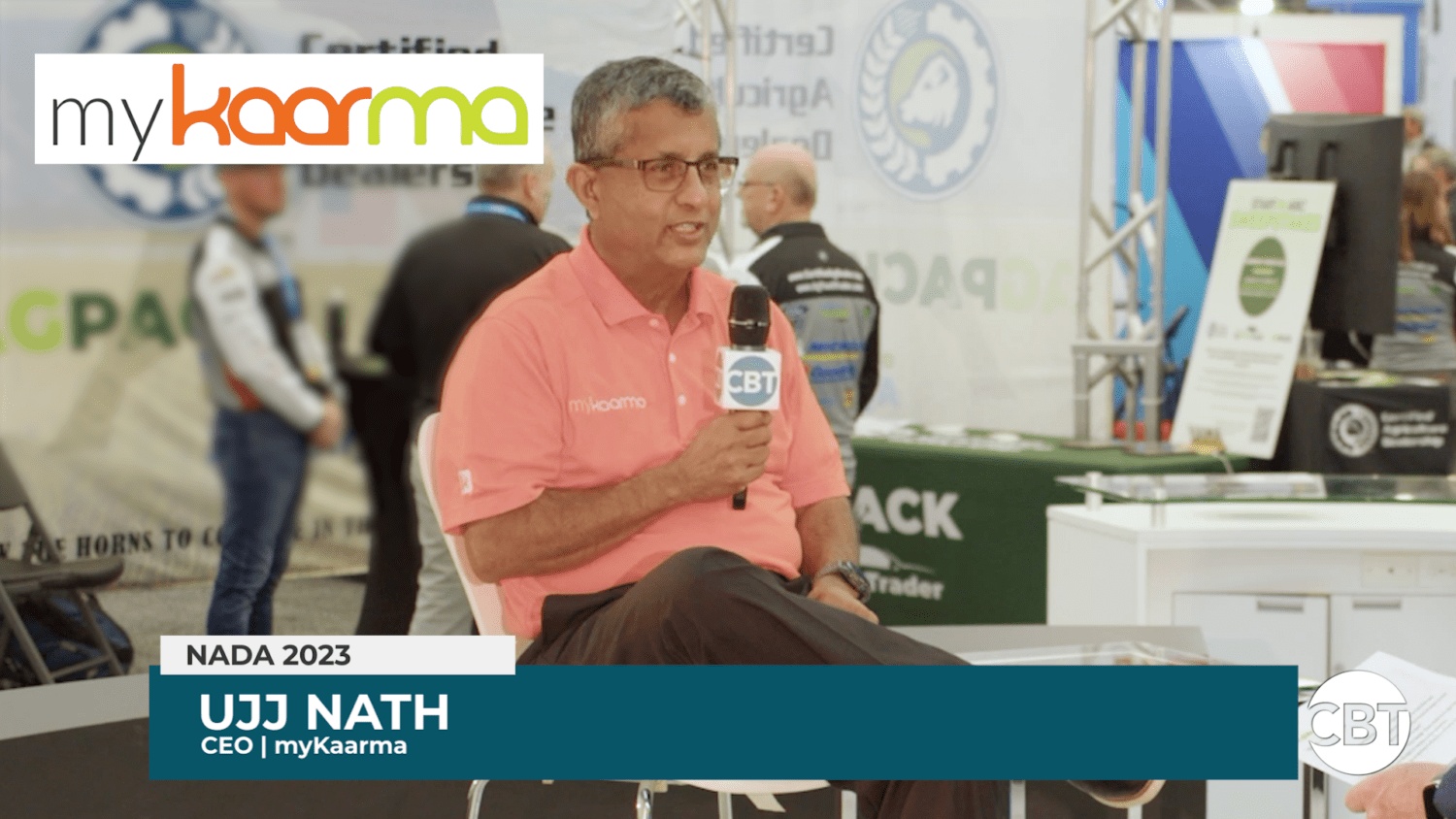
The episode is a useful introduction to Nath, now myKaarma’s co-founder, chairman and CEO. He has worked on large distribution systems and small customer inconveniences. Across both, his recurring interest is the handoff: the point where information ought to travel with the work, but somehow takes the rest of the day off.
A business education with machinery attached
Nath’s route to dealership software began far from the service counter. Born in Jamshedpur, India, he studied materials engineering at the institution now known as IIT (BHU). His early working life included running an industrial equipment and manufacturing business. He moved to the United States in 1985, then earned an MBA in finance and information systems at the University of Texas at Austin.
That combination matters. Materials engineering puts physical constraints in the foreground. Finance adds another set. Information systems offer a way to connect the two. Before founding Syncata, Nath worked in the corporate finance systems group at Drexel Burnham Lambert, with responsibilities that crossed databases, networks and financial analysis. The eventual automotive entrepreneur had learned to move between the machinery of a business and the numbers describing it.
One early lesson remained particularly uncomfortable. At his first company in India, payroll went unpaid for three months; he learned of the consequences when grocers stopped extending credit to employees. His later recollection emphasized collecting receivables and protecting cash flow. It is a harsh little business-school case, with the tuition charged to people who had never enrolled.
Before the service lane, 100,000 cars
In 1990, Nath co-founded the business that became Syncata. Its original name was NetBase Computing. A decade later it was helping companies adapt their operations to the internet, with clients including American Honda and Kinko’s. Even during the enthusiasm of the dot-com period, Nath described practical business work: figuring out how the web could serve an existing company.
The name change supplied a pleasingly economical anecdote. Nath approached his Texas alma mater for help. Three MBA students came up with Syncata, intended to suggest a catalyst for synergy. They shared a $5,000 prize. The company obtained a distinctive name, and the students got a result considerably more useful than another classroom presentation. Everybody escaped a lengthy naming consultancy.
Honda gave Nath a different kind of problem. He has described a distribution project involving 100,000 vehicles and 1,200 dealers, using logistics ideas associated with FedEx and UPS. Getting the right cars to the right places meant treating allocation as a system. He also drew a personal lesson from the work: professional credibility is built with the individuals inside a customer organization.
Those numbers belong to his account of that earlier project, rather than a current operating measure. They show the scale of the work that preceded myKaarma. Long before an unanswered service call became a product brief, Nath had spent years considering how automotive businesses coordinate complicated movement.
Go to the place where it goes wrong
After Syncata, his career included ProQuest and Snap-on Business Solutions. He left Snap-on in 2008 and worked on Volkswagen of America’s new-vehicle distribution system. Then came the dealership visit. A career spent looking across automotive operations narrowed to an everyday encounter in which the customer could barely get an answer.
The resulting company adopted a principle associated with the Toyota Production System: Genchi Genbutsu, usually rendered as going to see for yourself. At myKaarma, that means entering dealerships and observing their processes. The practical attraction is obvious. A meeting can produce a beautifully coherent explanation of how work is supposed to happen. A service counter can supply the corrections before lunch.
Nath has been making the customer-first argument for years. In a 2018 essay, he pointed to Amazon’s ease of shopping and Disney’s MagicBands as examples worth studying. His proposed starting point was the customer’s experience, followed backwards into the organization. The question is concrete: what would make this particular visit easier to complete?
The consumer’s perspective also explains why communications and payments sit together. A repair needs to be explained, approved and paid for. Treating those moments as connected creates a different product brief from simply adding another messaging window. For Nath, the useful unit of design is the interaction someone must actually get through.
Your idea has to survive the customer
Working backwards gives a product team a destination. It leaves the awkward question of whether its proposed route is any good. Nath’s writing describes a deliberate attempt to challenge attachment to an idea before committing to it. The designer is supposed to search for the weaknesses, including the ones enthusiasm has made conveniently difficult to see.
His next step is a process he calls Teacher-Customer testing. A small group of three to five early-adopter customers tries the idea and contributes feedback. The name assigns an unusually clear role to the buyer. The customer has something to teach; the software company has something to learn. A friendly demonstration alone would be a rather easy examination.
- 01Start at the customer’s outcome
- 02Look for reasons the idea fails
- 03Test with 3-5 teacher-customers
- 04Refine from what happens
There is a useful tension here. A founder needs enough conviction to make a company around a frustrating afternoon. A product designer needs enough distance to accept that the proposed fix may be wrong. Nath’s method tries to accommodate both instincts. Conviction gets an idea into the room; observation determines whether it stays.
The email is part of the product, too
Inside the company, Nath applies a similar interest in reducing confusion to written communication. In a 2024 explanation, he described a three-part format: a summary, a specific request and the supporting detail. The request names the person responsible and includes a deadline. Other recipients can remain informed without mistaking inclusion for ownership.
“I’m obsessed about execution.”Ujj Nath
It is an unglamorous managerial preference, which is part of its appeal. The person reading can see the decision required before getting lost in the history of the discussion. Nath connects clear communication to the speed of reaching an outcome. A company selling better interactions has plenty of opportunities to practise on itself.
His stated values also include judgment under uncertainty and room for disagreement. In describing myKaarma’s culture, he has emphasized active dissent during meetings. Those commitments fit the product approach: decisions benefit when somebody is allowed to point out the inconvenient thing before a customer has to do it.
A longer runway, the same question
The business has attracted outside backing as it has expanded. H.I.G. Growth Partners invested in 2022. In January 2026, Warburg Pincus announced an investment that included a partial sale by H.I.G. and a board seat for Warburg. Nath said myKaarma had more than tripled in size since 2022; the announcement did not specify the measure behind that comparison.
The next phase puts AI into dealership workflows. The ambition extends from responding to customers to helping staff gather useful information and complete work. That creates a demanding test for Nath’s philosophy. An automated interaction still has to carry context forward. A quicker conversation offers limited comfort if the next person needs the customer to start again.
There is also a connection to people entering the trade. In September 2026, myKaarma and Universal Technical Institute announced a pilot bringing the company’s digital multi-point inspection software into technician training at UTI’s Atlanta campus. The software would be provided at no cost for the pilot. Learning the workflow becomes part of learning the job.
The customer remembers being remembered
Nath’s examples reach beyond cars. In a July 2026 podcast conversation, he described a visit to the Strand House in Manhattan Beach, where he lives. Staff remembered a previous dinner and made his return feel personal. He used the experience to explain three qualities he wants in a customer interaction: convenience, transparency and context.
The last quality is easy to overlook. Recognition changes an encounter because the visitor does not have to rebuild the relationship from the beginning. In software, that demands continuity between channels and people. In a restaurant, it can begin with somebody remembering you were there last week. The principle travels surprisingly well between a dinner table and a service desk.
Nath keeps returning to the same modest-sounding question: what does this feel like to the person on the other side? It has carried him from distribution planning to product testing, internal messages and AI. The original oil change is long finished. The work of getting an ordinary interaction right has proved rather more durable.
Continue the conversation
- myKaarma - company website
- Ujj Nath on LinkedIn
- Ujj Nath on X
- Product essays and the myKaarma blog
- Watch: What the Fixed Ops?! - Ujj Nath interview
- Listen: Full Throttle with Jason Stein
- Read: Digital Dealer conversation
- Read: Warburg Pincus investment announcement
- Read: Technician-training pilot at UTI Atlanta