An artist’s website has a peculiar job. It must look like one person’s world while behaving like dependable infrastructure. The album changes. The photography changes. The merchandise drops without much warning. Somewhere beneath all that personality, a checkout still has to accept a payment. Halo Media has made a business out of keeping those two demands in the same room.
- Halo combines product strategy, design, engineering, and marketing technology.
- Its work runs from artist websites to commerce, event registration, and enterprise AI.
- The useful lesson: standardize the machinery that lets distinctive experiences ship.
01 / A thousand small opening nights
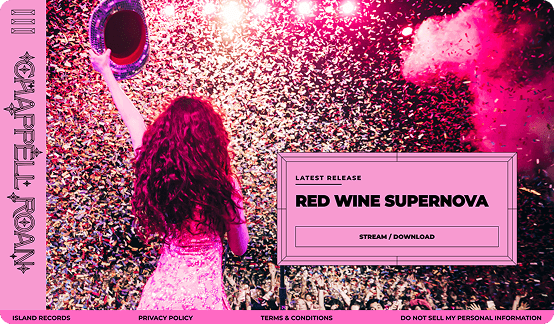
Consider Universal Music Group. Halo says it launches more than 1,000 artist sites annually, typically in 10–12 days. That volume changes the meaning of a design brief. A team cannot treat every launch as an expedition into unexplored territory. It needs a way to make repeated work predictable without making every artist look interchangeable.
Halo’s answer includes a shared component library, a design system, and a deployment pipeline. Its UMG work also encompasses more than 250 Shopify storefronts. The infrastructure supports different artistic identities and commercial moments: a release, a limited drop, an invitation to participate. Creative variation sits on top of repeatable operations. The factory has room for an art department.
For a reader running a smaller operation, the transferable idea is simple. Separate what customers should experience as different from what the team should stop rebuilding. A useful component library saves decisions as well as code. It gives the next launch a starting point, leaving people more time for the details an audience might actually remember.
02 / Before the software, there were fans
Halo’s founder, Dave Lee, came to this problem through music promotion. While attending Rutgers, he ran Soul’d Out, promoting music around venues including CBGBs and Limelight. Halo began in a suburban New Jersey basement in 2006, then moved into digital experiences for artists and their teams.

That history supplies a useful way to read the portfolio. Music promotion asks how to turn attention into participation. A website adds a technical layer to the same question. Can someone find the release, join the list, or buy the thing? Over time, Halo’s assignments expanded into enterprise platforms, healthcare, financial services, and other markets where that journey involves considerably more machinery.
03 / The customer sees one event
The 2023 FIBA Basketball World Cup put an unusually concrete version of that problem on the table: three host countries and five venues. Halo worked with TicketSocket on a shared ticketing platform with localized buying experiences and centralized customer information. Its case study describes the earlier arrangement as fragmented across local vendors.
The customer has little reason to care which vendor owns which step. Organizations, however, inherit every seam. A currency, a payment gateway, a venue’s inventory: each can introduce another handoff. Halo’s role sits between the visible interface and those operating rules. A coherent screen is the result of getting the less visible agreements to work.
Spartan Race offers a muddier test. Halo built kiosks that let athletes check in and activate RFID tags despite unreliable connectivity, then synchronize when a connection returns. It also rebuilt registration with TicketSocket. Halo reports a 13% checkout conversion increase. The revealing detail is the offline requirement: the event cannot pause while the network catches up.
Start there when writing a brief. List the conditions the product must survive: an interrupted connection, an unfamiliar currency, a sudden crowd, a customer returning with an existing account. Then name the team responsible for each exception. That exercise turns an attractive mockup into a set of operational promises. It also gives a buyer something more useful to discuss with an engineering partner than whether the homepage feels contemporary.
04 / The discount that went the wrong way
One of Halo’s most instructive accounts concerns a subscription offer. A logged-in shopper could be shown a subscribe-and-save price higher than the one-time price they already qualified for. Subscription discounts and customer-specific pricing were working from different rules. The screen could look perfectly sensible while the offer underneath it contradicted itself.
Halo describes resolving the problem across Shopify, Recharge, and the merchant’s engineering and finance teams. It announced its Recharge agency partnership in July 2026. This is a good explanation of what systems integration buys: someone responsible for the spaces between products. Before adding another subscription widget, a merchant can copy the diagnostic question. Which system has authority over the final price?
“Measure your partnership in years, not sprints.”
Halo’s services page
Halo sells that work through client engagements spanning strategy, design, software, and marketing systems. Continuing partnerships let a delivery team carry knowledge from one launch into the next. Its POLITICO FOCUS work, for instance, combines interactive design and development for sponsored narratives. Buyers choosing among product agencies, integrators, or an internal team should examine those working relationships alongside the finished screens.
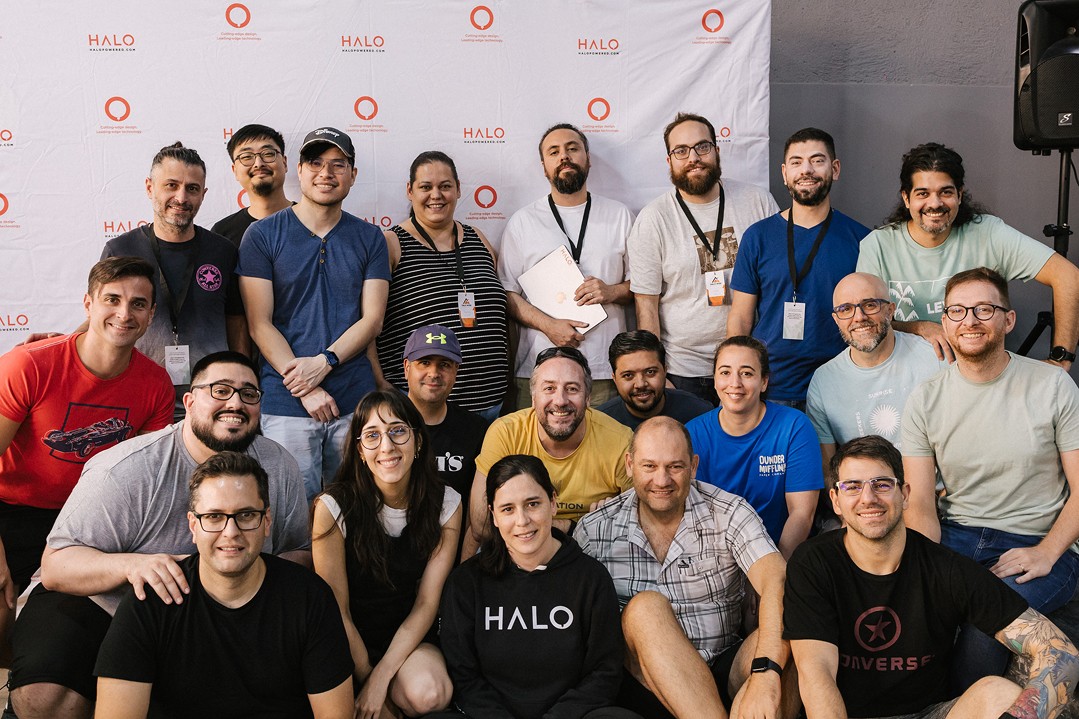
That breadth puts Halo in a busy part of the market. A specialist studio can handle a single surface; an internal team can preserve institutional knowledge; a larger integrator can coordinate a wider program. Halo’s pitch combines creative and technical delivery within the relationship. The fit depends on the assignment: a recurring stream of launches creates different needs from a one-time brochure site. Buyers can ask to meet the people responsible for maintenance, integration, and release decisions before choosing a partner.
05 / Sometimes the team needs one person
In August 2026, Halo announced its acquisition of Nascent Works. Its explanation was refreshingly specific: some customers already had leadership, roadmaps, and processes. They wanted experienced engineers embedded in their teams. Nascent packages that capacity through project, fractional, embedded, and retainer arrangements.
The distinction matters. Nascent expects the customer to retain product leadership, sprint planning, technical governance, and QA ownership. Adding capacity makes sense when those functions already work. When they do not, an extra engineer inherits the uncertainty. Halo points those clients toward a fuller strategy engagement.
Its Applied AI & Agentic Systems Lab, launched in January 2026, addresses a related gap between a promising demonstration and an operating product. The work includes retrieval, workflow agents, and copilots, with validation and human oversight. Across these offerings, a sensible buying question emerges: what must keep working after launch day? Halo’s portfolio becomes more interesting when you ask it that way.