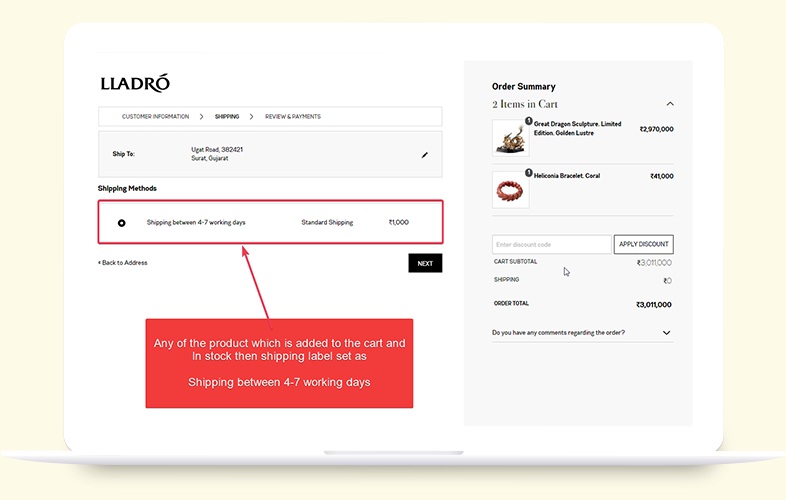
The porcelain was fine. The support arrangement was the problem. In AddWeb Solution’s account of its work for Lladró, the Spanish maker of figurines and sculpture had an online store whose maintenance was becoming a management burden. Requests waited. Fixes arrived late. People spent time negotiating with service providers when they wanted to improve the shop. It is an unusually useful place to begin understanding a software company: with the work nobody wants to discuss at the launch party.
- AddWeb builds custom software and keeps existing systems running.
- Its customers include retailers, nonprofits and other development agencies.
- The useful buying test: ask how changes are tested, explained and handed over.
AddWeb’s response was incremental. Its team learned the existing code, handled fixes and enhancements, and moved changes through testing and user acceptance before production. The case study describes more than 1,000 hours of work over 120-plus days. That tells you something about the product being sold. A prettier storefront was only part of the assignment. The larger task was making improvements arrive predictably.
A business hiding in the support queue
AddWeb occupies a familiar but consequential corner of the technology market: the outside engineering team. It builds websites, mobile applications and business software; it also supplies people and ongoing support to companies with technology already in place. Customers can hire a project team, add developers to their own operation, or retain help after launch. Other agencies are customers too. Sometimes the team behind the team is the business.
Its toolkit stretches across Drupal and WordPress content systems, Laravel applications, ecommerce, cloud infrastructure and DevOps. Its present pitch adds language-model applications and automation. The breadth matters when a problem crosses boundaries: a customer-facing page may depend on a payment connection, a database and a deployment process. Buying those separately leaves somebody responsible for the joins. AddWeb is offering to take that assignment.
An editorial reading of the delivery process described in its client work.
“We built AddWeb to close that gap permanently.”
Rajeev Agarwal, on the gap between price and engineering quality
The library must survive the move
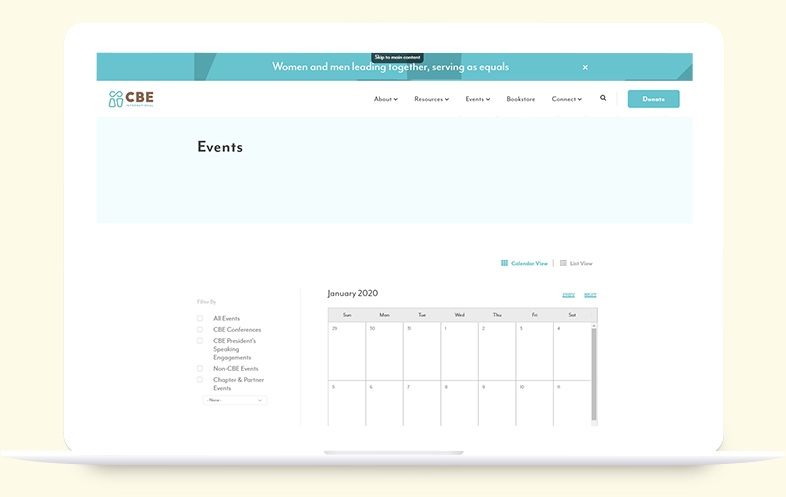
Consider CBE International, a nonprofit whose website carries resources, journals and events. AddWeb’s project involved moving it from Drupal 7 to Drupal 8. A migration sounds like transporting boxes. In practice, the boxes have relationships: an article belongs to a collection, an event has a date, a search result must lead somewhere sensible. The team reworked content architecture and navigation, added resource and journal views, and improved editing tools.
The payoff was partly for the people publishing the material. Frontend editing, richer text controls and multilingual features made the site easier to operate. That distinction is easy to miss in a redesign brief. A visitor sees a page for seconds; an editor may wrestle with its publishing system every working day. Better software has to account for both.
The International Kiteboarding Organization offers another example. In a company-authored Drupal case study published in January 2026, AddWeb describes moving a community with more than 600,000 registered users from Drupal 7 to Drupal 10. Accounts, permissions, certifications and course commerce all needed attention. The method was phased migration, replacement of obsolete modules and validation of the transferred records. The headline number is big; the essential work is checking that individual people can still do what they came to do.
The founders, and the people who stay
Founded in 2012, AddWeb names three founders with complementary responsibilities: CEO Rajeev Agarwal, technical leader Saurabh Dhariwal and partnerships lead Ashish Jain. Its American headquarters and Indian engineering operations put it in the global outsourcing market. The competitive proposition is continuity across disciplines: people who can understand the existing system, change it and remain available afterward.



There is a telling detail on its careers page. AddWeb advertises an extra month’s salary on every work anniversary, plus interest-free loans of up to three times salary. These are company-stated benefits. They make sense in a business where accumulated knowledge matters. Every departing engineer can take a little map of a customer’s system with them. Keeping that knowledge close has practical value.
What the invoice buys
Clutch lists a $5,000-plus minimum project and an advertised rate below $25 an hour. One financial-services client reported spending about $60,000 on a WordPress site and an accounting SaaS platform. The same client wanted better documentation and training at the beginning. A delivered application still needs people who can use and administer it.
Approximate client-reported spend for a website and accounting platform. A scope example, not a standard package price.
For buyers, that changes the brief. Specify the operating result, the acceptance checks and the handover materials alongside the features. Budget for the people who must explain decisions, test changes and answer questions. An hourly rate can help compare bids, but it cannot describe the whole purchase.
Give the team a problem worth solving
Client feedback also exposes a boundary. In a largely positive 2022 Trustpilot review, Alex Pontin wrote that “the team does exactly what I tell them to do” while asking for stronger strategic and UX advice. More recently, an April 2026 reviewer alleged delays in a Zoho implementation. These are individual accounts, but they sharpen a useful question: who challenges the brief, and who records a blocker before it becomes a missed milestone?
AddWeb’s current AI emphasis deserves the same practical test. Pick a recurring task, establish the baseline and agree on the result. This arrangement works best when someone on the customer side can make decisions and judge the output. A buyer expecting a supplier to discover every unstated requirement will need more discovery and consulting in the contract. Start there, before choosing the next feature.