Consider the used car that has finished one repair but has not started the next. The mechanic may have done everything right. The replacement part may already be ordered. Yet someone still needs to approve the expense, notify an outside vendor, or tell another department the vehicle is ready. This is the territory Repair360 occupies: the surprisingly consequential interval between people doing their jobs.
- The job: coordinate a vehicle’s journey from inspection to lot-ready.
- The buyers: dealerships, auctions, rental operators, and recon businesses.
- The idea to steal: give every next step an owner, and make waiting visible.
The company sells software for automotive reconditioning, the work that prepares vehicles for their next customer. Its desktop and mobile platform connects managers, technicians, parts teams, and vendors. Inspections become repair plans; work gets assigned; status and costs follow the vehicle. The commercial proposition is straightforward. Inventory earns its keep when it can be sold, and administrative uncertainty can keep it waiting.
The delay nobody owns
There is a particular kind of frustration that comes from having information somewhere, but never where you need it. An approval sits in a message. A parts update lives in another application. A vendor knows the job is finished; the dealership does not. Repair360’s founding product argument was that these disconnected records turn a manager into a human integration service.
In AMT’s December 2020 announcement, operations executive Eric Meahan described managers switching among systems for workflows, parts, vendors, timekeeping, and approvals. His verdict was economical: “This kind of setup can be exhausting.” Repair360 gathered those functions into one shared environment. The intended benefit was fewer administrative handoffs and a vehicle status everyone could see.
“This kind of setup can be exhausting.”
Eric Meahan / AMT’s 2020 platform announcement
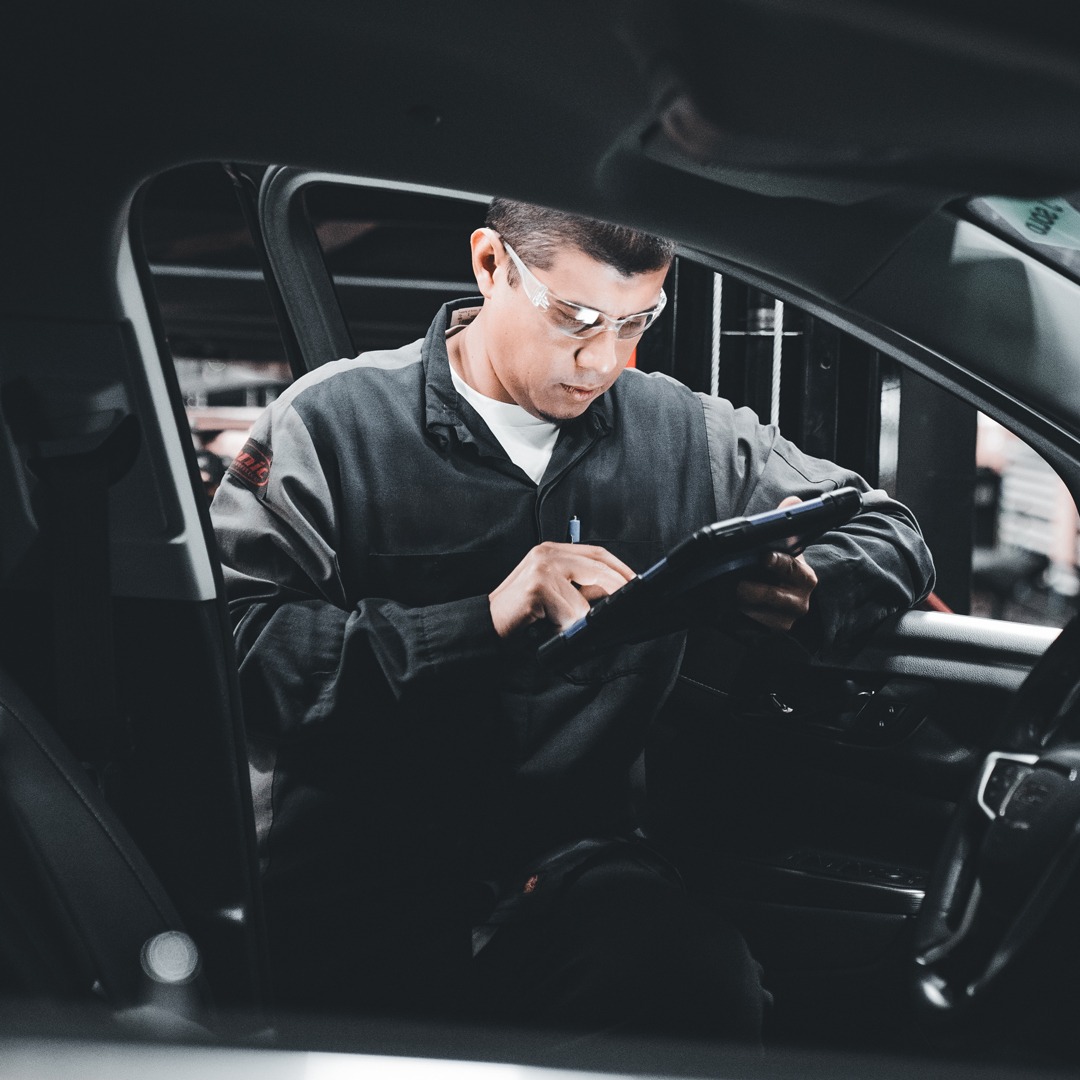
First an invoice. Then the whole car.
Repair360’s history begins with a smaller promise. In October 2017, developer AutoMobile Technologies introduced it as a free mobile invoice app for solo and smaller repair businesses. Users could manage vehicle records, perform inspections, obtain approvals, and record payments. A paid expanded edition added team management and accounting integration. The original unit of convenience was the individual operator.
The 2020 announcement described a broader system for dealerships, auctions, rental companies, and recon providers. AMT reported 400 clients in North America using Repair360, with another 200 scheduled to follow. That second figure was a pipeline. The interesting change was the product’s scope: it now addressed coordination across an operation, including repair planning, execution, inventory, billing, and reporting.
In February 2022, Repairify acquired AMT. The transaction announcement identified Paul Maximov as AMT’s founder and described roughly 8,000 technicians using AMT’s work-order software. Those were AMT-wide figures. For Repair360, the deal placed its workflow product alongside a larger family of automotive diagnostics and repair businesses. The acquisition price was undisclosed.
Give the next person the whole story
The product’s practical details explain its appeal better than a grand claim about digital transformation. Technicians can receive assignments on a phone, capture inspection photos, log time, and update jobs. The mobile application supports offline updates that synchronize when connectivity returns. Parts ordering and tracking sit beside repair work. Outside vendors participate in the workflow rather than remaining a separate administrative project.
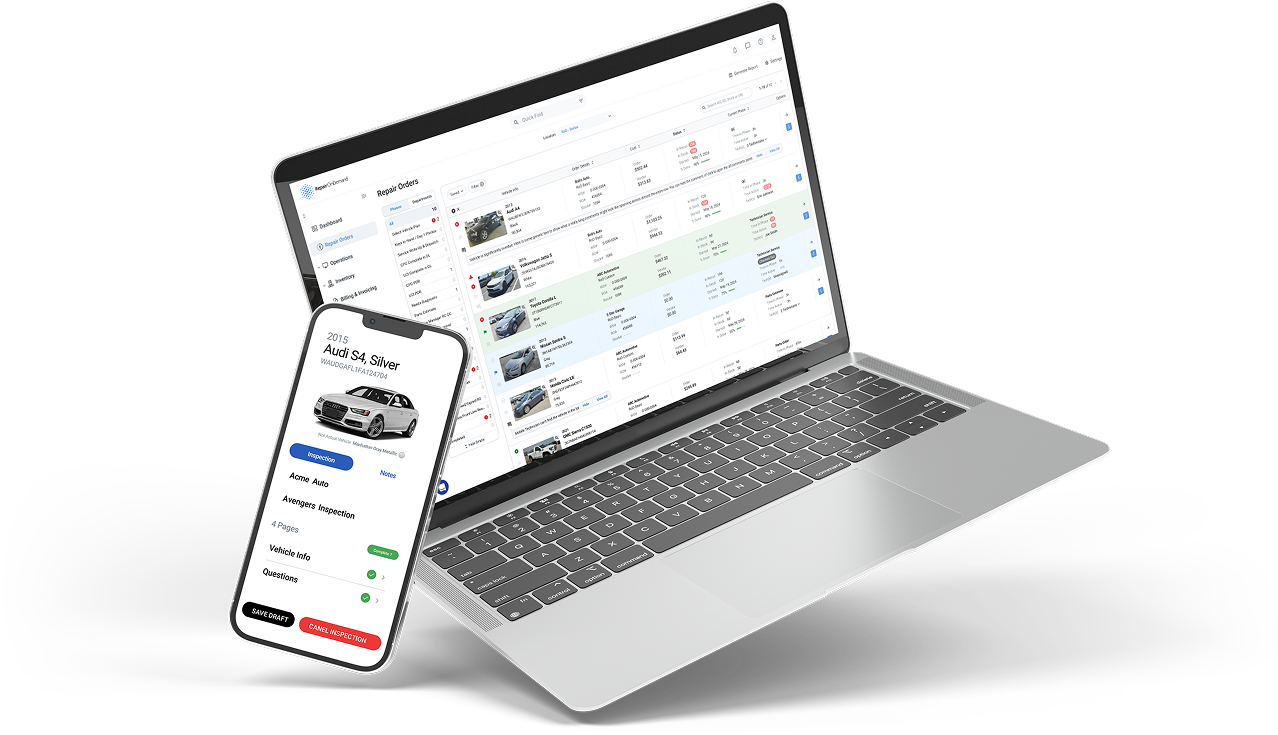
A smaller tool makes the same point. The Repair360 VIN Tracker Chrome extension lets users view repair-order details by vehicle identification number on open tabs. Sales staff can check progress without interrupting service for another update. Meanwhile, BlueDriver MAX diagnostics connect vehicle-condition information to appraisal and repair planning, helping teams start with more than a visual walkaround.
In February 2026, Repair360 announced chat inside the repair order, including photos, attachments, and separate conversations for vendors and internal teams. Context stays with the job. It also announced Dealertrack import and write-back: vehicles enter the workflow, repair orders are created automatically, and completed expenses return to the dealership system. The updates target communication and duplicate typing.
The last mile is an accounting entry
A June 2026 Autosoft integration extended that closeout approach. Completed repair-order details, including parts, labor, opcodes, and service information, can transfer into Autosoft. Repair360 occupies the execution layer alongside the dealer management system. The DMS still matters; the product’s job is to connect the work and deliver the resulting record without another manual reconstruction.
Its market includes specialists such as Rapid Recon and vAuto iRecon, both of which also promote workflow visibility and accountability. Repair360’s case rests on its particular combination of repair execution, diagnostic connections, parts, vendor coordination, and DMS integrations. A buyer should ask to see an actual vehicle move through those connections, including a changed estimate and the final accounting entry.
The business runs on paid subscriptions configured for different operating needs. Buying it means discussing the workflow and scope with the vendor. Teams evaluating cost should include setup, integrations, training, and the time needed to bring vendors into the process. The relevant comparison is the complete operating change, alongside the subscription itself.
Beware the comfortable average
Repair360’s September 2026 argument for consistency supplies a useful twist. A respectable average recon time can conceal vehicles that move quickly and others that linger. Predictability lets managers plan capacity and identify exceptions. The graphic below makes the arithmetic visible; its figures are illustrative, rather than customer results.
Both average 4 days. The long wait disappears inside the average.Illustrative arithmetic / no measured Repair360 performance claim
There is a lesson here anyone can copy. Follow one vehicle, name the owner of each next action, and separate working time from waiting time. Then check whether decisions and updates reach those owners. Software can make that discipline easier. Its usefulness still depends on participation: a vendor working outside the process, or a team leaving statuses stale, weakens the shared picture. The next step needs someone responsible for taking it.