The compression socks have a small logistical problem. They have to leave a warehouse, meet the other items in an order, enter the right carton and arrive at someone’s home. A robot may manage one part of that trip beautifully. The rest of the trip still has to happen.
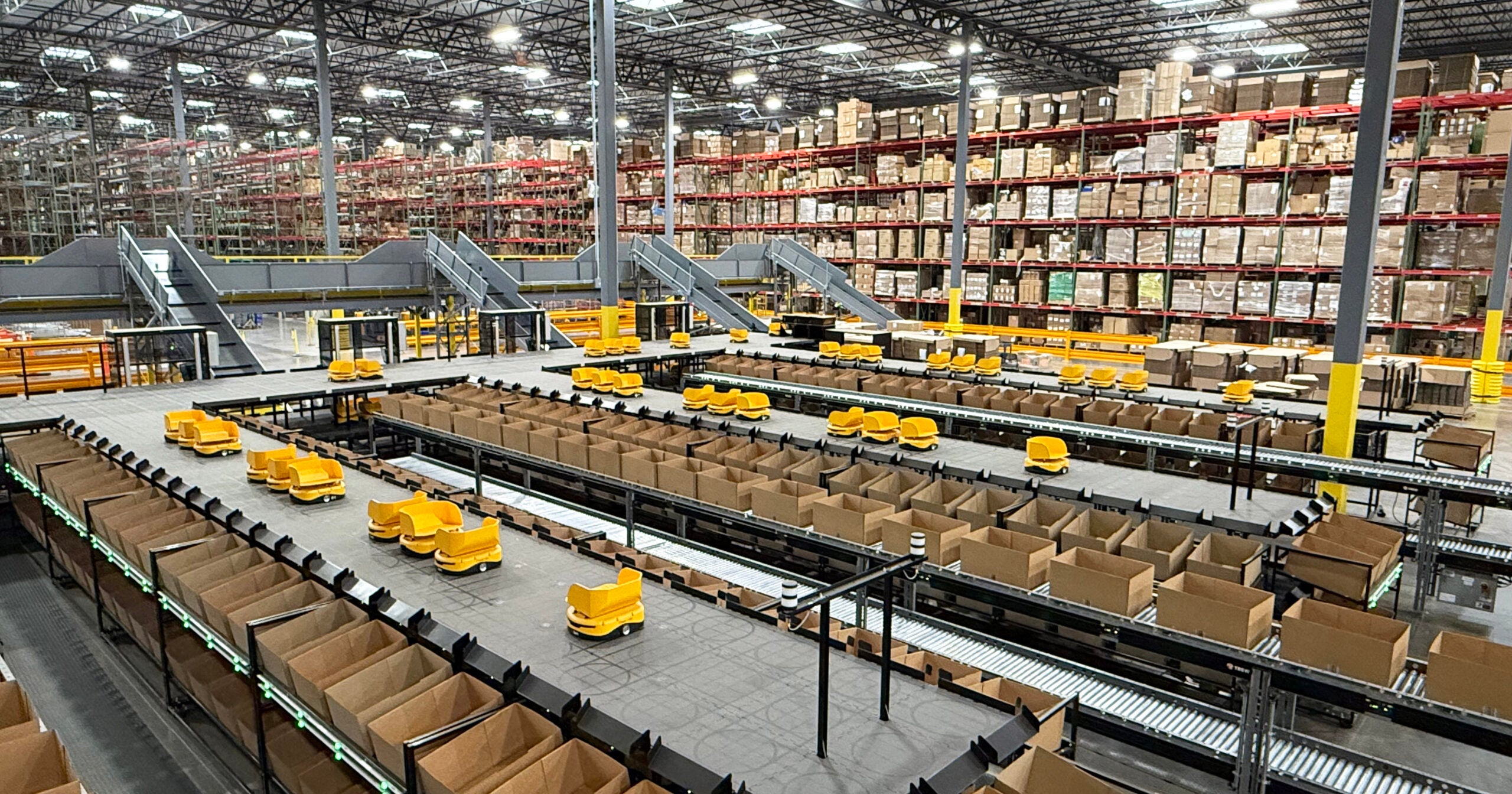
Medline’s Pick Pack Pro installation in Montgomery, New York, helps explain Trew. Announced in April 2026, it assigns item sorting to Tompkins Robotics, carton movement and sortation to Trew, and automated packing to Ranpak. Each has a defined job. The order depends on their cooperation.
- The work: manufacture and integrate conveyors, sorters, controls and warehouse software.
- The customer: operators with orders to ship, plus integrators building their systems.
- The useful lesson: evaluate the whole order journey before buying an impressive machine.
A carton with three chaperones
Health-plan orders have a particular rhythm: a narrow product catalogue and ordering windows that create demand spikes. A compression sock is an ordinary object. Thousands of orders arriving in a rush make it an engineering problem.
Medline expects faster, more accurate fulfillment. Those are projected benefits. What the installation already illustrates is the division of work: several specialists can contribute to one customer promise. Trew’s place between tasks makes integration a useful lens through which to understand the company.
A new name with an old tool chest
Trew launched operations on January 1, 2019, led by CEO Mark Tefend and President and COO Chris Arnold. It arrived with capabilities rooted in two existing companies: Hilmot, known for conveyors, and Tech King Operations, which brought software and controls. The starting point included equipment, operating experience and relationships with system integrators.
Arnold offered a wonderfully unromantic description in a 2019 interview: a “jump-up.” The team had acquired established businesses and quickly assembled more than 250 experienced colleagues. That is quite a different origin from inventing a device and then looking for a customer.
His own background included logistics at Amazon, work on Walmart’s first internet fulfillment center, and operations and solutions development at Intelligrated. It helps explain why Trew’s offering spans so many apparently separate disciplines. Warehouse operators experience the equipment, software and staffing plan together, every shift. A supplier that understands only one of those parts has homework to do.
Three layers, one moving order
Trew’s software gives the machinery a set of instructions at different levels. SmartMoves WX, its Warehouse Execution System, coordinates work across people and automation. CHAMP, its Warehouse Control System, handles material flow and routing. PLC controls act at the equipment level. Think of an order being organized, a carton receiving a route, and a machine carrying out the movement.
SmartMoves WXOrganize the warehouse work
CHAMP WCSRoute and track the material
PLC controlsOperate the equipment
SmartMoves WX supports batch and waveless fulfillment, and coordinates manual tasks as well as automated ones. CHAMP connects with host systems and devices such as scanners, scales and printers, while offering carton tracking and diagnostics. The distinction matters when evaluating a proposal: visibility into an order, control of its route and control of a motor answer different questions.
Trew also integrates third-party equipment. Its controls experience includes other manufacturers’ sorters and conveyors, which matters in an existing building where replacing every machine would be an expensive way to solve a narrow problem. An operator can explore a software or controls change, a new piece of equipment, or a broader redesign.
The sorter that knows its place
There is a pleasing restraint in the sales pitch for Trew’s Swivel Wheel Sorter, introduced in April 2026. Senior Product Manager Drew Herchenbach said, Not every operation needs the fastest sorter on the market
. A warehouse buying capacity it cannot use has acquired a costly conversation piece.
The next station gets a vote in how fast the whole warehouse can run.Reading the system, rather than a machine specification
Trew positions the all-electric machine for 45 to 200 cartons per minute. Its SmartRow technology independently controls and monitors rows of divert wheels; its wheel coating is intended to improve traction. These are choices about predictable handling and control. The stated range is a manufacturer specification, dependent on the application, rather than a promise that every installation will ship 12,000 orders an hour.
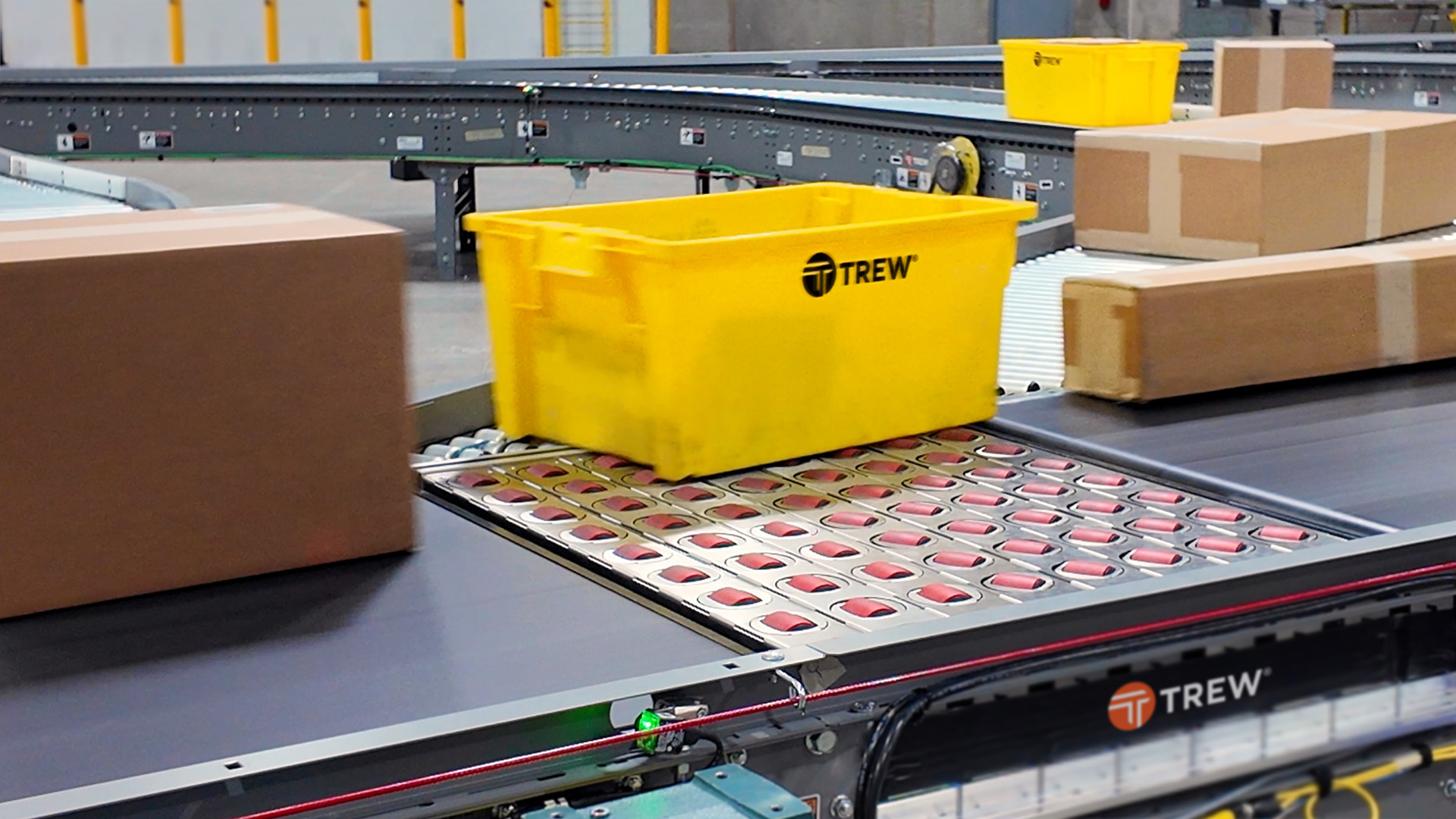
For higher-rate sliding-shoe sortation, Trew introduced TrewTouch, an approach that adjusts the divert movement to reduce impact and smooth acceleration. Here the awkward detail is physical: a polybag and a rigid carton do not necessarily behave alike when nudged sideways. More speed demands attention to how the package moves, as well as how quickly it travels.
Buying options, then making them work
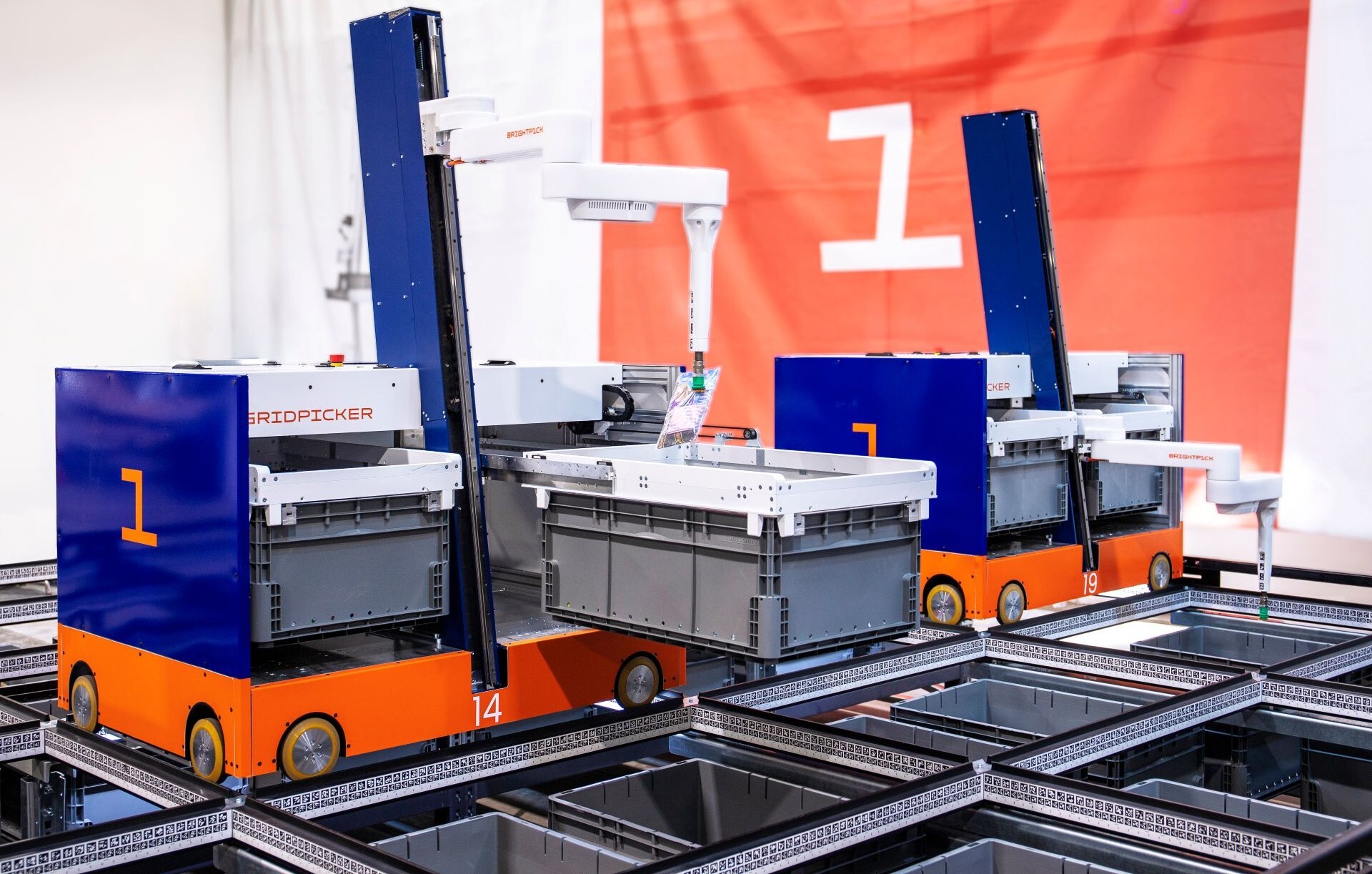
Trew manufactures equipment and integrates technology from partners. Its February 2024 OPEX agreement added access to Infinity automated storage, Perfect Pick goods-to-person systems and Sure Sort small-item sorting. A June 2026 Brightpick partnership brought Gridpicker and Autopicker into the mix, with planned connections to Trew’s software and material handling systems.
This gives Trew several ways to tackle storage, picking and order consolidation. It also creates a responsibility: the selected technologies must work as one installation. The appeal to buyers is a wider set of options combined with engineering, installation and support. A partnership announcement establishes access to technology; it does not establish a return on investment for every warehouse.
Trew sits among integrated automation suppliers such as Dematic, Daifuku and TGW. Its distinctive combination is its own conveyor and sortation hardware, its software and controls, and access to partner robotics. Buyers should compare that combination against their actual order profiles and existing infrastructure. A catalogue is a starting point for the discussion.
The bill continues after go-live
Trew sells to end users and to integrators that use its products in their own projects. The commercial relationship can include equipment, software, engineering and installation, followed by parts, maintenance, support and upgrades. For the customer, commissioning begins the operating life of an asset that will need attention.
Its design process starts with business goals and operational data, then examines workflows, staffing, equipment sizing and the business case. Detailed engineering and pre-installation testing precede launch support. Those steps are practical things a reader can copy: describe the demand, model the complete process, and test the interfaces before the equipment arrives.
A useful test includes awkward packages, the busiest shift, room for accumulated cartons and recovery after a stoppage. Trew’s own operational-fit guidance warns that available space, order complexity, labor readiness and system architecture constrain the result. When the next process cannot absorb the flow, a higher machine rating alone cannot finish more orders. When maintainers cannot service the equipment, the staffing problem has merely changed address.
A bigger company, a familiar test
Trew’s expansion has involved both factories and financial backing. In January 2023 it announced up to $4 million in JobsOhio research-and-development assistance for a technology center and at least 75 new engineering jobs. In August, American Industrial Partners and Redwood Technology Ventures made a minority investment, intended to expand products, manufacturing and implementation capacity. The equity terms were undisclosed.
In April 2024, Trew announced a 263,000-square-foot lease for Ohio offices and manufacturing, with plans for 190 additional full-time positions. The significance is tangible: designing an automation system, building its equipment and delivering it require different kinds of capacity.
2025 revenue reported for Intelligrated, Trew and Transnorm together.
A group figure, not Trew’s standalone revenue.On July 27, 2026, AIP completed its acquisition of Intelligrated and Transnorm from Honeywell and combined them with Trew. Alfred Rebello became CEO of the organization, whose businesses reported more than 3,700 employees worldwide. The announcement retained the existing brands, products, contracts and support relationships while the organizations aligned.
For Trew, the setting has become larger. For the operator watching a carton approach a divert, the test is familiar. Does the software know where it belongs? Can the equipment send it there? Can the next process accept it? Trew’s business lives in those questions. The socks have somewhere to be.
Trew website · LinkedIn · X · Facebook
Company news & blog · Product demonstrations · Trew on YouTube · Explore the interactive warehouse