The first thing Totara fixed was not learning. It was the org chart. Moodle had already shown that open-source course software could thrive in schools and universities. A workplace, however, arrives with line managers, expiring certificates, contractors, job hierarchies, classroom bookings, auditors and a regional office that insists its dashboard must be blue. In 2010, a New Zealand alliance of Catalyst IT, Kineo and Flexible Learning Network began turning those awkward requirements into a product.
The result launched globally in 2011 as Totara LMS, with Richard Wyles and Steve Rayson among its founders. Its proposition was neither the blank canvas of community Moodle nor the sealed box of a conventional enterprise vendor. Customers paid an annual subscription for maintained software, security fixes and new releases; certified partners configured, hosted, integrated and supported it. Crucially, customers could get at the code.
That last detail made “no” commercially useful. A rigid LMS says the workflow is the workflow. Totara’s answer is that a capable implementer can alter it: add a tenant, automate an audience, build a report, connect an HR system, change a role or give a subsidiary its own branded door. This is less romantic than disrupting education. It is also exactly the sort of plumbing that keeps a safety officer, NHS administrator or federal training manager awake.
01 / The unglamorous wedgeThe product is the permission to meddle
Today the core offer is the Totara Suite. Totara Learn handles courses, programs, seminars, learning plans, competencies, certifications, compliance, audiences, reporting and collaborative learning. Totara Perform adds goals, appraisals, check-ins, feedback and skill assessment. Totara Mobile moves assigned and downloaded learning onto a phone. A FedRAMP-authorized TotaraGov package addresses the US public sector. Version 20 added optional AI assistants for course text and images, informal quizzes and SMART goals.
The suite is aimed at organizations for which “employee” is only one species of learner. A single installation can separate business units, customers, suppliers, franchisees, partners and contractors into tenants with distinct branding, administration and content. Rule-based audiences can assign training according to position, organization, role or other data. Managers see their teams; tenant administrators see their patch; the central owner sees the whole machine.
That puts Totara in an interesting strip of the market. Cornerstone, Docebo, SAP SuccessFactors, Workday Learning, LearnUpon, 360Learning, Absorb, Learning Pool and Skillsoft all sell plausible alternatives. Moodle Workplace sits closest to the family tree. Totara’s distinction is not that nobody else supports compliance or integrations. It is the combination of workplace depth, deployment choice, modifiable code and a service network prepared to customize the last mile.
02 / Proof, not course completionsWhen the help desk goes quiet
Corporate learning software is notorious for measuring what is easy: logins, enrollments, completions. Totara’s better customer stories begin one step later, with time saved or risk reduced. Hertfordshire Community NHS Trust replaced a legacy system and gave its learning team enough control to build a service-administrator dashboard. Managers could monitor compliance and book training for their staff. Learners got direct links to the correct course rather than a catalogue scavenger hunt.
Within three months, the trust reported 94.4 percent compliance. First-line support queries fell 80 percent, classroom non-attendance dropped from 10 percent to 4.7 percent, and the team estimated it saved as much as three staff-days a week. The first thing that had failed was mundane: people could not confidently find or manage the right training in the old LMS. The repair was equally mundane - cleaner routes, useful permissions, targeted dashboards and feedback that updated the guides.
Spanish insurer Pelayo offers a newer variation. Its previous platform behaved like a static course repository while certifications were handled manually. Working with Totara partner Actua, it integrated employee data from the company’s ERP, Microsoft 365 access, Teams sessions and external GoodHabitz content. Annual recertification, onboarding and offboarding became workflows rather than calendar reminders.
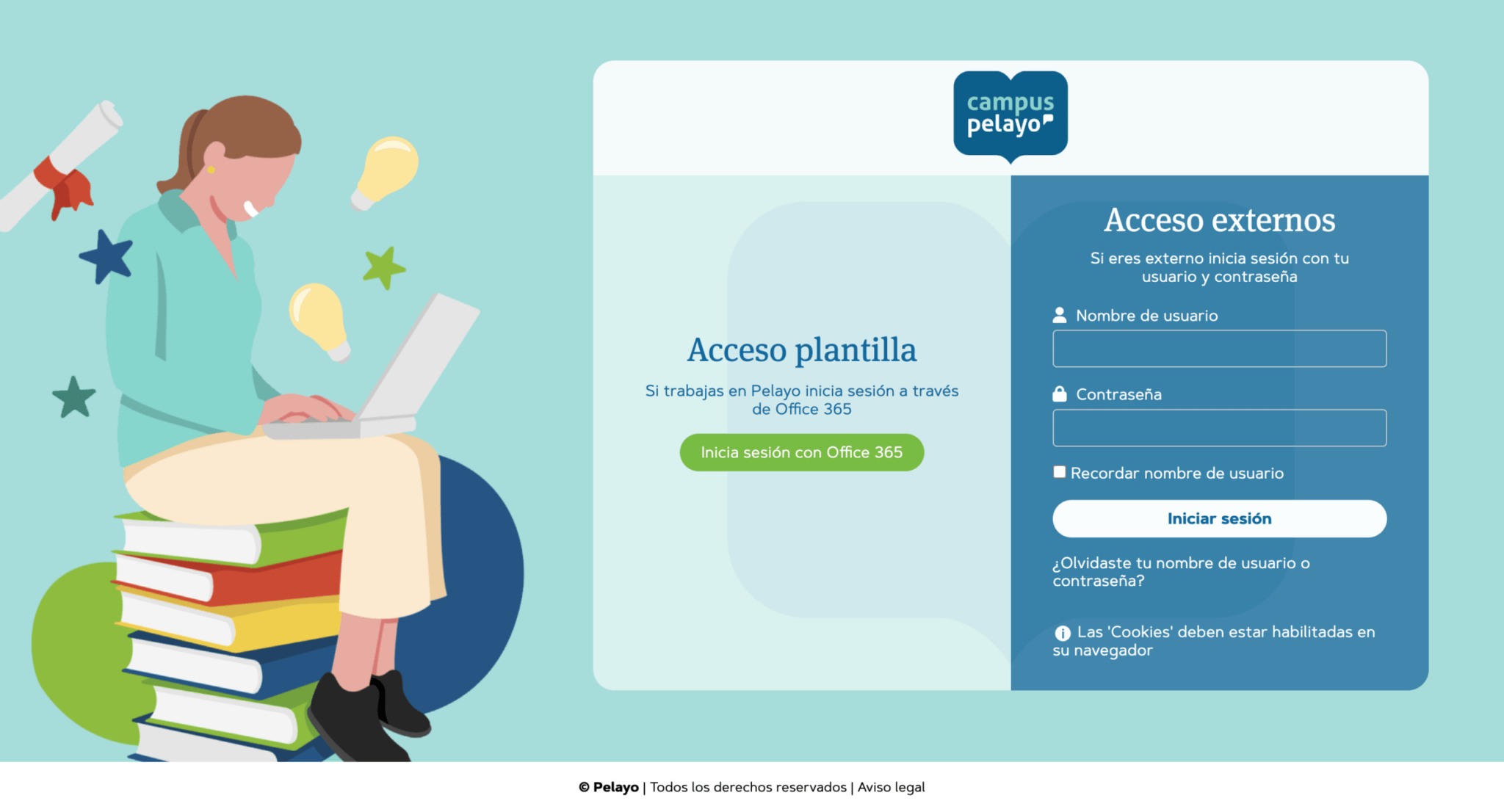
Pelayo migrated 12,000 historical training records without surrendering continuity. Voluntary course completion rose 45 percent, and every manager adopted the dedicated manager menu. The useful lesson is not “make it colorful.” It is that engagement followed operational coherence: one entrance, relevant paths, trustworthy records, visible progress and badges attached to real milestones.
03 / The business behind the codeOpen source, with a meter running
Totara calls its code base open, but this is not a free community download with a tip jar. Subscribers and authorized partners receive the product code under a commercial agreement, including enterprise extensions. The public GitHub account contains development tooling, examples and upstream forks; the main platform travels through Totara’s own repository. Customers are buying rights, maintenance and a release stream, then usually buying delivery around them.
The economic unit is therefore a stack: subscription plus implementation, hosting, support, integrations, migration, upgrades and any bespoke feature work. Totara itself does not display one universal price. Public partner schedules show user-banded subscriptions, while a UK government marketplace listing from Think Learning spans roughly £10,000 to £145,490 per instance per year. That range is not a Totara price card; it is a useful warning against treating the license as the whole bill.
The number on the invoice has layers
Subscription + implementation + hosting + support + integrations + customization + internal ownership
A small team wanting an instant, standardized LMS may find the machinery excessive. The value appears when complexity is real, budgeted and owned by people who can govern change.
For most of its life, Totara distributed through partners. More than 75 certified firms now provide local sales and technical work. This gave a Wellington-born company reach without planting a consulting office in every country. It also means experience can vary by implementer. The clever procurement question is not only “Does Totara do this?” but “Who will configure it, how much custom code will we carry, and what happens at the next upgrade?”
The company itself reported about $30 million in annual recurring revenue before buying two longtime UK partners, Think Learning and Chambury Learning, in November 2024. Those businesses brought around 70 employees, 130 customers and roughly $10 million in revenue. Totara said the deal would move it closer to end customers - a revealing change of mind for a company whose route outside North America had historically been almost entirely indirect. Partners still matter; direct customer knowledge now matters enough to acquire.
04 / Ownership changes, product continuityFrom three founders to two buyouts
The ownership story has been busier than the product’s dependable demeanor suggests. Five V Capital agreed to take a majority interest in 2020 as Totara prepared the Talent Experience Platform, which joined formal learning, social discovery and performance management. In 2023, London growth investor Tenzing acquired the group for an undisclosed sum. The following year Dave Cruickshank replaced Mark Ash as chief executive and moved into Totara’s new London office.
The suite has also tightened. Collaborative and social-learning features that once justified a separate Engage identity moved into the core LMS with version 19. Version 20 concentrated on multi-year recertification, skill proficiency, content discovery, reporting and workflow. AI arrived, but as four optional helpers rather than a floating oracle. That ordering says something sensible about the customer: the compliance report still has to work on Monday morning.
Security credentials have followed the same market. Totara achieved ISO/IEC 27001:2022 certification in December 2025 across the design, development, delivery and support of its suite and cloud services. TotaraGov is FedRAMP authorized for US agencies. These badges do not make a deployment secure by themselves. They do shorten a conversation with buyers whose risk teams can kill a learning project before a learner sees it.
05 / The reusable bitCopy the operating idea, not the feature list
Totara’s transferable playbook is not “fork Moodle.” It is to find the repeated refusal in a broad platform, package the missing domain logic, and recruit specialists who already possess the customer relationship. The partners turn general software into local outcomes; the subscription funds maintenance and shared improvements; the modifiable core keeps the strangest requirements inside the tent.
Five moves worth stealing
- Sell into the awkward edge cases where standard software creates manual work.
- Treat implementers as distribution, product feedback and customer success - then certify them.
- Measure the queue that disappears: support tickets, missed sessions, expired certificates and admin hours.
- Separate shared product improvements from customer-specific code, or upgrades become archaeology.
- Let new technology earn its place inside an existing workflow. AI course text is useful; an audit-ready renewal path is indispensable.
There are conditions. An organization without complex audiences, integrations or compliance may be happier with a simpler SaaS tool. A buyer unwilling to fund implementation and internal product ownership will underuse the flexibility. A team that customizes every screen can create an expensive private fork in spirit, even if the code still receives updates. And a weak partner can turn freedom into ambiguity. Open code removes a vendor boundary; it does not remove decisions.
That is why Totara’s most persuasive achievement is not a feature or an award. It is that the company has kept a single idea legible through new products, private-equity owners, acquisitions and an AI cycle: complex employers should be able to shape the system that certifies their people. The pitch sounds almost anti-software. The organization, not the application, gets the final word.