employee-training
(16)
San Bernardino County PERC and the education of a bureaucracy
A class can teach someone the rules. San Bernardino County’s training center has a harder assignment: helping employees use them when they get back to work.
MetaCompliance wants to change what happens after you click
Security training is easy to count. Safer habits are harder. MetaCompliance is building a business around that gap, combining phishing rehearsals, policy paperwork and lessons triggered by real-world exposure.

Totara Made ‘No’ the Most Expensive Word in Workplace Learning
Born from Moodle’s workplace blind spots, Totara bet that complex employers would pay for the freedom to alter the machinery. Fifteen years later, 1,500 organizations use that flexibility to train 21 million people - and the dullest parts of corporate learning have become its best argument.

Your Rough Screen Recording Just Got a Production Crew
Trupeer cleans the ums, writes the guide, voices the video, and follows the clicks. The clever part is not the polish - it is turning one hurried walkthrough into knowledge that people can watch, read, search, and hand to an AI agent.

LRN's $1.4 Million Case for Making Compliance Training Less Boring
LRN spent three decades turning the corporate training everyone dreads into a source of behavioral data. Its best proof is not a lofty ethics slogan - it is 19,000 hours returned to one client's workforce.
The $200-a-Month Wedge That Turned Grace Hill Into Property Management’s Operating Layer
Grace Hill began with a stubbornly specific problem: training apartment teams without pulling them off the property. Twenty-eight years and a string of acquisitions later, it is trying to connect what employees learn with what residents actually experience.
WalkMe Sold the Cure for Software Nobody Uses - Then SAP Paid $1.5 Billion for It
WalkMe built a business around an awkward corporate truth: buying software is easy, but getting people to use it is expensive. Its journey from browser prompts to SAP's $1.5 billion adoption layer offers a practical playbook - and a warning - for anyone selling change to large companies.

Guideless Raised €1 Million to Kill the Tutorial Nobody Updates - Here’s the Playbook Any SaaS Team Can Copy
Every software company has a graveyard of stale walkthroughs. Guideless thinks the better business is not recording another video - it is turning each workflow into editable operational memory.

The 25-Year-Old LMS Betting Its Second Act on AI
Intellum spent a quarter-century turning corporate training into customer education. Now it is rebuilding the learning stack around AI agents - while trying to prove that a course can move revenue, not just completion rates.

ScreenSteps
Stop slowing employees down with outdated docs and scattered knowledge. Give them trusted, step-by-step guidance exactly when and where they need it.

Whatfix
The company nobody notices - because if Whatfix is doing its job, you never read the manual. Inside the Bengaluru-and-San Jose startup teaching a billion-dollar software stack to explain itself.

Inline Manual
Create walkthroughs, tooltips, checklists, announcements, and in-app help that improve onboarding, adoption, and support.

OpenSesame
OpenSesame is a Portland, Oregon-based e-learning company that runs an online marketplace of curated corporate training courses. Founded in 2011, it aggregates content from hundreds of publishers into a single catalog of tens of thousands of courses spanning business skills, compliance, safety, leadership, technology and wellness, and integrates that content directly into a customer's existing learning management system. The company sells to enterprise and mid-market employers who want to buy, curate and deliver workforce training without stitching together dozens of separate vendors.

Jericho Security
Jericho Security is a New York-based cybersecurity company that uses generative AI to defend organizations against AI-powered attacks. Its platform runs hyper-realistic, AI-generated phishing, voice-clone, and deepfake simulations to train employees, then measures human risk through a dashboard of analytics and KPIs. Founded in 2023, the company pits an AI 'red team' against an AI 'blue team' to find and close the gaps attackers now exploit at machine speed - an approach it sums up as fighting AI with AI.

Derek Belch
Derek Belch is the founder and CEO of STRIVR, the enterprise virtual reality training company he spun out of Stanford's Virtual Human Interaction Lab in 2014. A former Stanford kicker turned graduate assistant football coach, Belch built a VR prototype to give quarterbacks mental reps off the field, then pivoted the company from sports to the Fortune 1000. STRIVR has since trained more than a million workers in VR for clients including Walmart, Verizon, Bank of America and the NFL, and has raised roughly $87.5 million through a Series B.
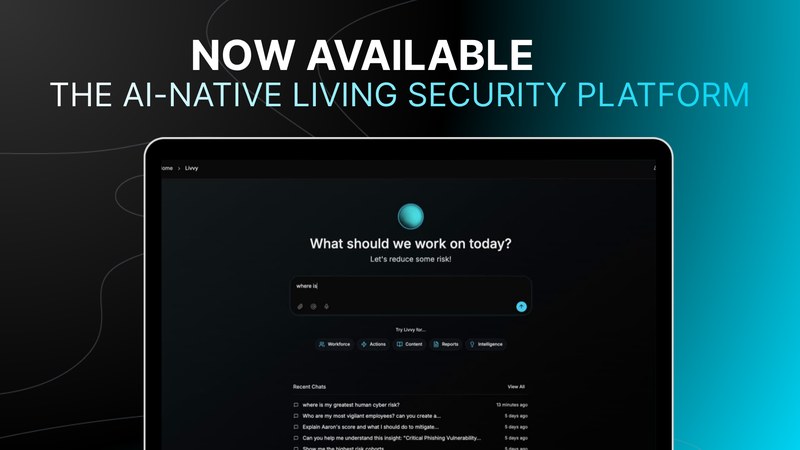
Living Security
Living Security is an Austin-based cybersecurity company that pioneered Human Risk Management (HRM), moving organizations beyond check-the-box compliance training toward measurable behavior change. Its AI-native Unify platform correlates behavioral, identity, and threat signals to find the small share of employees who drive most of an organization's risk, then guides targeted interventions. Founded in 2017 by Ashley and Drew Rose, the company serves more than 100 enterprises including Fortune 500 names, and was named a Leader in the 2024 Forrester Wave for Human Risk Management Solutions.