The person selling a GoPro camera may never appear in GoPro’s employee directory. They might work for a retailer, speak another language and need an answer about an older accessory while a customer waits. A training program organized around the company’s payroll would miss much of the action. Continu’s appeal begins in that gap between the organization chart and the people who actually need to know something.
- One platform for employee, customer and partner learning.
- Audience rules and automations decide who receives what.
- Branded portals and independent brand instances extend its reach.
- Sales-quoted subscriptions; implementation adds 10% of first-year contract value.
A classroom with very untidy boundaries
In Continu’s published GoPro story, training reaches athletes, influencers, agencies, retail partners and internal teams. GoPro consolidated these audiences, built localized learning tracks, simplified retailer registration and made current and legacy product knowledge available on demand. The case study describes participation across 186 retailers. This is less like running a school than maintaining a useful public square with carefully controlled entrances.
The reported payoff includes more than $1 million in annual productivity savings. That is a customer-story figure, rather than a promise attached to a subscription. The transferable idea is more modest: put the information in one maintained place, then tailor the route to it. A retail associate and an athlete can share a product library without needing the same curriculum.
The machinery behind a relevant lesson
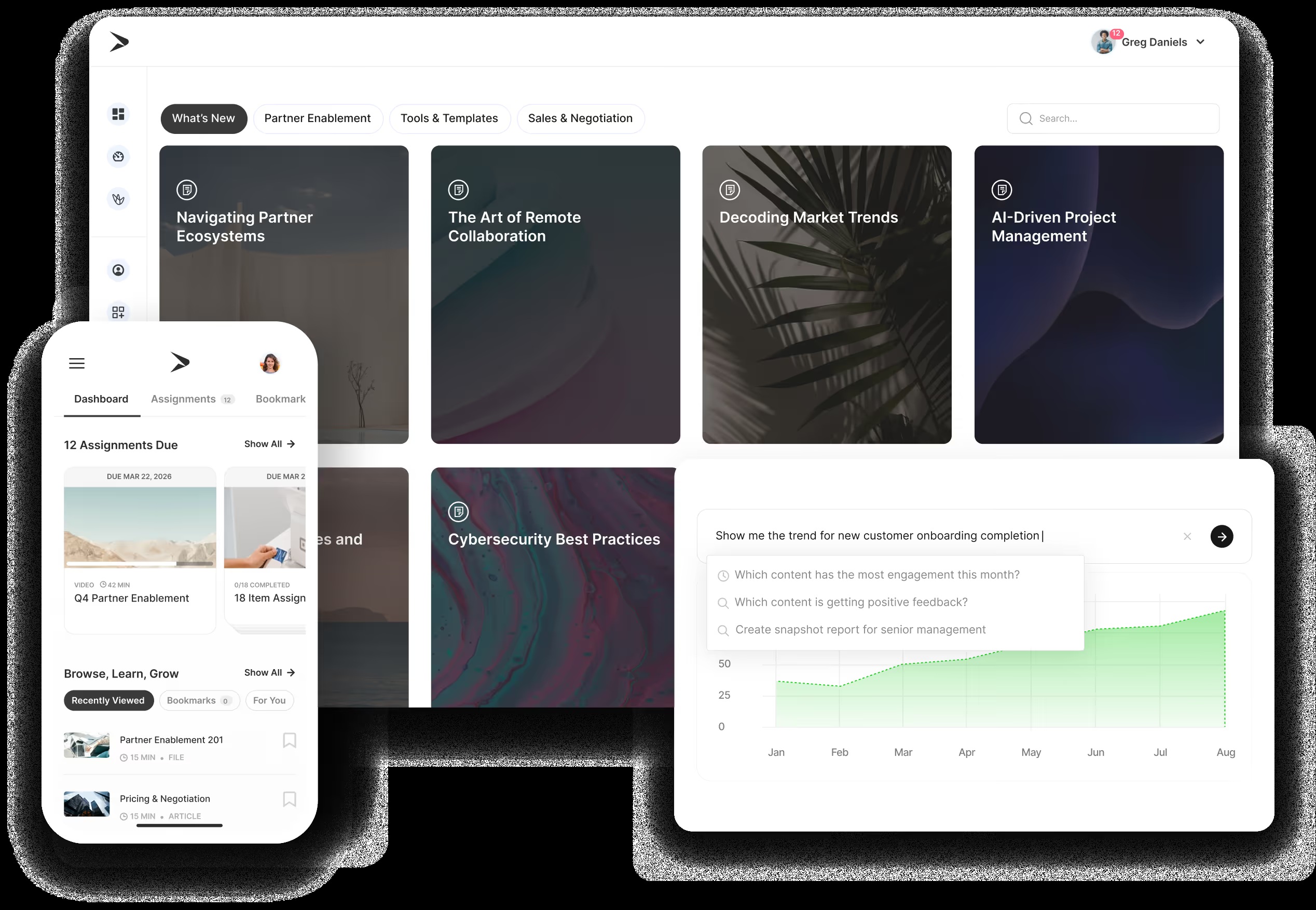
Continu is enterprise subscription software for creating, delivering and measuring learning. Its help center describes six connected objects: users, segmentation, content, assignments, automations and completion data. That inventory tells you where the expertise lies. The company is supplying the machinery that distributes knowledge, keeps track of participation and helps administrators manage programs across audiences.
Smart Segmentation builds dynamic groups from attributes such as role, region, partner tier or signup date. Rules can combine conditions, preview the resulting audience and feed assignments or reminders. When the underlying data changes, the audience changes. The practical attraction is obvious: the administrator need not rebuild a mailing list every time someone joins, moves or qualifies for a different program.
Content authoring, assessments, workshops and learning tracks supply the familiar classroom functions. Integrations connect learning to systems already running the business: Workday can import user data, Slack supports workplace communication, and Zoom supports live sessions. These connections matter because the training system rarely gets to be the only system.
Sometimes the course needs a calendar
Upwork’s published case study offers a less glamorous, more useful example. Its old LMS struggled with segmentation and an equitable experience for a hybrid workforce. During a two-month Continu deployment, staffing changes and external technical issues forced a reset of the implementation plan. The team revisited its data flow with customer-success support.
“Our previous LMS was just binary”Dana Whiteaker, Upwork
Later, the team changed its message to managers: help people allocate time for training. The story reports on-time compliance rising from an estimated 65% to 80%. Software supplied the reminders and targeting; managers supplied something software cannot manufacture, time. Anyone running a training program can copy that question before buying anything: have we assigned the work without making room to do it?
A 15 percentage-point rise. Before figure estimated in the customer story; no causal experiment claimed.
An answer without another login
The current AI suite brings another route into that library. Eddy, Continu’s conversational learning agent, retrieves answers from training content inside Slack, Microsoft Teams or SMS. Other tools assist with outlines, captions, workshop summaries and learning recommendations. Continu Insights lets administrators ask questions about learning data rather than assembling every report manually.
The sensible attraction here is convenience. A person with a specific question may need a specific answer more than a course enrollment. But retrieval makes the quality of the library consequential. An organization still needs accurate material, sensible access rules and someone responsible for updates. Faster access to a neglected handbook merely helps the handbook spread its mistakes with greater efficiency.
Head office meets the independent-minded subsidiary
Continu’s Extend product gives external learners branded portals with their own content and user management. Hubs addresses a different organizational problem: several companies or brands running learning independently. Each gets a full instance, including local administration, integrations and reporting; a parent hub provides oversight and can distribute shared content.
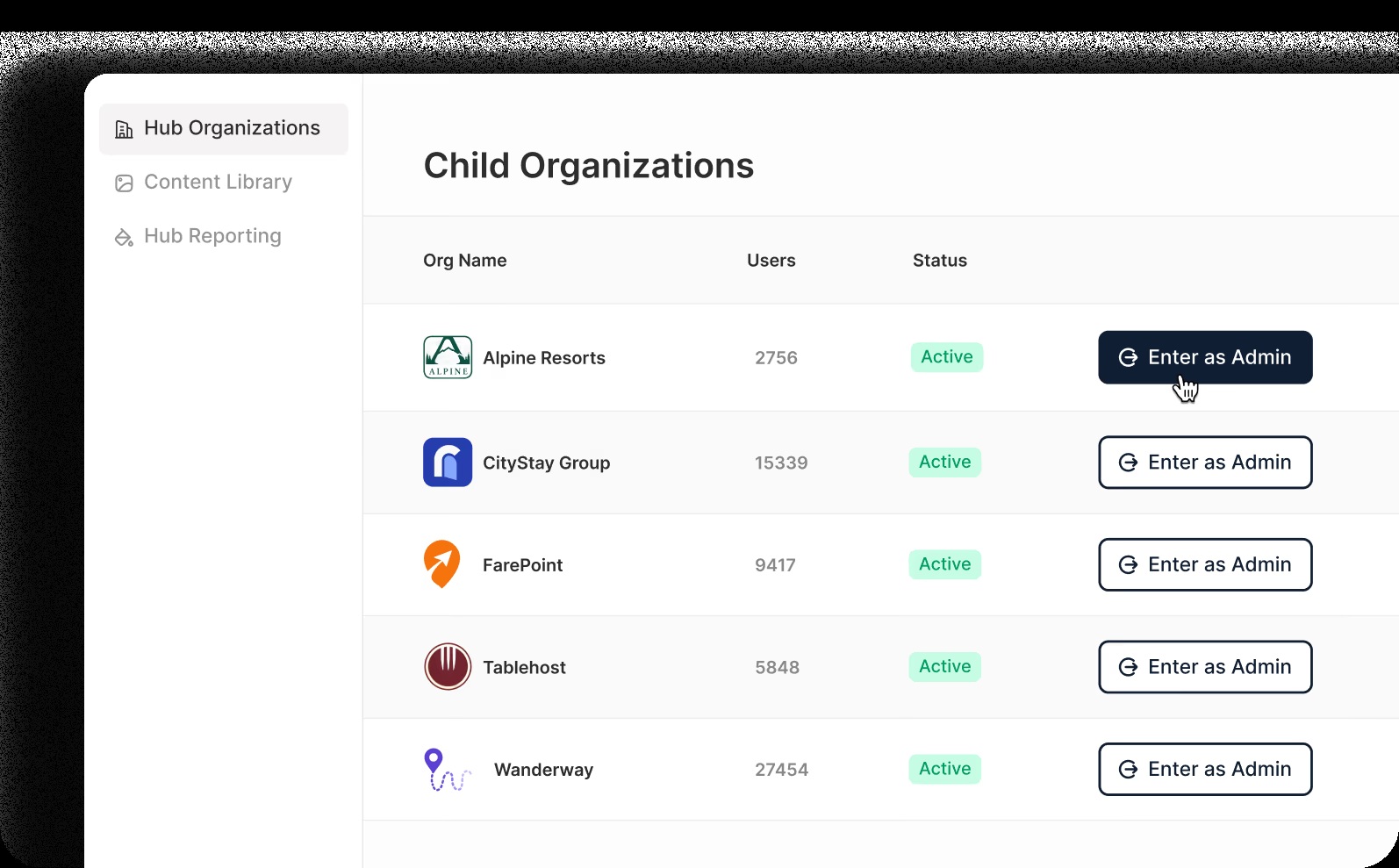
That distinction helps locate Continu in a crowded market alongside Docebo, LearnUpon, Absorb, 360Learning and Cornerstone. Its case rests on combining audience management, external education and everyday access. Those needs are not exclusive to Continu. Buyers should examine the proposed configuration: who controls content, which audiences share it and how reporting crosses organizational boundaries.
The invoice includes the work of getting started

Scott Burgess launched Continu in December 2012 after working across marketing, consulting and technology at CreateOne. The company describes itself as remote-first. In January 2022 it announced a $13.5 million Series A led by Five Elms Capital, with existing investors participating. The financing supported team and product expansion.
Today’s plans divide customers by monthly active users, with additional capabilities at Professional and Enterprise levels. Subscription fees require a sales conversation. The published implementation charge is 10% of the first-year contract value, and the pricing page recommends allowing 60 days for setup. For a buyer, configuration and administrator attention belong beside the subscription in the budget.
A small team seeking only a simple course shelf may find this breadth unnecessary. A complex business with unreliable learner data will have groundwork to do. Continu becomes interesting when the audience is messy, the knowledge is shared and someone will maintain both. Its useful ambition is to make that work ordinary enough that learning can get on with its job.