Consider the peculiar moment when a good employee suddenly becomes somebody’s boss. Yesterday, competence meant doing the work. Today, it means explaining the work, correcting it and persuading other people to care. The promotion arrives immediately. The skills may take longer. That gap is where SkillPath does business. The unusual part comes afterward: the training provider’s excess earnings support students at Graceland University. A lesson for one generation helps another afford its education.
- Practical workplace learning, from Excel to difficult conversations.
- Public courses, annual passes and customized team programs.
- A nonprofit model that sends excess earnings toward students.
Two classrooms. One business.
SkillPath traces its beginnings to 1989. Co-founders Denise Dudley and Jerry Brown built a workplace training business; in 1995, Graceland acquired it. The relationship put a commercial operation inside an educational purpose. SkillPath could charge employers for useful instruction while helping finance opportunities for university students.
There is an important accounting distinction here. SkillPath says it contributes 100 percent of excess earnings to support Graceland students. That means the money left after operating costs. An instructor still needs paying. A course still needs developing. A nonprofit training company still has to run a business.
The university connection eventually reached the curriculum itself. In April 2022, the two organizations launched online certificates in leadership, Microsoft Excel and HR management. SkillPath’s instructional designers researched and drafted the materials. Graceland faculty reviewed them, and the university’s Executive Council approved the programs. Ownership had become a division of teaching labor.
“Learning has to be regular and convenient.”
Michele Markey, then SkillPath CEO, 2022
There is a small, revealing benefit for the university’s own graduates: Graceland alumni may register for one free SkillPath or National Seminars training session each year. The relationship follows people out of college and back into the workplace. Education continues after the degree is framed.
The seminar had a geography problem
For years, practical training came with an impractical condition: the class had to reach your city. In SkillPath’s own retrospective, someone needing a pivot-table lesson or help managing a difficult employee might wait weeks or months for the right seminar. The content could be relevant. The timetable could be ridiculous.
SkillPath says it moved its business online in March 2020. Changing the venue was only part of the job. Facilitators learned to use polls, annotation and breakout rooms to hold attention. Self-paced courses and shorter lessons widened the options for people who could not surrender three or six hours to a scheduled session.
The lesson for other businesses is a useful one: examine the inconvenience surrounding the product. A customer may want the instruction and still be unable to attend. Offering different durations and delivery methods changes who can buy. It also creates a harder teaching problem: getting a distracted person to participate from a laptop.
The price of showing up
The current individual offer makes that flexibility concrete. SkillPath Unlimited lists an annual digital pass at $249. Unlimited + LIVE costs $499 and adds eligible instructor-led virtual events and broadcast webinars. The live-event inclusion has a boundary: events must be priced at $399 or less. These are individual subscriptions, with access that cannot be shared.
Access is the easy number to measure. Use is the consequential one. As an illustrative calculation, a $249 pass used twelve times costs $20.75 per session; used once, it costs $249. Neither figure measures learning. Both explain why the buying decision should begin with a calendar and a specific problem to solve.
For someone shopping for a first course, the subjects are reassuringly recognizable. The group catalog includes coaching and teambuilding, business writing, project management and customer service. It also lists AI for Managers and Generative AI for Excel Power Users. The workplace changes; the buying impulse stays familiar: there is something I need to do, and I would like help doing it.
Sometimes the customer already owns the classroom
Employers have another choice. SkillPath can deliver tailored group training onsite or virtually, with coaching available for individuals and teams. Its published testimonials include GlaxoSmithKline, the American Diabetes Association and Princeton University Health Services. The audience extends across corporate, government and nonprofit work, where the same management problem can wear very different uniforms.
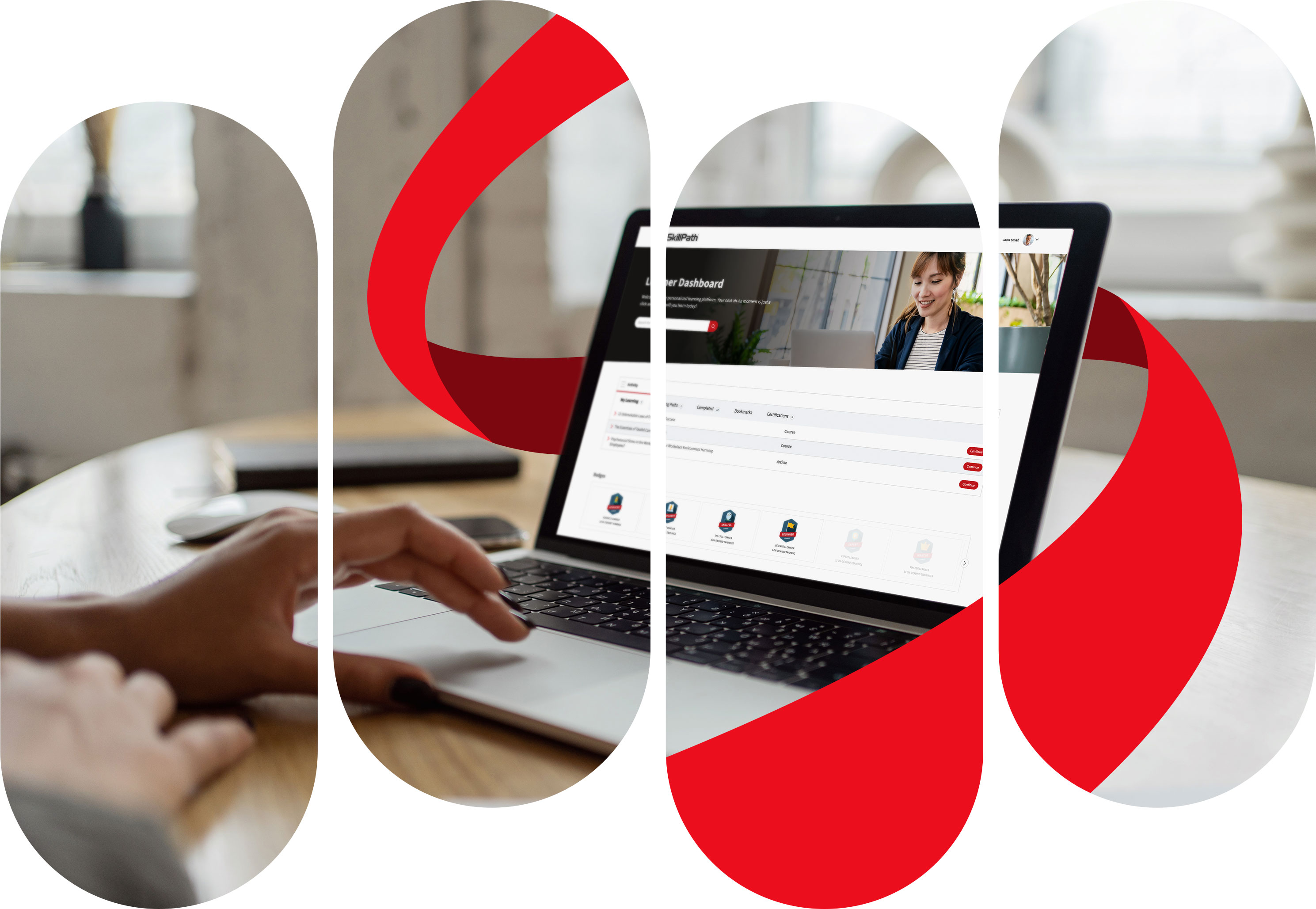
For organizations wanting oversight, the Learning Experience Platform offers assignments, learner dashboards, reporting and company branding. The enterprise version starts at twenty learners and requires a quote. An employer with an existing learning management system can instead license digital content. SkillPath also supplies facilitator kits with guides, handouts and slides for internal instructors.
That gives SkillPath several places in a training budget: visiting instructor, course library, platform provider or curriculum supplier. The distinction matters. A company that already has software may need lessons. A company with lessons may need someone who can teach them.
The leadership offering makes the approach particularly clear. A suite highlighted in September 2024 separates managing yourself, developing other people and leading the organization. Those are different assignments. Self-awareness is useful; it does not automatically teach someone to manage change or set strategy. Organizing instruction around responsibility gives a buyer something more concrete than a broad promise to improve leadership.
A certificate is a beginning
SkillPath sits between familiar alternatives: providers such as the American Management Association and FranklinCovey for facilitated development, and libraries such as LinkedIn Learning and Udemy Business for digital study. Its particular proposition combines live instruction, self-paced material and customization with university-linked nonprofit ownership. The combination deserves consideration; the best choice still depends on the learner’s task.

Current CEO Brian Morris’s public writing focuses on supporting middle managers. It is a fitting concern for this business: people asked to translate organizational ambitions into daily work also need instruction themselves. The buyer and the learner may be the same overextended person.
There are sensible limits. Graceland’s professional certificates are non-degree programs. Continuing education eligibility depends on the course and professional body. A subscription will not reserve learning time for you. And a completion badge cannot establish that a manager now gives clearer feedback. Those are reasons to define success before registering.
Start with one observable task: a cleaner spreadsheet, a better delegation conversation, a meeting that ends with decisions. Choose the course and format around it. Then return to the task and see what changed. SkillPath’s scholarship model gives the purchase a second purpose. Its first purpose remains wonderfully ordinary: making tomorrow’s work a little less difficult.
Keep learning
Courses, company updates and a conversation with co-founder Denise Dudley.