Alice Chesley-Akhtar had a biology degree and plenty of experience helping people learn. She had written an agriculture curriculum in Colorado, managed a biochemistry lab in North Carolina, and moved into mentoring AmeriCorps VISTA members. What she wanted next was a clearer understanding of how nonprofits actually worked. In March 2026, she became the Nonprofit Leadership Alliance’s 13,000th Certified Nonprofit Professional.
- A nonprofit that prepares the people running other nonprofits.
- CNP credentials for individuals; Leaderosity training for teams.
- Professional routes cost $950 or $1,950, depending on experience and format.
Her story makes the Alliance’s purpose unusually easy to grasp. Experience can arrive in pieces: a service year, a project, a supervisor’s advice. A credential gathers those pieces into a framework. For someone already doing consequential work, the missing ingredient may be a map of the organization around them.
A classroom built for the people behind the cause
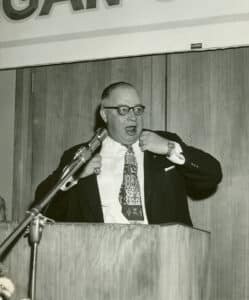
The Alliance began in 1948 as American Humanics, founded by H. Roe Bartle to recruit and train college students for nonprofit careers. Its first students graduated from Missouri Valley College in 1952. Bartle later served as Kansas City’s mayor. Long before today’s online learning platforms, his project connected education with the practical business of running service organizations.
That college connection remains. Students at partner campuses can combine nonprofit coursework with the CNP pathway; students elsewhere can enroll through a collegiate track. The listed enrollment fees are $150 at partner campuses and $325 through the broader collegiate route. Those are program enrollment prices, separate from college tuition. The credential supplements an education rather than replacing a degree.
The bigger change came when the Alliance widened access for people already working. It acquired Leaderosity and developed an online route for in-career professionals. The practical consequence matters more than the technology: a nonprofit employee could train without enrolling at a partner college. The institution began meeting working adults where their careers had already taken them.
Two routes. Two very different calendars.
For professionals, the choice starts with how much structure they need. The $1,950 Professional Track runs for six months with a facilitator. It includes six courses, applied projects, course materials, and an Elevate conference ticket. The Alliance says past learners typically spend three to five hours a week on the work. That is a meaningful appointment with the calendar.
The $950 Accelerated Professional Track is independent study for people with at least eight years of nonprofit experience. Its timed, 100-question exam requires a 76 percent passing score. The trade is straightforward: less scheduled instruction and a lower price, with more responsibility placed on the learner’s existing knowledge and self-direction.
Across its pathways, the Alliance organizes preparation around nonprofit knowledge, professional experience, volunteer service, leadership development, and education. Its ten core competencies give the credential a sector-specific frame. Learners can use CNP Central to track requirements and connect with others. The CNP itself does not expire. That makes the distinction between earning the qualification and continuing to learn especially important.
Six months · cohort learning
Self-study · 8+ years of experience
The employer becomes the classroom
An individual credential is only half the proposition. Leaderosity also serves organizations that need to train staff, volunteers, members, or boards. Its suite combines an on-demand course library, online communities, virtual events, and a customizable learning management system. For an employer, the attraction is the combination of nonprofit subject matter and a place to deliver it.
Make-A-Wish America supplies a concrete example. In a published testimonial, its HR director Doug Klein describes a customized CNP cohort in which emerging leaders consider scenarios from their own organization. Instead of asking employees to translate every lesson back to work alone, the employer brings its own questions into the course.
Leaderosity Learning offers branded learning paths, administrative reporting, discussion boards, and digital certificates. Organizations can also buy instructional design and content development help. That places the Alliance between a training provider and a learning platform vendor. A general course marketplace supplies lessons; an internal learning system supplies delivery. The Alliance’s pitch joins those functions around social-sector work.
“It’s the right thing to do to continue to develop our employees”Doug Klein · Make-A-Wish America
Published Alliance customer testimonial
A nonprofit with a price list
The business model mixes fees for credentials and training with charitable support. The Alliance says donations bridge the gap between service fees and operating expenses and help fund scholarships. It is a 501(c)(3) organization selling professional development, which gives it a familiar nonprofit balancing act: charge for a useful service while keeping access within reach.
Its Advanced Certified Nonprofit Professional credential extends that relationship. For existing CNPs who meet the experience requirements, the published price is $350. Unlike the lifelong CNP, the advanced credential renews every three years; the standard renewal fee is $200. It recognizes ongoing practice and development rather than treating one completed program as the end of a career.
The relevant alternatives depend on the job to be done: university nonprofit-management study, specialist fundraising credentials, individual online courses, or an employer’s own training program. The Alliance’s distinctive combination is a common credential, applied experience, university relationships, and employer-based learning. A buyer should compare that combination with the particular skill gap they need to close.
CNP credentials awarded.
Reported by the Alliance, October 2026.
What a training budget can actually buy
The simplest idea to copy is the applied assignment. Choose a live organizational problem, learn the relevant method, and produce something colleagues can use. The Make-A-Wish example suggests another: let coworkers learn together using shared cases. Both approaches create a shorter distance between a lesson and a useful conversation at work.
There are limits. A self-study route assumes substantial prior experience. A facilitated course still needs protected time, and a credential cannot promise a promotion or repair an organization that gives employees no opportunity to use what they learn. The sensible purchase begins with a specific need: management knowledge, a recognized signal, a peer network, or training infrastructure.
Pherabe Kolb became president and CEO in April 2026, bringing experience at the Aspen Institute and Smithsonian Institution. The Alliance now reports more than 13,181 CNP credentials awarded, with professionals across all 50 states and more than a dozen countries. Its underlying wager remains refreshingly practical. Organizations ask people to improve the world. Someone should help those people get better at the work.