A prison tablet has a peculiar design brief. It must let a person learn about the world while preventing that person from wandering around the internet. It has to satisfy a teacher, a security officer and a procurement department. Orijin has built a business around that awkward little rectangle. Its more interesting invention may be the invoice: the agency pays, and the learner studies free.
- Secure devices carry education, trade skills and reentry programs into prisons, jails and juvenile facilities.
- Government agencies buy the service; incarcerated people and their families are not charged.
- The 2026 Honest Jobs acquisition adds an employment handoff beyond release.
The bill goes to the agency
Consider a wonderfully unromantic document: Maryland’s May 2025 procurement agenda. It lists an Orijin youth-tablet award of $657,199.40 for July 2025 through June 2030. The package covers educational software, a library, rehabilitation and reentry tools. The agency explains the payment arrangement plainly: an annual fee to government, with no burden on youth, relatives or friends. That is one contract, not a price list for every prison. The public record makes the arrangement concrete.
The distinction matters. If your customer buys education, you have a reason to improve education. If a family must keep topping up a balance, access depends on that family’s means. Orijin places the purchasing decision with an institution that has reasons to care about learning, staff time and what happens after release. The incentive is sensible; execution still has to earn it.
July 2025 - June 2030$0 to youth & families
Orijin is a public benefit corporation. It dates its founding to 2014, under the rather bureaucratic name American Prison Data Systems. Co-founders include Christopher Grewe and Arti Finn; Harris Ferrell leads the company as CEO. APDS announced the Orijin name in November 2023. The renaming announcement kept the same mission: preparing justice-impacted people for sustainable employment. A better name is pleasant. A better route to a paycheck is consequential.
A classroom with a locked front door
The hardware is the entrance. Behind it sits a managed learning platform, assessments, individualized pathways and reporting for staff. Academic preparation shares space with employability and personal development. Teachers can deliver content; administrators can track participation. Massachusetts describes a secure internal network with no internet access. The ingenuity lies in getting useful material through a controlled door. Orijin’s government offering combines devices with cloud-based learning and communications.
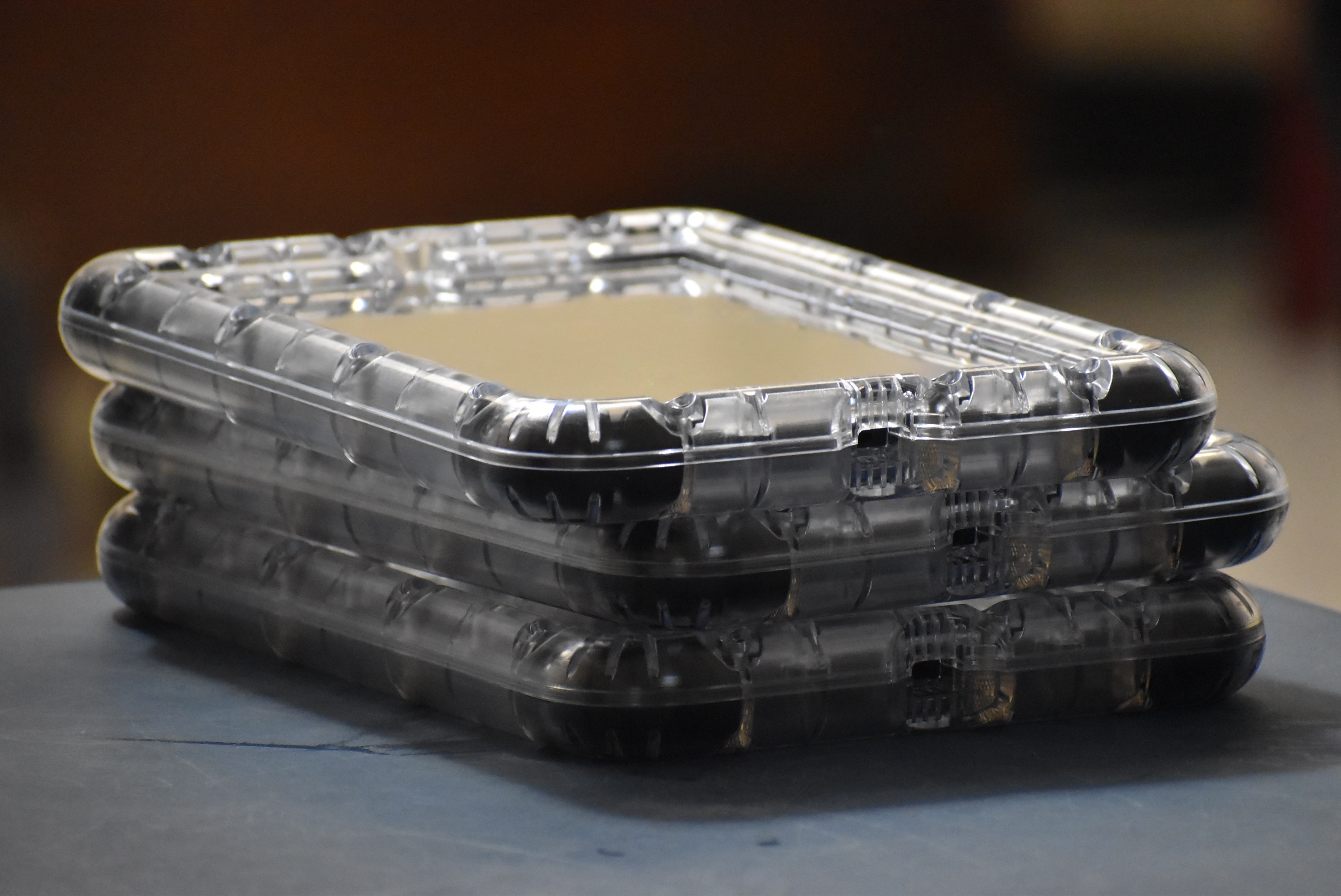
Customers range from county jails to state prison systems and juvenile facilities. North Carolina’s 2024 rollout planned more than 500 devices, with academic, behavioral and career resources available free to youth. Staff highlighted Spanish-language materials. That detail is easy to overlook and difficult to dismiss: a library cannot help much if its reader cannot understand it. North Carolina’s account also describes staff creating their own programming.
Partners supply depth. In March 2025, Interplay Learning expanded its offering to 15 pathways, including HVAC, electrical, plumbing and facilities maintenance. Pre-apprenticeship options connect classroom preparation to trade careers. A tablet course remains preparation for work that ultimately involves actual equipment, supervisors and customers. The partnership gives facilities a practical starting point.
Count the hours. Then ask what happened.
Massachusetts provides a useful window into adoption. In May 2025, its Department of Correction reported more than 330,000 hours of educational, vocational and reentry activity during 2024, with roughly 5,000 people regularly using the devices. Its account draws on an Orijin study and describes a DOC Virtual Education Team developing content with learner input. The state’s review makes educators part of the mechanism.
Reported by Massachusetts DOC in May 2025, drawing on Orijin’s tablet study.
These are measures of use. They do not, by themselves, establish that a device caused a later reduction in recidivism. Learning hours, completed credentials and sustained employment answer different questions. A sensible buyer would want all three, with clear time periods and comparable groups. The attractive statistic should begin the conversation rather than end it. This distinction matters to the person buying a system and to the person using it. A busy dashboard can document activity while leaving the hardest question unanswered: whether someone has a workable next step. The reporting should make that question easier to ask, with enough detail to follow a learner over time.
Security is another purchasing test. Orijin announced completion of a SOC 2 Type 2 audit in May 2025, conducted by Sensiba LLP and covering security, availability and confidentiality controls. The company’s announcement addresses the infrastructure behind the lessons. In this market, dependable access and controlled access have to coexist.
The lesson after release
February 2026 brought two consequential moves. Orijin partnered with Instructure to use Canvas LMS across its correctional network; the announcement described more than 300 facilities in 20 states. The agreement focuses on scalable curriculum delivery. Later that month, Orijin acquired Honest Jobs, a fair-chance employment platform. The first deal strengthens the classroom. The second extends the journey beyond it.

“Reentry success does not start at the prison gate. It starts inside.”
Arti Finn · Co-founder · February 2026
Honest Jobs brought a reported 300,000-plus openings from over 1,500 employers and a directory of reentry services. Orijin announced phased integration during 2026. The acquisition rationale identifies the gap: preparation and employment too often operate in disconnected systems. A course certificate is useful evidence. An employer willing to consider its owner is the next requirement.
- 01Learn insideAcademic foundations
- 02Build skillsTrade & career preparation
- 03Find employersHonest Jobs connections
In March, a Roca partnership added asynchronous Rewire CBT, a non-clinical behavioral-change program. The course lets learners work at their own pace. Together, these additions suggest a company widening its definition of readiness: knowledge, practical skills, behavior and access to opportunity.
A customer can still walk away
The market supplies a corrective. In March 2026, Utah announced a transition from Orijin to ViaPath, citing long-term reliability, expanded programming and communication tools. Its timetable described reduced tablet availability and infrastructure work. Utah’s notice illustrates a buyer weighing a broader service bundle. It supplies no basis for inventing a specific product failure.
For another builder, the useful lesson is concrete: choose a payer whose interests support the user, equip staff to make the product useful, and design the next handoff. The approach depends on agency funding, reliable networks, engaged educators and employers prepared to hire. A prison tablet can carry a lesson. The job is making sure the lesson has somewhere to go.