A 15-minute call from a prison can cost $25. A factory floor can vanish to automation overnight. Zo Orchingwa looked at both numbers and decided they were problems worth a company each.
Emerge Career is the company Zo Orchingwa runs today, and it has a stubborn premise: there is a vast labor pool the rest of the economy has written off, and most of them are one credential away from a paycheck that changes everything. People with criminal records. People living below the poverty line. People that hiring software quietly filters out. Emerge partners with governments to give them cost-free, technology-driven vocational training and then places them into high-paying skilled trades that artificial intelligence is unlikely to swallow.
The trades part is deliberate. While much of the tech industry races to automate knowledge work, Orchingwa points the other direction - toward the welder, the commercial driver, the electrician. Hands-on careers with labor shortages, real wages, and a long runway before any algorithm comes for them. Emerge calls it building toward "AI-proof careers," and the company has been backed by Y Combinator, Alexis Ohanian's 776, the SoftBank Opportunity Fund, Pioneer Ventures, Michael Seibel and Deborah Quazzo.
In 2024 the bet got a marquee customer. Emerge partnered with New York City's Mayor's Office of Criminal Justice to launch Next Mile NYC, a program that gives justice-involved and housing-insecure New Yorkers free vocational training and a direct line into skilled-trade employment. It is the kind of public-private machinery Orchingwa has spent his entire career trying to build - government scale, startup speed.
What makes the model work is the order of operations. Most reentry programs hand someone a certificate and wish them luck. Emerge wires the training directly to an employer network, so the graduation and the job offer arrive close together. The company leans on data-driven insights and program analytics to prove what actually moves the needle - which cohorts complete, which placements stick, which trades pay. For a government writing the check, that measurement is the difference between a feel-good grant and a program that renews. Orchingwa has built his pitch around that distinction.
He runs Emerge alongside co-founder Gabe Saruhashi, who graduated magna cum laude from Yale in computer science and psychology and engineered at Facebook before the two went into business together. It is a familiar pairing - they built Ameelio first, and carried the partnership into the second act. One brings the legal and policy fluency, the other the engineering depth, and both share the conviction that the overlooked labor pool is a feature of bad design, not a fact of nature.
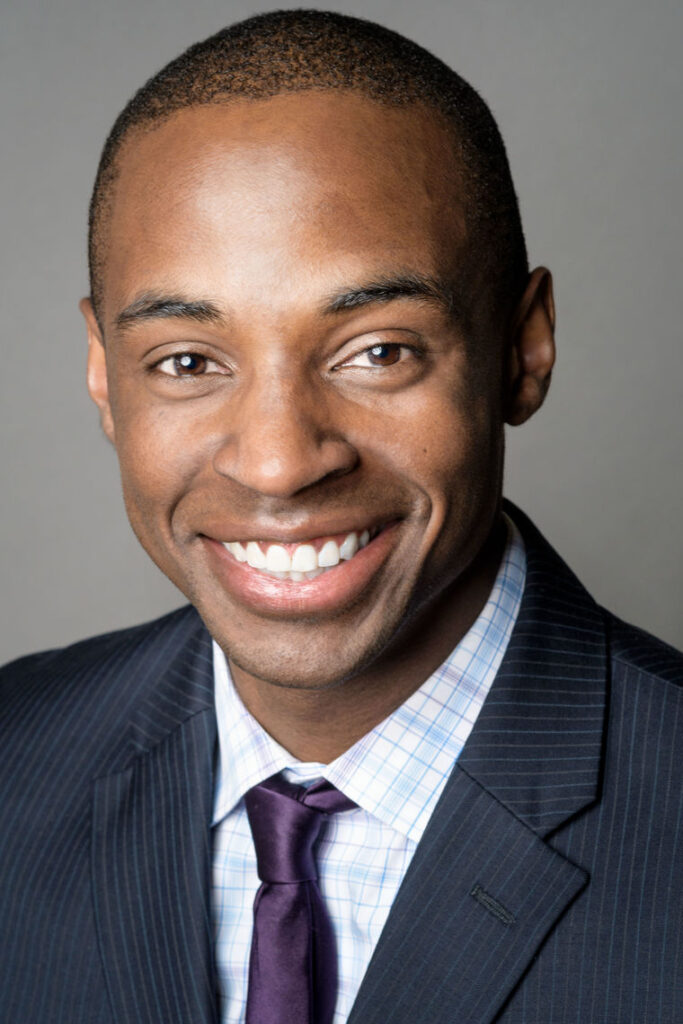
Before Emerge, there was Ameelio. In March 2020, Orchingwa and his co-founder Gabe Saruhashi emptied their savings to launch a technology nonprofit aimed squarely at the prison communications business - a roughly $3 billion industry where a single 15-minute phone call could run a family up to $25. One in three families with an incarcerated loved one falls into debt just trying to stay in touch.
Orchingwa had the research to know why that mattered. Family connection, the data shows, can reduce recidivism by as much as 56 percent. So Ameelio built the unthinkable in that market: free. Free letters, free calls, free educational content flowing between incarcerated people and the world outside. The platform crossed one million users and now operates across dozens of correctional facilities, in state prison systems including Iowa, Colorado and Maine.
The backer list reads like a who's who of people who normally chase returns, not give them away - Jack Dorsey, Vinod Khosla, Reid Hoffman, Brian Acton and Eric Schmidt, alongside the Mellon Foundation and Arnold Ventures. Orchingwa structured Ameelio as a nonprofit on purpose. Some markets, he argues, can't be ethically monetized at venture scale. So he ran it like a startup anyway - lean, growth-obsessed - and simply removed the profit motive from the equation.
The thread runs back further than any company. Orchingwa is Nigerian-American, the child of immigrants, and growing up he watched the criminal justice system take many of his childhood friends. That was not an abstraction studied later in a seminar. It was the neighborhood. The question of why so many people he knew ended up behind bars became the question he organized his education around.
So he chased it through every door that opened. A philosophy degree at Colby College. An MPhil in Criminology at the University of Cambridge as a Gates-Cambridge Scholar, where he examined the history, causes and possible solutions to mass incarceration. Then back across the Atlantic for a JD from Yale Law School and an MBA from Yale School of Management - the law to understand the system, the business training to build alternatives to it. Along the way he was named a Harry S. Truman Scholar and a Paul & Daisy Soros Fellow for New Americans.
One detail that resists the resume: 91 percent of Americans, Orchingwa found in his research, support criminal justice reform. The appetite was there. What was missing was anyone building for the actual carceral experience - the phone calls, the lost contact, the closed doors after release. He decided to be the person who built it.
A JD from Yale Law and an MPhil in criminology gave him the vocabulary of the system he wanted to change. He studied the machinery before trying to retool it.
A Yale MBA and two YC-backed ventures gave him the other half - the ability to ship products, raise capital, and run lean against entrenched incumbents.
For all the gravity of the mission, there is a lighter parallel track. Since his undergraduate years, Orchingwa has been a DJ - and not just for the dorm. He performed semiprofessionally at Cambridge and Yale events, reading a room and timing the next drop while, presumably, the rest of his cohort was buried in case law. It is an unusually useful skill for a founder. Knowing when the energy is about to peak, and what to play next, turns out to translate.
It also says something about how he carries the work. The subject matter - incarceration, poverty, families in debt - is heavy enough to flatten a person. Orchingwa has spent a decade inside it without losing the ability to throw a party. That balance, the rigor and the lightness, is part of why he has been able to recruit serial billionaires to free phone calls and convince city governments to hand reentry programs to a startup.
Put the two companies side by side and the strategy comes into focus. Ameelio keeps people connected while they're inside. Emerge gets them working when they come out. Communication, then credential, then career - a continuous pathway for people the broader economy has trained itself to ignore. Orchingwa's stated aim is to leverage technology so that justice-involved and low-income people can build sustained pathways to reintegration and, in his words, flourishing.
The timing is pointed. As AI reshapes which jobs survive, Orchingwa is deliberately routing his trainees toward the work that endures - the skilled trades, the hands-on careers, the roles with labor shortages instead of layoff risk. It is a contrarian read of the AI moment from someone who has spent his life noticing who gets left behind, and refusing to let that be the end of the sentence.
There is a quiet logic to the whole arc that's easy to miss in the resume. The philosophy degree taught him to ask why. The criminology degree gave him the evidence. The law degree showed him the rules. The business degree handed him the tools. And the DJ years, maybe, taught him timing. Stacked together, they point at a single career-long project: take the population the economy treats as disposable and prove, program by program and placement by placement, that the disposal was a choice. Orchingwa keeps making the other choice.
He has done it without the usual martyr's posture. He recruits billionaires, partners with mayors, and structures nonprofits like startups - then turns around and DJ's the afterparty. The recognition has followed: Fast Company, MIT Technology Review, Fortune's inaugural Founders Forum. But the metric he keeps returning to in interviews is not the award shelf. It is momentum - better products, lower rates, more people connected and credentialed and working. For a founder whose entire thesis is about second chances, the goal has always been less about being seen and more about how many people get to start over.