In 2011, Freddy Vega and Christian Van Der Henst were teaching web design and programming on the internet under a name that sounded like an instruction: Mejorando.la, roughly, “improving it.” Their classroom had no walls. It did, however, have a clock. The earliest classes happened live, and if you missed one, the internet could be as unforgiving as a locked lecture hall.
That inconvenience exposed a more interesting truth. People did not come merely for a video about CSS. They came because somebody was teaching it in their language, with examples that belonged to their professional world, while other ambitious people were learning alongside them. The lesson could be recorded. The sensation of company could not.
The brief, before the lecture
- Platzi sells subscription access to 1,900-plus professional courses and role-based learning paths.
- Its individual plans currently list at $49 monthly or $249 annually; teams and employers buy group or tailored access.
- The company reports more than 6 million learners in 120-plus countries and over 4,000 business customers.
- Its edge is Spanish-first context plus live sessions, projects, events and community around on-demand lessons.
- The model works best for self-directed learners. Access is economical; finishing still requires time and habit.
The first thing to fail was the clock
The original live format created energy and urgency, but it also reproduced a defect of physical education: everyone had to be ready at the same hour. That is a poor fit for the junior developer commuting across Bogotá, the parent studying after dinner in Lima, or the marketer in Mexico City trying to change careers without surrendering a paycheck.
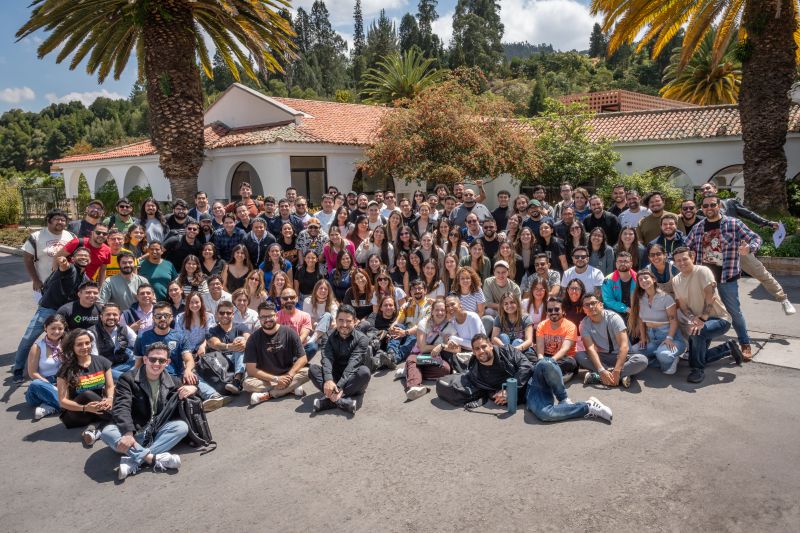
Platzi's answer was not to abandon live teaching. It separated presence from scheduling. Recorded lessons became available on demand; weekly live sessions, forums, study groups and events supplied contact. Vega has compared the logic to an online game. A player enters when time permits and finds others already moving through the same world. This is a better metaphor than the virtual classroom: progress is individual, but the environment is inhabited.
“We are creating a generation of people traumatized by online learning because they think it's Zoom and cohort-based learning.”Freddy Vega, speaking to TechCrunch in 2021
It is a deliberately prickly opinion. Cohorts can create accountability, and some learners need a deadline more than they need freedom. But Platzi recognized that attendance and learning are not synonyms. Its model lets a person arrive late without being behind forever.
A catalog is not a curriculum
Today the platform spans software development, artificial intelligence, data science, cybersecurity, cloud computing, design, marketing, business, English and leadership. The number is impressive - more than 1,900 courses - and also slightly terrifying. A library that large can turn curiosity into indecision.
Platzi therefore organizes lessons into schools and career paths. A learner who wants to become a data analyst does not have to browse every Python course like a tourist in a railway station. The path supplies an order. Projects and quizzes test the journey; certificates mark its stops. The product is less a shelf of videos than a map through them.
For individuals, the bargain is breadth. The monthly Basic plan was listed at $49 during our review. The annual Expert plan was $249 and added the full set of schools, mobile downloads, events and physical certificates for completed professional paths. Duo and group plans spread access among more people. Platzi generally does not sell courses one by one: the recurring subscription is both the commercial engine and an argument that a career is never finished.
The second customer has a spreadsheet
The consumer sees a course. The employer sees a skills gap, fifty unused software licenses and a director asking what the training budget accomplished. Platzi Business is designed for that less romantic audience. It maps skills, assigns routes by role, evaluates English, tracks completion and exports progress. Employers can move licenses rather than paying indefinitely for vacant seats.
The business suite now includes Platzi Learn, which turns a company's neglected manuals and in-house expertise into courses, and an Executive Program for up to 40 leaders focused on putting AI into practice. It is a shrewd expansion. Coursera, Udemy, LinkedIn Learning and regional rivals can all supply libraries. Platzi is trying to become the machinery around the library: diagnosis before training, a path during it and evidence afterward.
Its own headline statistic is that seven in ten learners finish courses assigned by their employer, against one in ten across the wider industry. Treat that as a company-reported measure, not a controlled experiment. Even so, it identifies the correct problem. Publishing another course is easy. Getting somebody to complete Tuesday's module after a long workday is the business.
Sixty-two million dollars for an unfinished job
Platzi joined Y Combinator in 2015, when the awkward old name was retired for one that traveled more easily. Seed capital followed in 2016, then a roughly $6 million Series A. In December 2021, Prosus led a $62 million Series B alongside returning investors including Foundation Capital, Y Combinator and 500 Startups.
The money was intended for more content, a stronger enterprise product and broader access. There was a quiet confession inside that plan. At the time, Vega noted that a $300 annual subscription could equal a month's income for many customers. Online education may be cheaper than a degree, yet “cheaper” is a relative adjective with expensive habits.
The current $249 annual price is lower than that old benchmark, and free introductory classes and occasional open-access Platzi Days widen the door. Still, the model asks for reliable internet, discretionary money and self-command. It is less suitable for someone who needs daily supervision, a regulated academic credential, laboratory equipment or a guaranteed placement. A certificate can signal persistence; it does not manufacture experience.
What changed their mind
The company's changes have been pragmatic rather than theatrical. Live-only teaching gave way to on-demand access because adult schedules are unruly. A very Spanish name gave way to Platzi because ambitions crossed borders. A consumer course catalog grew an enterprise control room because employers needed proof of use. Technical teaching widened into communication and teamwork after learners revealed that code alone does not make a colleague.
One 2021 figure is especially charming: more than 60 percent of students taking a technical class also chose a soft-skills course. The stereotypical coder may wish to be left alone with the machine. The employed coder must eventually explain the machine to another person.
The part worth copying
Do not begin with volume. Begin with the friction that keeps the learner from returning. Let lessons fit around a life, but place people, milestones and useful work along the route. Translate context, not merely words. And if you sell learning to an organization, show what changed after the invoice.
This works when the subject changes quickly, practice can happen on a laptop, teachers know the industry and learners share enough aspiration to help one another. It works badly when a giant catalog substitutes for guidance, when certificates are mistaken for competence, or when flexibility dissolves into “later.” Community is not decorative here. It is the counterweight to postponement.
The knowledge-economy argument
Platzi's mission is more political than its interface. Vega has argued that Latin American economies cannot rely forever on oil, coal and other natural resources. The region's renewable resource is the mind, provided it can reach markets that reward it. Programming, English, data, design and AI are presented not as hobbies but as export infrastructure.
There is plenty of founderly grandeur in that claim. Yet the underlying observation is modest and useful: geography matters less for digital work than it once did, while language, confidence and current skills still matter enormously. Platzi occupies that gap. It is a global platform made specific by Latin American teachers, employers, salaries and ambitions.
A conventional school organizes life around education. Platzi organizes education around life. That does not remove the hard work. It merely stops ringing a bell and pretending everyone has already arrived.