Tom Reno went to see a customer and found an unofficial translator. Vicki Guyette, an operations expert at Premier Build near downtown Atlanta, was using ChatGPT to turn Agave’s technical error messages into language she could act on. The software was doing enough to warrant a workaround. Its explanations apparently needed one too.
For a founder visiting customers, this is useful intelligence with a small sting attached. Someone has found a way to use your product more effectively, and the extra tool is there because yours has made something difficult. Reno took the observation back to Agave. Reducing the friction of resolving errors became a June goal.
That same trip supplied another lesson. At Batson-Cook Construction, Mark Traylor gave him feedback on a feature that displayed live data from connected systems. Then Reno discovered that Traylor had not been using a newer dashboard showing synchronization status and history. He did not know it existed. Somewhere between shipping a feature and getting it used, the message had gone missing.
Reno described seven customer visits across twelve Uber rides around Atlanta. A conference had become a small travelling product review. There was even a golf simulator at Premier Build. The more consequential entertainment was watching his own assumptions meet the people paying for them.
First, find out what refuses to connect
Agave makes connections between construction companies’ financial and project systems. Reno, its co-founder and CEO, works on an awkward boundary: the place where a project manager’s view of a job meets the accounting team’s records. Both can be looking at the same building while their software tells different stories about its costs.
He came to the problem with experience at Barclays Investment Bank, Graphiq and Amazon. His official biography also describes him as a proud Delawarean. The geographical loyalty is a welcome human detail in a career otherwise populated by databases and product names. Today, his professional base is San Francisco.
The founding team’s history reaches back to Graphiq in Santa Barbara in 2014. That business connected information from disparate sources to help people make decisions. An early customer was Procore, giving the team an introduction to construction before they set out to build a company for it. Amazon acquired Graphiq in 2017; Alexa became the next setting for their work.
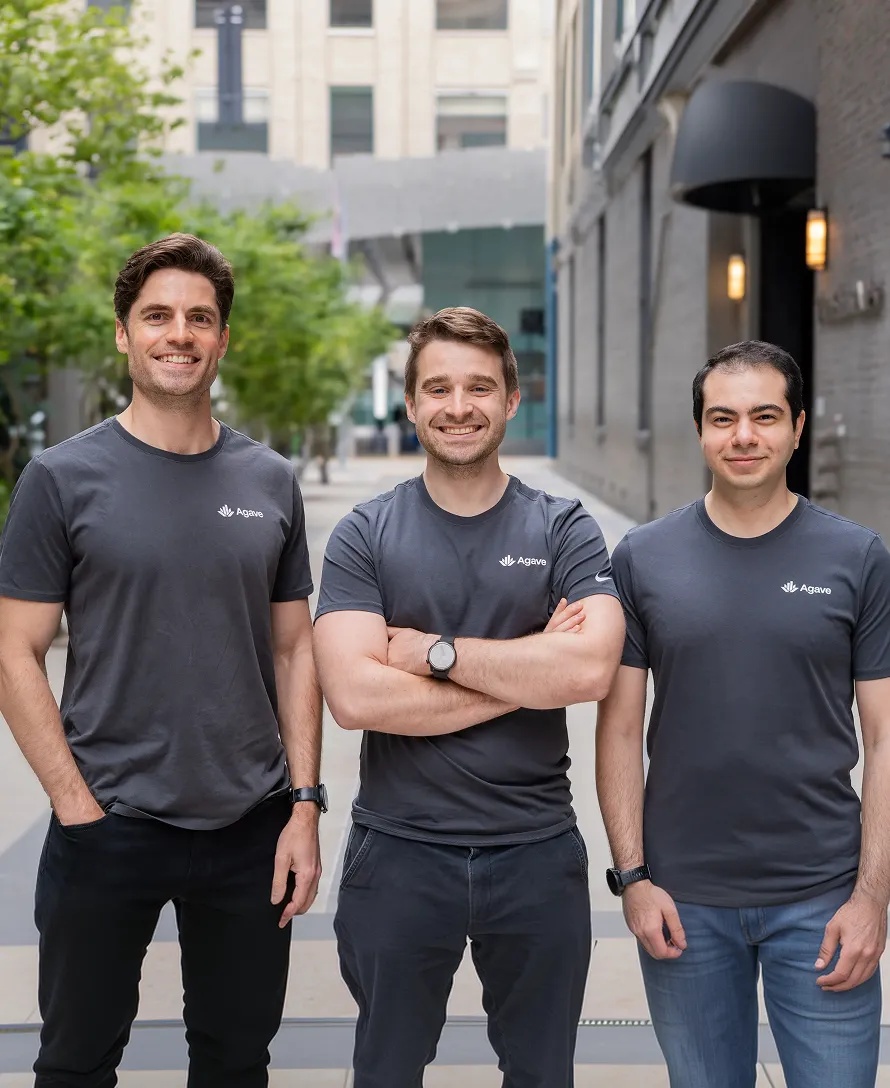
At Amazon Alexa, Reno worked as a technical product manager, leading three engineering teams on data integration and knowledge management tools. He helped develop Alexa’s Knowledge Skills product from the initial pitch through its public launch. That experience put him close to the work of making information accessible through products other people could actually use.
When he appeared on Todd Weyandt’s Bridging the Gap podcast in 2023, the discussion returned to a practical question: which problem are you trying to solve? It is a question that sounds almost too basic for a technology conversation. It becomes rather less basic when a company has several departments, several systems and several incompatible answers.
After Amazon, the founders conducted more than 300 conversations across construction. The recurring complaint was about systems failing to communicate. Agave was founded in 2021 and joined Y Combinator’s Winter 2022 batch. The team had spent years dealing with unruly information. They had now chosen a particular place to keep doing it.
- 2014 · GRAPHIQConnect factsBring disparate information together.
- 2017 · AMAZONMake it usableBuild data and knowledge tools for Alexa.
- 2021 · AGAVEConnect workLink construction’s field and finance systems.
The sales pitch with a pause in it
Listen to Reno explain integrations and he spends a surprising amount of time slowing the conversation down. Even the word itself needs clarification. A scheduled transfer, an automatic update and a manual file exchange can all arrive in a sales conversation wearing the same label. Agreement on the noun can conceal disagreement about the service.
In his 2025 conversation with Eric Thomas on Digital Builder, he urged contractors to establish what they actually needed before choosing tools. Which systems should connect? Who enters the information? Which team owns a particular record? Those questions put organizational decisions ahead of technical installation.
“We recommend narrowing the scope in whatever you do.”
Tom Reno · Digital Builder
There is a modesty to that recommendation. Begin with something people can check, then expand. It offers a way to earn confidence from teams that may already have endured a disappointing software rollout. A working connection that everyone understands has a persuasive advantage over a much larger promise.
This helps explain the kind of founder Reno has become. He repeatedly returns to the work surrounding the product: defining a requirement, getting teams to agree, making the result legible. An integration cannot settle an argument about who should create a purchase order. It can, however, faithfully automate the confusion if nobody settles it first.
In July 2025, he joined a construction finance discussion with a mechanical contractor weighing accounting systems. Reno offered to introduce the contractor to Deltek’s product team to discuss its connectivity plans. The offer was specific: a conversation about the next six to twelve months and the integration use cases being prioritized. It is a small example of the relationship work around the software. Sometimes moving a decision forward means connecting two people who should be talking.
The document before the decision
Inside Agave, Reno describes a similar appetite for clarity. Major decisions begin with a document. Product proposals, hiring plans, pricing changes and customer feedback all receive the treatment. The habit came from the founders’ years at Amazon, where writing became part of how they learned to think together.
In his account, the document makes assumptions visible and gives colleagues something concrete to examine. Engineers write; product managers write; founders write. Even employee feedback is written down. An idea has to survive being put into sentences before it gets the benefit of everybody nodding at it.
There is a useful connection between that habit and the Atlanta visits. A polished feature can remain undiscovered. A technically correct error message can remain unhelpful. A confidently delivered proposal can remain vague. In each case, the test arrives when another person has to understand what you mean and do something with it.
“At Agave, every major decision starts with a doc.”
Tom Reno · on how the company works
Agave also sends new employees Ray Dalio’s Principles, and its business reviews are open for colleagues to attend. The company’s stated preference is for sharing context widely enough that people can make decisions without constantly appealing upward. For a business built around moving information, keeping it available internally is a fairly sensible house rule.
What customers will pay for
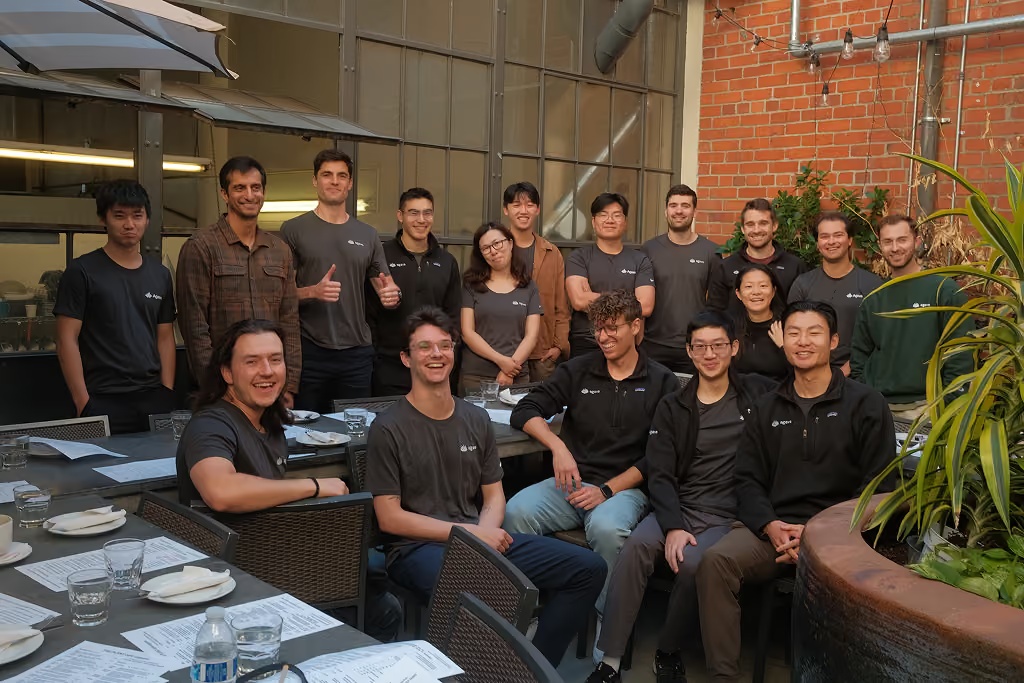
Reno’s recruitment pitch makes another part of the operating method explicit. The team seeks customer commitments to pay for new features before building them. Engineers join customer conversations, and recordings are available across the company. The aim is to keep the roadmap attached to problems customers consider worth solving.
He describes an organization where even recent graduates can deliver substantial features from beginning to end. Monthly goals and weekly reviews give that autonomy a visible frame. Responsibility comes with a shared view of what the business is trying to achieve, rather than a title that neatly contains every possible task.
The commitment to working together is literal. Agave operates in person in San Francisco, five days a week. Its account of the early years acknowledges that this made the first hires harder. Reno argues that proximity produces faster feedback, stronger relationships and more learning through observation. It is a particular choice about how he wants to build a company.
By July 2026, the company was able to put financial results beside those operating preferences. It announced a $15 million Series A led by Accel, with Y Combinator participating again. Agave said it had been profitable for more than two years and served over 500 general and specialty contractors across North America.
LED BY ACCEL
CUSTOMERS
PROFITABILITY
The timing gave Reno a reasonable question to answer: why raise money when the company could already support itself? His answer was speed. Demand for AI products had opened more work than the existing team could deliver quickly. The capital would help expand the team and the range of products.
The old systems get a new assignment
Agave’s first AI product shipped in late 2025, after years spent building connections between construction systems. The sequence matters to Reno’s strategy. A tool handling financial work needs access to the records, an understanding of what they mean, and a reliable way to put the result back.
His company first packaged its connections as a unified API for software vendors. Contractors then wanted to use that machinery directly to keep their own systems synchronized. AI added another assignment to the same underlying work. The connections became useful for doing tasks as well as moving records between applications.
Accel’s Vas Natarajan has framed the investment around those two-way connections and the difficulty of building them. In that account, four years spent working with old financial and project software created the infrastructure on which Agave’s agents could operate. The patient part of the business came before the more fashionable vocabulary.
Reno’s own forecast for construction in 2026 emphasized firms treating data as infrastructure. He expected more contractors to connect a few essential systems and reuse workflows across projects. Financial reviews, in that vision, become closer to an ongoing view of each job, with less dependence on a monthly reconstruction of what happened.
That ambition reaches back to the customer who needed an error message translated. Software has to cross the distance between a useful capability and a person who can use it. Reno found part of that distance in an Atlanta office. Getting into the car for the next visit seems a reasonable way to keep measuring it.