Varun Vummadi had prepared for the questions. He had practised with other founders. He could explain the market, defend the idea, and make the case for an education startup. Then Y Combinator’s Harj Taggar suggested that he and his cofounder should work on something else. There are interviews that go badly because you have no answers. This one went strangely because the answers he had brought belonged to a different conversation.
YC accepted them. Vummadi would later give Taggar considerable credit for keeping the company alive. But admission came with an awkward assignment: find the business. The eventual result, Giga, would build AI agents for enterprise customer support and announce a $61 million Series A in November 2025. Between the acceptance and the announcement lay the part that a funding headline has little room for: changing direction, more than once.
The friendship was older than the pitch. Vummadi and Esha Dinne met in their first year at IIT Kharagpur in 2019. They shared a dorm and an appetite for machine-learning projects, Paul Graham essays, and conversations about what they might build. Vummadi studied electrical engineering, graduating in 2023. His technical background also included research at Stanford on large language models. The two had plenty to discuss before they had a company to discuss it in.
Vummadi grew up in Vijayawada, Andhra Pradesh. His original plan allowed for a respectable interval between ambition and action: pursue a PhD, deepen his research, get to know Silicon Valley, then start a company. ChatGPT disturbed that timetable. He and Dinne saw an opening they wanted to pursue immediately. In his 2023 launch announcement, Vummadi said he had declined both a Stanford PhD offer and a $525,000 quantitative-trading job offer. Dinne had declined a $150,000 systems-engineering offer.
Those are attractive numbers to turn into a morality play. They are also job offers, with the ordinary promise of a salary attached. In Vummadi’s telling, his father was angry about the decision. Both parents were government teachers. He tried explaining YC through its videos and the companies it had backed. Entrepreneurship required some selling at home before there was much to sell anywhere else.
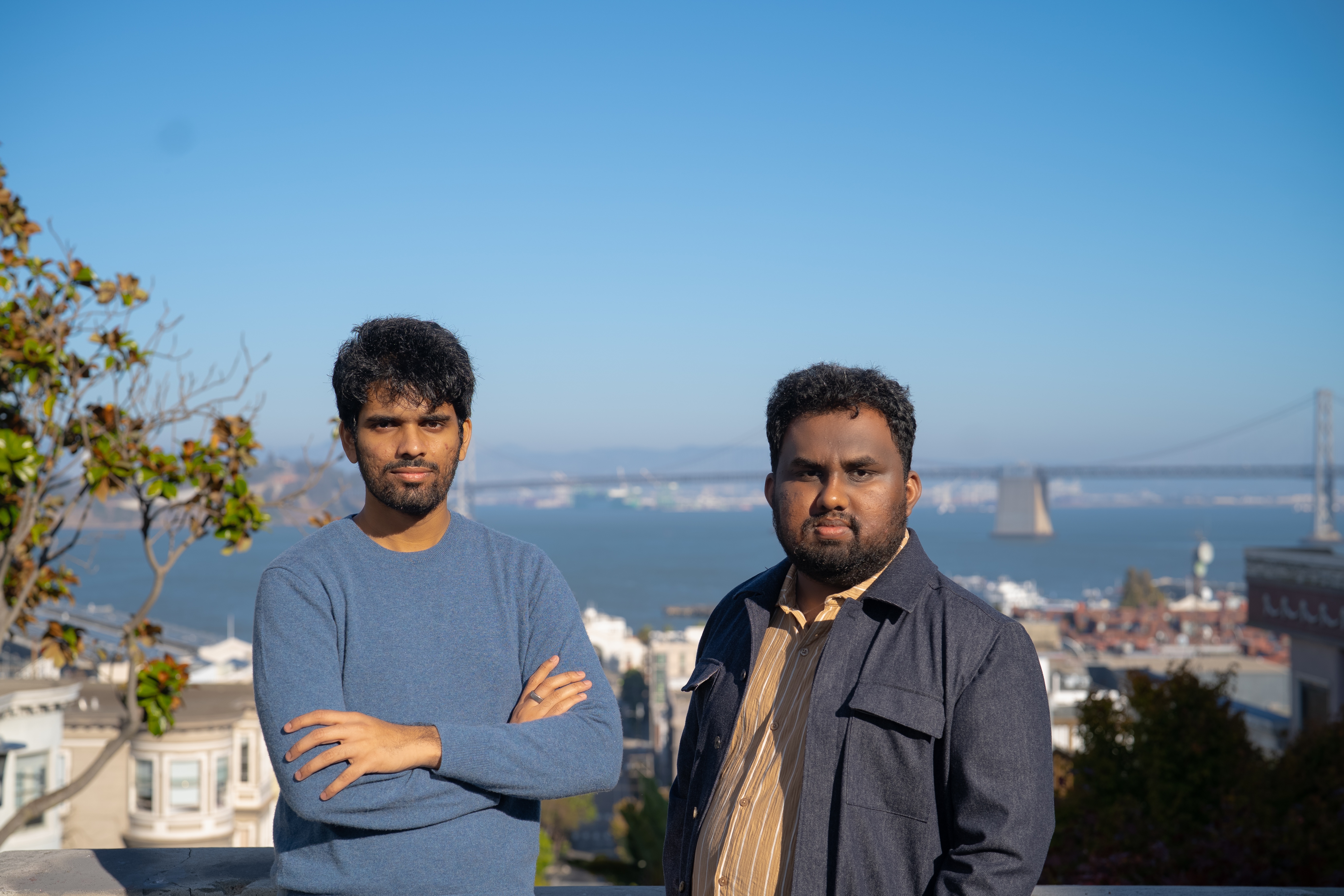
The tutor who needed tech support
In May 2023, Vummadi introduced Giga Tutor in an online developer forum. The proposed learning companion would offer custom learning paths, whether someone was preparing for an interview or trying to understand a difficult topic. He asked a revealing question: was the team solving a real problem, or pursuing a “tarpit idea”? It is a useful phrase for a project that can absorb effort without giving much back.
The replies brought the idea down to earth. People wanted to try it. People could not log in. Someone could not click the registration button. Vummadi answered the questions himself, asking about accounts and credentials. A website was proving more complicated than he had expected. It is a small, recognisable portrait of a founder: proposing a new way to learn, then helping somebody get past the front door.
That exchange matters because it predates the smooth explanation of what Giga became. A public launch preserves the untidy present tense of a company. There is interest, confusion, encouragement, and a founder trying to learn which of those signals deserves the next hour. The education idea did not become the business that won DoorDash. It was work the founders had to be willing to leave behind.
A model looking for a market
The next direction sat closer to their engineering experience. Giga ML offered enterprises a way to customise and deploy large language models, including on their own infrastructure. Privacy was central to the proposition: a business could work with its own data without handing the entire exercise to an outside model service. The team’s public launches included X1 Large models built from Llama 2 70B.
In October 2023, Giga ML announced $3.6 million in seed funding led by Nexus Venture Partners, with participation from Y Combinator and other investors. There was a product, technical work, and money to continue. None of those things automatically settled the question of which customer problem would make a durable business. A benchmark can tell an engineer that a model performs well. A buyer has a different examination paper.
Vummadi later described more than a year of painful pivots. He also thanked Nexus’s Aniket Kamthe for introducing the team to Zepto, an early customer. The route into support emerged through customers using the technology. In his Series A announcement, Vummadi was unusually plain about the motivation: customer conversations had led them there. A lifelong fascination with call centres was unnecessary.
The earlier business did leave something useful behind. Enterprise deployment, model adaptation, and the practical restrictions on customer data were already part of the founders’ work. The move into support gave those capabilities a task with an observable ending. Somebody arrives with a problem. The company needs to do something about it. An answer that merely sounds convincing leaves both parties exactly where they started.
- 01Learning companionEducation pitch & Giga Tutor
- 02Enterprise modelsFine-tuning & private deployment
- 03Customer supportAgents that complete tasks
Eight people at the enterprise door
At Startup School India, Vummadi recounted how Giga’s eight-person team won a DoorDash contract while competing against a company with roughly 400 people. The comparison describes that contest, rather than Giga’s current headcount. It also supplies an appealing reversal: the small vendor gets invited into a very large operation. Size helps make the story memorable. The work explains why the invitation mattered.
DoorDash support involves a driver, a customer, a merchant, operational policies, and a clock that does not stop while everyone sorts things out. Consider a delivery address that falls outside the expected location. Giga’s system can keep the Dasher connected, investigate earlier messages, contact the customer to verify the change, and check what the delivery rules permit. A successful conversation has consequences outside the conversation.
That is where Dinne’s product discipline becomes relevant. In their conversation with Taggar, the founders described a rule: work done for one customer should become part of the core product, available to others. An unusual DoorDash problem could therefore become a capability another customer might use. The ambition was to keep the product general while letting the difficult cases teach it something specific.
Vummadi’s story is inseparable from this partnership. One founder could go looking for the customer’s hardest problem; the company still needed the engineering to survive the answer. The friendship formed at Kharagpur had become a working arrangement tested by buyers. A large account offers credibility, but it also supplies a large number of occasions to discover whether the software does what was promised.
“At first, I just wanted to start a company with my best friend.”
VARUN VUMMADI / NOVEMBER 2025
The question after the call
Giga’s DoorDash case study reports a Did We Resolve rate above 90%, measured from September 20 to October 20, 2025. The same account identifies 98% resolution as a target for the next phase. The distinction deserves to stay visible. A measured result and an ambition can both be interesting without being printed as the same number.
Did We Resolve is a refreshingly direct question. Ending a call is easy to count. Finishing a task is harder. The useful test lives with the person who needed help: could the delivery continue, did the right action happen, would they need to ask again? The phrase gives Vummadi’s broad interest in enterprise AI a smaller, rather demanding unit of proof.
On November 5, 2025, Giga announced the $61 million Series A led by Redpoint, with Y Combinator and Nexus participating. Vummadi and Dinne had also been named to Forbes’s 30 Under 30 Asia list in 2024. Recognition and financing belong in the story. So does the less ceremonial achievement of finding a problem that customers would entrust to them after the earlier ideas had failed to settle into place.
Reported DWR
September 20 - October 20, 2025
Back to the terminal
By July 2026, the product announcements had moved further into the daily work of running agents. Giga introduced its command-line interface on July 14. Engineers could inspect tickets, change agent configuration, run tests, and deploy from the terminal. Policies and behaviour could live in a Git repository, giving teams a history of changes and a way to roll them back.
This is an engineer’s answer to a familiar nuisance: the fix is spread across too many windows. A transcript explains the failure; a configuration change addresses it; tests check it; a deployment puts it to work. Keeping those steps close together makes the task easier to follow. The person who once answered login questions in a forum now leads a company selling tools for investigating much larger piles of customer trouble.
On July 27, Giga introduced Scout in Slack. Its job is to investigate support performance where teams already discuss it, reading conversations and proposing changes for approval. The company’s illustrated example uses sample data to show how an agent can close a ticket while leaving a customer dissatisfied. It is a pointed choice of demonstration: even a favourable operational metric may deserve another look.
The thread running through these products is the work after the first deployment. Someone has to inspect the failures, understand the policy, propose a change, and establish whether it helped. Vummadi’s company is trying to automate more of that labour. Software that can speak is only the beginning of the job; keeping it useful gives the engineers plenty to do.
The friend stayed. The idea moved.
Vummadi describes support as a starting point for a broader enterprise-operations platform. That aspiration is consistent with the path so far: follow a practical problem into the machinery behind it. It also makes the early wandering look less like an embarrassing prelude to be edited out. Those revisions are how the founders learned what buyers needed from their technical ability.
There are smaller clues to his disposition. His public GitHub includes image-cartooning experiments, face detection, and a space-shooter game. He calls himself more of a hacker than a textbook student. The expensive offers make a tidy opening anecdote, but the more revealing habit may be the willingness to make something, expose it to use, and revise it when the response is inconvenient.
The durable commitment was to building with Dinne. The education pitch changed. The model business changed. The questions became more specific. By the time Giga reached DoorDash, the two friends had found work that could answer back every day. For a founder who began by preparing all the right interview answers, there is some pleasure in that ending: the customer keeps setting the next question.
Follow the conversation
The company, the people, and the longer conversations.