The courier is at the wrong address. The app says the job is unfinished. The customer may have asked for a change in chat, or perhaps only over the phone. Somewhere a policy says what can happen next. This is the point at which a conventional support bot, having cheerfully supplied the delivery status, becomes rather less helpful. Giga’s proposition begins there: an AI agent that can keep the courier on the line, investigate the record, call the customer and make a policy controlled decision before dinner turns cold.
- Giga sells AI support agents for voice, chat and email to large consumer businesses.
- It began in 2023 as GigaML, a tool for enterprise language model fine tuning, before customer conversations pushed it toward support.
- Its DoorDash case study reports a greater than 90% “Did We Resolve?” rate during a one month period in 2025.
- Its distinctive bet is a feedback loop: inspect failed conversations, change the workflow, test the fix and measure the result.
The company’s origin makes the choice of problem more interesting. Co-founders Varun Vummadi and Esha Manideep Dinne, both graduates of IIT Kharagpur, began with the machinery of enterprise AI. GigaML helped companies tune and deploy open source language models on their own infrastructure. The technical appeal was obvious. The business lesson arrived through conversations with prospective customers: the buyers cared less about a better model in the abstract than a painful task it could finish.

01 / The turnThe market spoke in hold music
Vummadi has said that he and Dinne started the company in a college dorm, and that the first idea was fine tuning LLMs for enterprises. Support was a discovery, not a childhood ambition. By November 2025, the founders were announcing a $61 million Series A led by Redpoint Ventures, with Y Combinator and Nexus Venture Partners participating. A 2023 seed round had brought in $3.6 million. The funding tells you investors liked the destination; it does not tell you whether every call is good. For that, a customer case is more useful.
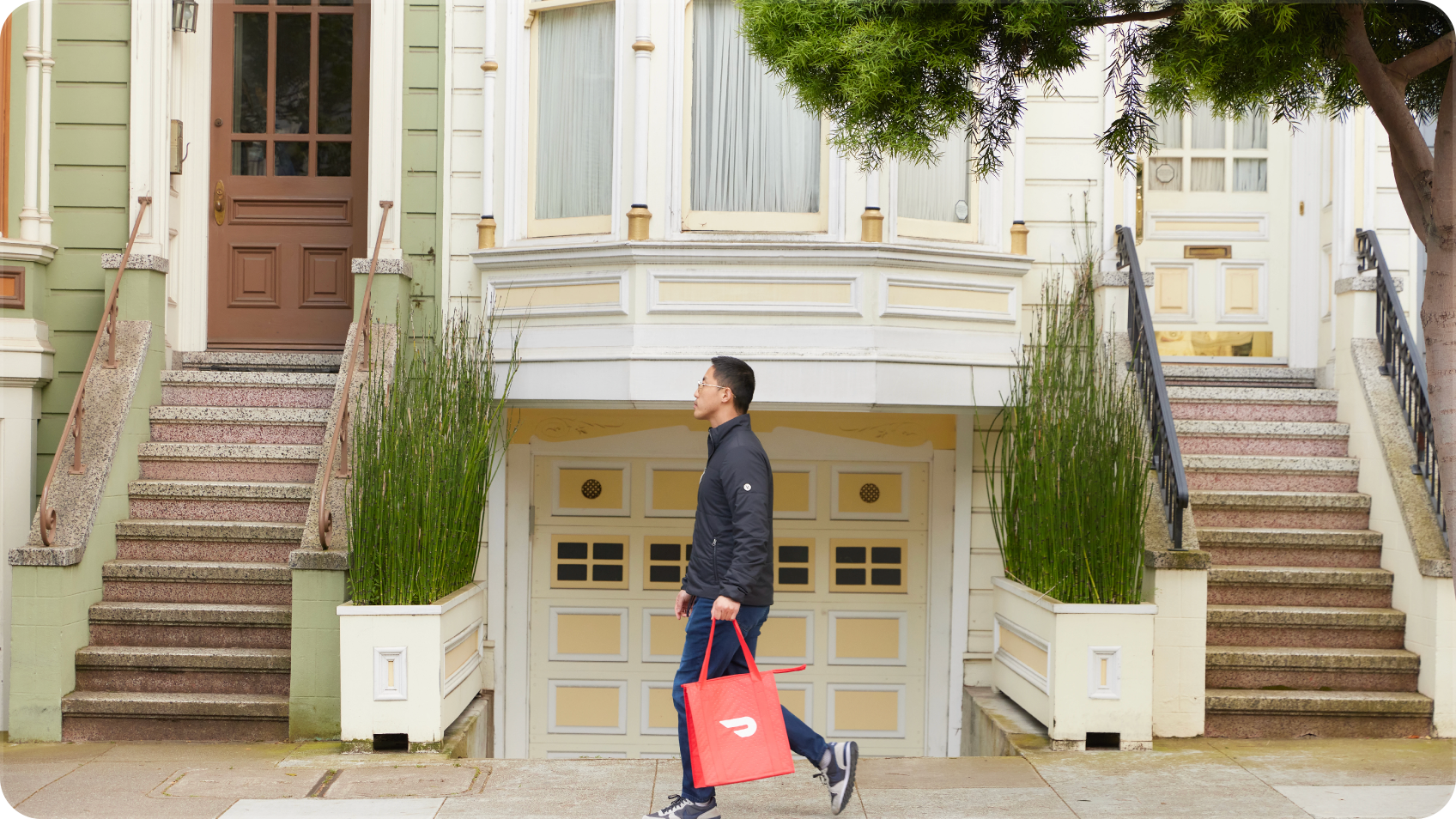
DoorDash’s delivery network is a tidy way to understand an untidy product. A geofence mismatch can prevent a Dasher from marking an order complete at a changed address. The agent has to establish what happened, check a possible address change in the chat history, reach the consumer if the record is incomplete, and decide what the policy allows. Giga says its system maintains the courier conversation while contacting the consumer. This is customer service as coordination across people and software, rather than a contest to produce the most fluent sentence.
Giga’s published DoorDash case study says the deployment reached production in weeks, training on old edge cases while shadowing live interactions. For September 20 through October 20, 2025, it reports more than 90% on a “Did We Resolve?” measure for live delivery scenarios. That is a company reported figure over a defined window, not a universal score for every customer or every type of call. Still, the choice of measure is revealing. A bot can count a transferred call as contained or a politely ended chat as finished. The customer has a less elastic definition of done.
02 / The machineryA voice is only the front door
The customer hears a voice. The buyer purchases an operating system for what happens behind it. Giga’s Agent Canvas lets teams assemble an agent from support transcripts, recordings and procedures, then define policies and run simulations. Its agents span voice, chat and email. The Browser Agent can perform tasks in web based tools when an API is unavailable. Insights reviews conversations and suggests changes. The newer Scout product asks teams to pick a metric, reads the cases behind it, proposes a policy, knowledge or tooling fix, and tests safe changes on a limited slice of traffic. Risky changes go to a human for approval.
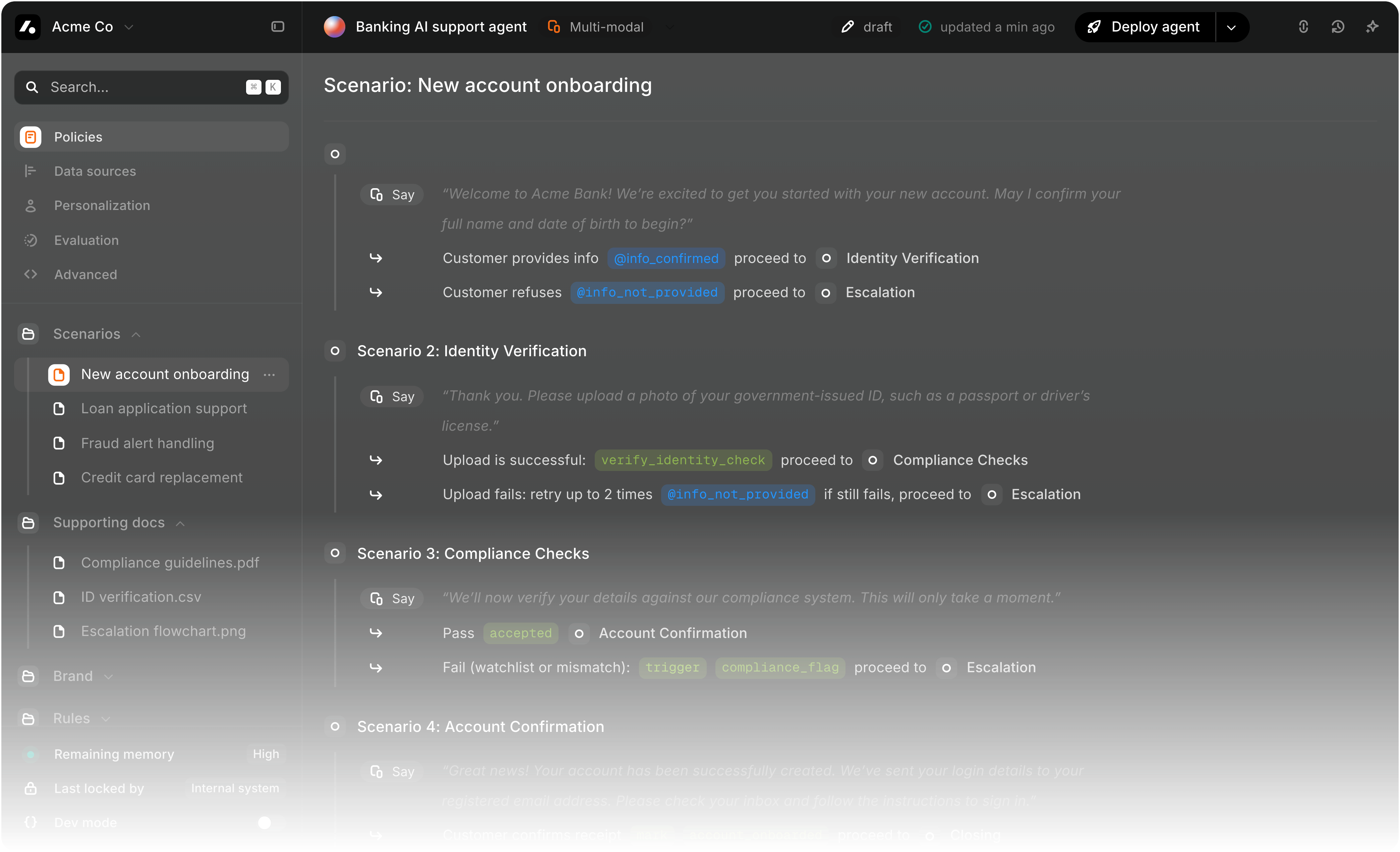
That last step is where the product’s claim becomes practical. If an agent mistakenly closes a refund request after the caller asks for a person, a dashboard can report a respectable containment rate while the caller remains furious. Giga’s Scout materials describe finding just such a discrepancy, changing the handoff rule and testing the revision before rollout. The illustrated scenario on its site is a product example, not an independently documented customer outcome. The general lesson travels well: measure the failure the customer experiences, not the label your software assigned to the ticket.
“Only by talking to customers did we end up in customer support.”Varun Vummadi, co-founder and CEO
The company also advertises response times under a second and support for 99 languages. In voice support those are connected claims. A pause feels like confusion; an interruption can make the caller start over. In September 2026, Giga published a demonstration using OpenAI’s GPT-Live voice API in which the agent keeps listening while it speaks and sends slower tasks into the background. The flower ordering scenario is explicitly a demonstration. What it shows is the design target: a customer can change the delivery time mid sentence, switch languages for a card and still see a coherent order emerge.
03 / The bill and the betWhat it costs to make “resolved” honest
There is no public price card for Giga. Prospective enterprise customers are directed to request a demo and discuss their systems, traffic and target metrics. The more instructive cost is organizational: old tickets must be useful enough to learn from; policies must be precise enough to enforce; the agent needs permission to read and sometimes write in operational systems; and people must be ready to review uncertain decisions. A quick pilot is possible when those materials already exist. A neglected knowledge base will remain neglected when a voice is placed in front of it.
Giga’s comparison set includes traditional call centers, scripted IVR menus and enterprise agent vendors such as Sierra, Decagon and Intercom Fin. Its pitch is strongest where a business has high call volume, complicated multi step work and a way to measure actual outcomes. The DoorDash example brings all three. A small team with few repeatable workflows might gain less from such a system. A company that cannot safely grant an agent access to its tools will find that fluent conversation stops short of resolution.
The roadmap has grown accordingly. In 2026 Giga added a terminal interface for developers, brought Scout into Slack, introduced scheduled callbacks and launched live screening for synthetic voices calling into support lines. These additions are not decorative. A system allowed to issue refunds, change bookings or touch accounts must also know when the person on the other end may be a machine. The company says flagged calls can go through added verification or to a human specialist. That is a useful reminder that automating one side of the telephone line changes the incentives on the other.
What can another company copy? Begin with one frustrating, measurable workflow. Collect the transcripts where it went wrong. Map the exact systems a human uses to finish it. Write the policy for the awkward edge case, not only the happy path. Give the agent a route to a person. Then ask customers whether the matter was resolved and compare a controlled slice before widening the rollout. Giga’s own story suggests that the first important decision was not a model choice. It was the choice to look at what customers kept trying to get done.