The short version
- Agave connects construction project tools to the accounting systems contractors already trust.
- Its path ran from a unified API, to managed ERP sync, to AI-powered financial workflows.
- The company says 500+ customers have used it across 80,000+ projects and $100 billion in construction volume.
- Pricing is custom. The variables are systems, entities, modules and customization - not seats or data volume.
A construction company can put a drone in the sky, a laser scanner in a room and a tablet in every superintendent's hand. Then, at the end of the month, someone in accounting may still open a two-hundred-page PDF and sort invoices one page at a time. That contradiction is Agave's market. The San Francisco company does not sell a shinier place to store the numbers. It moves the numbers between the places contractors already use, checks them on the way and increasingly does the clerical work attached to them.
The basic problem is almost comic: the field lives in software such as Procore or Autodesk Build; finance lives in an ERP such as Sage, Foundation, Viewpoint, CMiC or Acumatica. Both systems can be essential. Neither necessarily agrees on what a project, vendor, contract or cost code should look like. Without a dependable bridge, people become the integration. They export, re-key, reconcile and hope that two versions of the truth have not quietly appeared.
Autodesk Build
ServiceTitan
validate
audit
automate
Foundation
CMiC
Viewpoint
The founders already knew how to make unruly data behave
Tom Reno, John Zucchi and Pooria Azimi had worked together long before Agave. They met at Graphiq, a Santa Barbara search company that connected data from thousands of sources. Amazon acquired it in 2017, and the team went on to help scale search for Alexa across languages and billions of queries. There is a pleasing continuity here: first make disparate facts intelligible to a voice assistant, then make a subcontract change order intelligible to an accounting system.
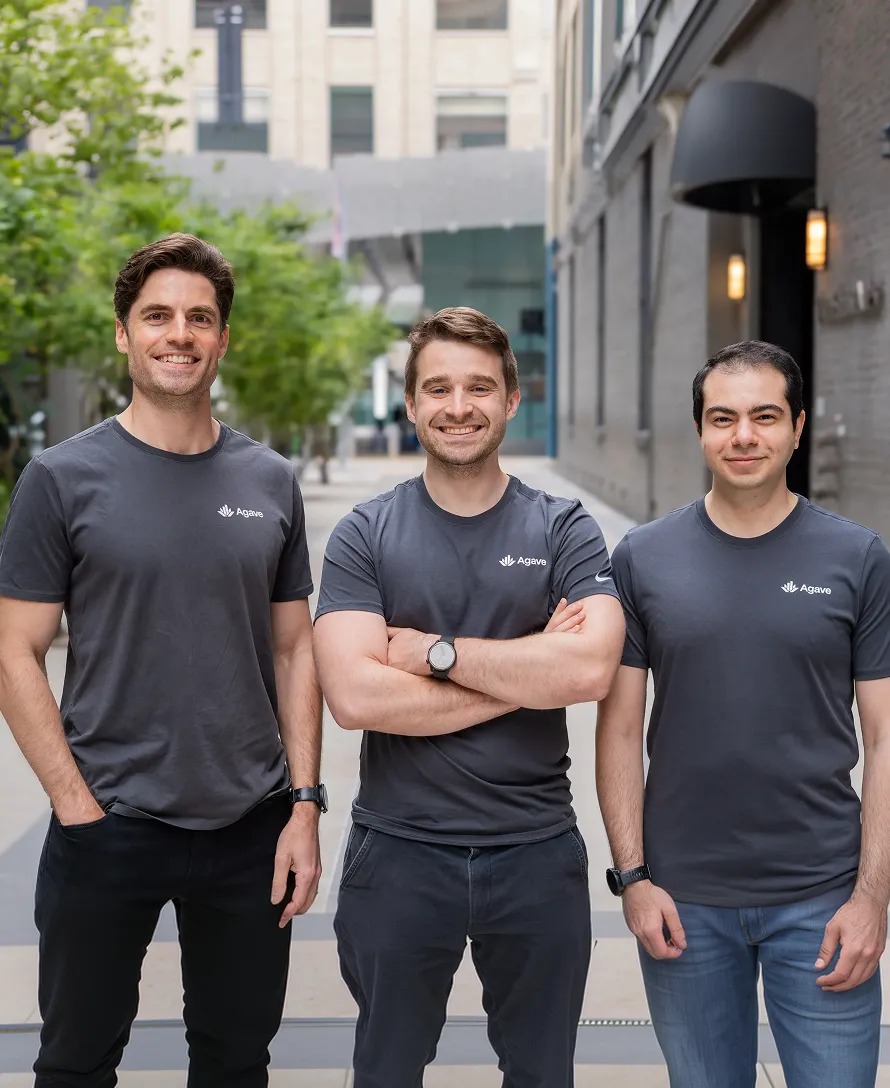
After Amazon, the team did more than 300 interviews across construction. The same complaint kept returning: too many systems, none of them talking. Agave was founded in 2021. It entered Y Combinator's Winter 2022 batch and began with a unified API for software developers. One integration let a vendor read and write normalized data across many construction systems instead of building each connection from scratch.
Then customers changed the brief. General and specialty contractors did not merely want their software vendors to have an API. They wanted Agave itself to keep project management and accounting in sync. That request produced ERP Sync, the product at the center of the business. It also produced a useful strategic lesson: customers often reveal the larger company by asking to use the internal machinery directly.
“We recommend narrowing the scope in whatever you do.”Tom Reno, on implementing integrations
What fails first is usually trust
A broken integration rarely announces itself with smoke. It stops a purchase order, hides a useful error behind an obscure code or puts a cost on the wrong job. RW Dake Construction described a particularly ugly failure in its old connector: direct costs were linked to the wrong $10 million project and could not be reversed in the tool. The company tracked that project's finances off-book for months.
Agave's answer is not simply faster transfer. It gives each data type a declared source of truth, validates records before they cross, displays the mapping and preserves an audit trail. When something fails, the user can see what moved, what did not and why. That sounds like table stakes until one remembers that a stalled integration can delay billing, payroll or vendor payment. In this market, legibility is a feature.
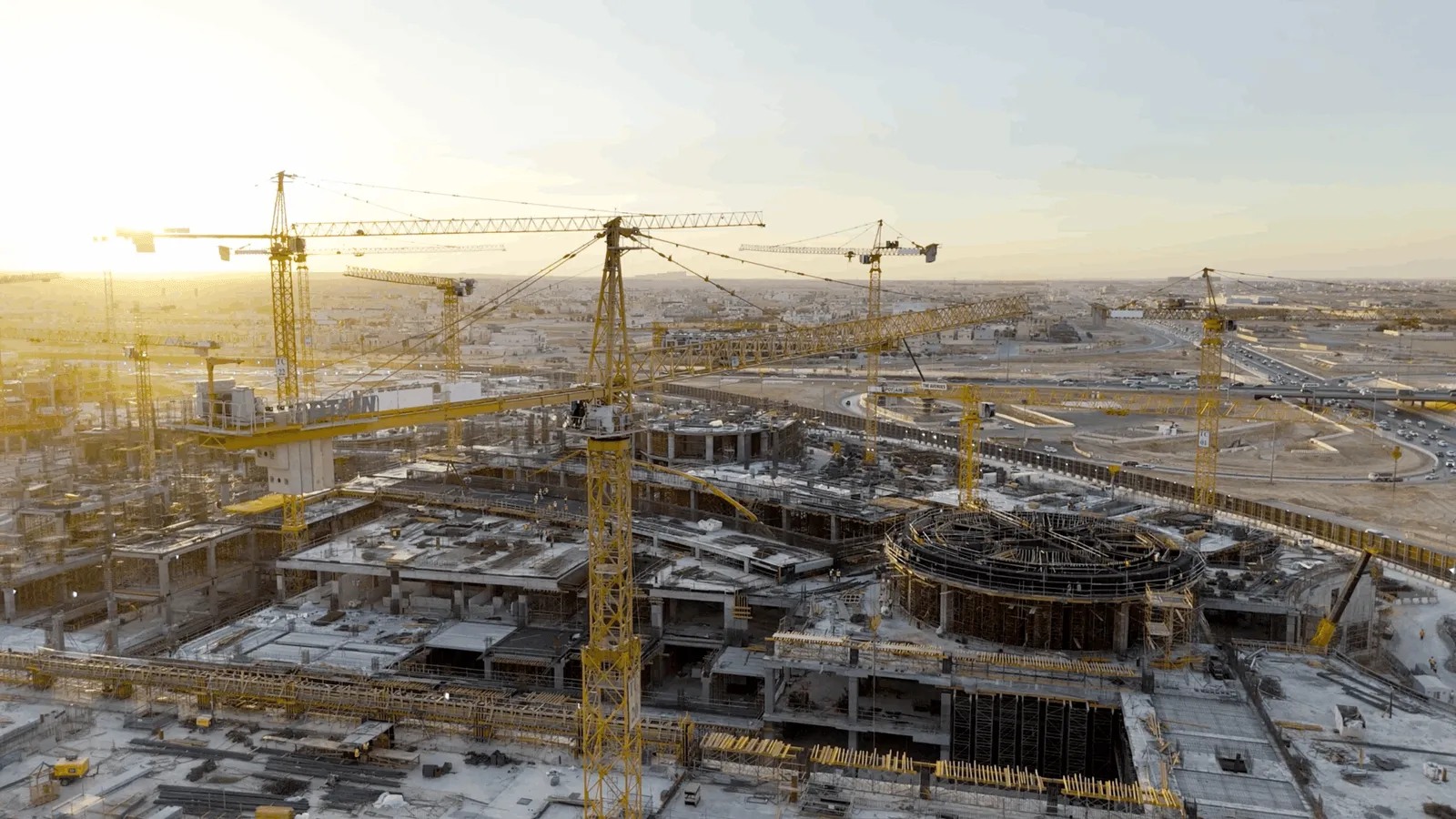
The customer range is unusually broad: general and specialty contractors from roughly $5 million to more than $5 billion in revenue. The company names projects as varied as the Tesla Gigafactory, Lumen Field, hospitals, universities and the World War II Memorial. Agave is not the system those projects are managed in. It is the quieter infrastructure that keeps the systems from contradicting one another.
The AI arrived after the permissions, mappings and scars
Agave shipped its first AI product in late 2025. The timing matters. A generic assistant can summarize an invoice; a useful construction agent must know which contract it belongs to, compare it with commitments, understand job and cost codes, route it to the right project manager and write approved data back into the ERP. That requires access, context, permissions and an action layer. Agave had spent four years assembling them.
Its AP agent can take a large supplier PDF, split it into individual invoices, flag contract variances, code lines, route approvals and return validated entries to the accounting system. Other offerings now include AI Analytics, Expense Management, Vendor Compliance and Agave MCP. The difference from generic automation is not a clever chat window. It is the accumulated knowledge of how construction records behave across incompatible systems.
Brinkman Construction shows what the plumbing changes. Its project managers once exported financial data, transformed it in spreadsheets and pushed it back into CMiC. Forecasting took days. Agave spent months with Brinkman building and stress-testing a CMiC connection that did not yet exist. Today, data flows from CMiC through Agave into Autodesk and Power BI every hour. Brinkman says forecasting now takes hours with about a quarter of the labor, and project-manager onboarding fell from 12 to 18 months to roughly six.
That is also the answer to what Agave costs: there is no public menu price. Quotes depend on which systems are involved, whether they are cloud, hosted or on-premise, how many corporate entities need service, which modules are selected and how much customization is required. Unlimited users, projects and data volume are included, as are hands-on implementation and support. Typical onboarding is four to eight weeks. In other words, this is software sold with the realism of an integration project.
A profitable company raises for speed
In July 2026, Agave announced a $15 million Series A led by Accel, with Y Combinator participating again. The round took reported funding above $20 million. More revealingly, Agave said it had been profitable and cash-flow positive for more than two years, while recurring revenue had nearly tripled year over year. It did not raise because the runway was disappearing. It raised because customer demand for AI products was outpacing the rate at which a profitable company wanted to fund them itself.
The money is meant to triple the team during the year, double the product suite and support at least four new products over six months. The ambition is to become the financial operations layer contractors run beside their existing systems. Beside is the key word. Agave's bet is that old ERPs persist for rational reasons: they encode specialized rules, handle critical payments and are painful to migrate. The wedge is coexistence, not conquest.
The bit worth copying
Agave's playbook is portable even if its connectors are not. It began with repeated observation, chose a narrow and expensive problem, built the data rails before the automation, and used a patient design partner to harden a product in production. It also treats implementation as part of the product. That last point is easy for software founders to admire and hard for them to staff.
- Interview until the complaint repeats in nearly the same words.
- Choose one source of truth for each kind of record.
- Start with a narrow workflow whose result can be checked.
- Show errors plainly; auditability earns permission to automate more.
- Layer intelligence on top only after the data can move reliably.
There are limits. The approach is less useful for a small contractor already happy inside one modern, all-in-one system. It also struggles when nobody can agree which system owns a record, when processes change from project to project or when the savings cannot justify a multi-week implementation. Agave's method assumes there is a repeatable process underneath the mess. If the mess is the process, software can only expose it faster.
Still, the larger idea travels well beyond construction. The glamour in enterprise AI belongs to the agent. The value often belongs to the company that knows where the data is buried, what it means and how to put a corrected version back without breaking payroll. Agave spent years learning that unphotogenic work. Now it gets to turn on the lights.