The office arrives before the building. Someone has to answer questions, store equipment, hold a meeting and decide what happens next while the permanent address is still a construction project. WillScot rents the temporary places where that work gets done. Timothy Boswell has spent much of his career learning the business behind those uncelebrated rooms.
On January 1, 2026, he became WillScot’s president and chief executive officer, succeeding Brad Soultz and joining the board. He had already been its chief financial officer, president and chief operating officer. The route to the top involved a long tour of the company’s machinery: financing, pricing, acquisitions, Canadian operations, strategy and information technology.
That makes his appointment an interesting case of corporate continuity. The person now responsible for the whole enterprise had previously worked on many of its constituent parts. His challenge is to make those parts cooperate when customers need a working space quickly. A rental agreement is tidy. The logistics that make it useful are considerably less house-trained.
Economics, psychology, then the operating business
Boswell studied economics and psychology at Davidson College, graduating in 2001, and earned his MBA at the University of Virginia’s Darden School of Business in 2008. The pairing of undergraduate subjects makes an appealing footnote to a career involving both capital and customers. It remains a footnote: a degree does not explain someone’s character, however tempting the shortcut.
His early employers included Bear, Stearns & Co., Edgeview Partners and Banc of America Capital Investors. Before entering the WillScot family of businesses, he was a vice president at Sterling Partners, the Chicago private equity firm. That work included investing and managing portfolio companies. He joined Algeco Scotsman in June 2012.
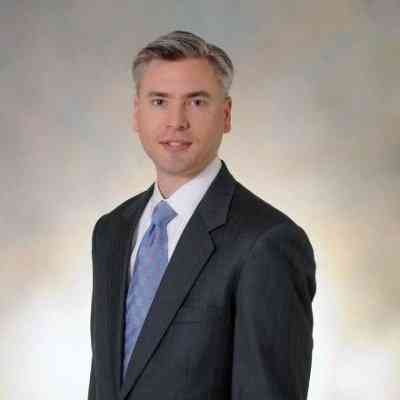
There is a useful distinction between evaluating a business and staying to run it. An investment decision has a closing date. An operating business keeps producing another morning, another customer and another problem with a delivery. Boswell’s subsequent career put him on the receiving end of that daily repetition.
His responsibilities expanded through strategy and business development, a chief of staff role, oversight of Canadian operations, and finance leadership. By the time he became CFO of the publicly listed WillScot in November 2017, he had worked beyond the usual boundaries of a finance office. He knew several ways the business could look from the inside.
A merger has a morning after
WillScot and Mobile Mini completed their combination in July 2020. Boswell continued as CFO of the combined company, alongside chief executive Soultz and president and chief operating officer Kelly Williams. Modular space and portable storage were now under the same corporate roof. A customer’s office and its container could belong to the same rental conversation.
For Boswell, a combination also meant explaining the inconvenient interval between paying for integration and receiving its benefits. During the merger discussions, he walked investors through how costs would arrive before the full savings. The sequencing mattered. A business can promise efficiency on announcement day; it still has to spend money and do the work that makes efficiency possible.
He later described a regular acquisition process rather than a succession of isolated deals. In August 2023, he discussed a team that met weekly to manage opportunities and recently integrated businesses. Cost improvements, pricing and additional products could all contribute as acquired operations became part of the wider network.
Across his company tenure, Boswell has led strategic initiatives that included more than 30 mergers and acquisitions. That number describes an extended body of work, rather than a single transaction that can carry the whole story. Repetition brings its own test: can the next acquired operation be absorbed without making the existing operation harder to run?
In September 2021, Boswell added president to his CFO title. Soultz publicly praised the trust he had earned from colleagues and shareholders. The relationship would continue into the succession: when Boswell’s CEO appointment was announced four years later, Soultz referred to their 12 years of collaboration. Familiarity had become part of the handover.
- 2012Joins Algeco Scotsman
- 2017CFO at WillScot’s public listing
- 2021Adds the president title
- 2025Moves into the COO role
- 2026Becomes CEO and a director
The furniture has a business model
Among the initiatives associated with Boswell is WillScot’s development of Value-Added Products and Services, usually shortened to VAPS. The name has the administrative charm of a filing cabinet. The underlying idea is easy to understand: customers need a usable workplace, including the things that go inside it.
WillScot’s offering includes furnishings, appliances and supplementary services alongside modular offices, storage and other temporary spaces. For a customer, buying those elements through the same provider can reduce the number of arrangements needed before work begins. For the rental company, the additional products create another source of revenue from its customer relationships.
Boswell has also discussed the less elaborate end of the transaction. In August 2024, he described a vision for modest e-commerce capabilities in the customer portal, including simpler container and single-wide transactions. He was describing an intended capability. The attraction was reducing friction for customers whose requirements did not need an elaborate sales process.
These are related problems at different scales. A large project may require more coordination, while a straightforward rental benefits from fewer steps. The executive who worked on pricing and marketing was discussing both. Convenience has to fit the order; otherwise, the sales process becomes another item the customer must assemble.
A conceptual view of WillScot’s offering. Each element adds another job the customer can arrange through one provider.
One year closer to the field
The company announced Boswell’s move into a newly created chief operating officer position in December 2024, with the transition effective January 1, 2025. Matt Jacobsen succeeded him as CFO. Boswell’s remit centered on strategic initiatives and execution across the portfolio. His title now made explicit the operating responsibilities that had accumulated over the years.
When the CEO succession was announced in September 2025, Boswell said the COO role had brought him closer to the business and its employees. He thanked the board and Soultz, then described his response to the appointment in unusually plain terms: “I am honored and humbled to take on this position.”
The transition also had supporting cast members. Worthing Jackman became executive chairman, and Jeff Sagansky became lead independent director. Jackman pointed to his own previous experience moving from CFO to CEO when discussing Boswell’s preparation. The arrangement paired an incoming chief executive with a chairman who had made a comparable professional crossing.
By May 2026, Boswell was explaining an agenda with distinctly physical consequences: getting equipment ready, improving dispatch and routing, and making service easier for customers. He also described enterprise accounts and a focus on selected industry verticals. The work involved both finding demand and having the right people and equipment ready to serve it.
The breadth of that agenda helps explain the importance of the COO year. Financial decisions eventually appear somewhere tangible: a unit available for rent, a truck route, a customer waiting for installation. Running the company means following the decision all the way to that destination.
Growth arrives with a delivery bill
WillScot entered Boswell’s first year as CEO after reporting approximately $2.3 billion in 2025 revenue and a $53 million net loss. Its adjusted EBITDA was $971 million, a separate measure that excludes specified items. The figures describe different aspects of the same year. They also give the succession a more demanding backdrop than a ceremonial change of chairs.
In the second quarter of 2026, revenue reached $612.2 million, up from $589.1 million a year earlier. Net income was $47.0 million, compared with $47.9 million. Growth in the top line therefore came with a small decline in the bottom line. Increased activity and increased earnings are separate achievements.
Delivery and installation revenue rose to $135.8 million from $108.5 million. Boswell discussed stronger modular activations and demand tied to large projects and events. The company raised its full-year revenue outlook to approximately $2.3 billion. That was an expectation for the year, rather than a result already achieved.
He also supplied a useful antidote to the tidy upward line on an investor chart. After speaking with a major customer, he told analysts: “Project delays are the norm.” Labor constraints, supply chains and inflation were affecting customers’ schedules. A rental network has to plan around the difference between an expected project and a project that actually starts.
On the same quarter’s call, he discussed the ability to adjust refurbishment activity, with production plans revisited at least every 90 days. Keeping that flexibility matters when demand develops unevenly. Capital allocated to equipment is also a decision about how much future activity the business is prepared to support.
“Project delays are the norm.”
Tim Boswell · August 2026 earnings call
A useful room, on time
In August 2026, WillScot announced its role as presenting paddock sponsor for the Freedom 250 Grand Prix in Washington. Its planned contribution included more than 6,400 square feet of temporary offices and storage. Race operations, production and broadcast work all needed space behind the spectacle. Even a very fast sport requires somewhere to put the paperwork.
Boswell’s comments about the event emphasized coordination, logistics and execution under tight deadlines. The example makes his business unusually easy to picture. A temporary building’s value depends on its connection to everything around it: the people using it, the equipment inside it and the schedule it is expected to keep.
His own professional address has changed less often than his job title might suggest. He joined a predecessor in 2012 and kept taking on different portions of the enterprise. The investor became a finance executive with operating responsibilities, then an operating executive, then CEO. Each promotion widened the stretch of the business for which he had to answer.
The question now is how that accumulated experience translates into consistent performance. Boswell has identified the practical work: prepare the fleet, develop customer relationships, improve field execution and invest where demand supports it. The results will turn on thousands of ordinary decisions. Somewhere, before a permanent building is ready, someone still needs the key to an office.
Follow the work
Company details, Boswell’s professional profile and further reading.