David Maura remembers a boxing glove. George Foreman signed it for him after they met at the US Open, sometime around 2006 or 2007. Years later, recalling the encounter, Maura dwelt on Foreman’s faith and his capacity for a comeback. There was a business connection too: the George Foreman grill belonged to the world of consumer brands in which Maura was building his career. An appliance with a famous name had acquired, for him, a human face.
It is a useful opening to the story of an executive whose working vocabulary is usually populated by capital allocation, leverage and margins. In his recollection, the memorable object was something a person had written on. A brand can be a line in a portfolio and a relationship that survives long after the first meeting. Foreman managed both, with the additional distinction of getting people to discuss a countertop grill as though it were a prizefighter.
Maura now leads Spectrum Brands as executive chairman and chief executive. He is based in New York; the company is headquartered in Middleton, Wisconsin. The distance between those places is less revealing than the distance his career has travelled: from analysing other people’s businesses to carrying responsibility for a collection of his own. He describes himself as an “investor / operator Hybrid.” The punctuation is informal. The professional tension is quite precise.
Learning where the money can go wrong
Maura’s route began with a business administration degree from Stetson University. His public LinkedIn profile lists his university years as 1991 to 1994. He also became a CFA charterholder. His first professional role was financial analyst at ZPR Investment Management, followed by work at Wachovia Securities, Merrill Lynch and First Albany Capital. Consumer companies and retailers recur through that record, giving the later move into household products a long apprenticeship.
At Wachovia he worked in high-yield research. At Merrill Lynch he was a director and senior high-yield research analyst. At First Albany he became a managing director and senior research analyst, concentrating on distressed debt and special situations. These are jobs that require attention to the less photogenic parts of enterprise: obligations, cash generation and what a business can support when conditions become awkward. A handsome brand name still has to meet its bills.
He joined Harbinger Capital Partners in 2006, serving as a vice president and director of investments until 2012. At HRG Group, his responsibilities included managing director and executive vice president of investments from October 2011 through November 2016. His HRG board service ran from May 2011 through December 2017. The overlapping dates matter: the passage from investor to executive unfolded through connected responsibilities rather than one tidy change of business card.
“I am an investor / operator Hybrid.”
David Maura
The observer takes the chair
Spectrum’s board became part of Maura’s working life in June 2010. He served as interim chairman, then chairman from July 2011. In January 2016 the role became executive chairman. Announcing that appointment, the board singled out his work on strategy, the allocation of capital, and acquisitions. By then, his involvement was already measured in years. He was moving further into a company he knew from its boardroom.
The larger change arrived in April 2018, when he took over as chief executive of the predecessor company, succeeding Andreas Rouvé. Alongside the appointment came a new operating structure and a three-year, $1 billion share repurchase authorization. The combination tells you something about the assignment. There were businesses to organise and a balance sheet to consider at the same time. An authorization, of course, establishes permission to buy shares; it does not mean the entire amount has been spent.
After Spectrum’s combination with HRG, Maura became executive chairman and CEO of the resulting company in July 2018. That explains the two dates attached to his tenure. April marks his assumption of the predecessor’s chief executive job. July marks the role at the combined public company. The distinction is small enough to disappear in a short biography, yet it captures the corporate rearrangement that accompanied his arrival in the operating seat.
- 2010Director & interim chairman
- 2011Chairman
- 2016Executive chairman
- 2018Chief executive
Selling a piece of the family silver
For a company with a large assortment of household names, deciding what to sell can be as consequential as deciding what to acquire. Spectrum’s battery business, including Rayovac, went to Energizer in January 2019. Energizer’s annual report records final cash consideration of about $1.96 billion after contractual and working-capital adjustments. The transaction removed a familiar part of Spectrum’s identity. A corporate family album sometimes has to surrender a page.
The Hardware and Home Improvement transaction was larger still. On June 20, 2023, Spectrum completed the sale of that business to ASSA ABLOY for $4.3 billion in cash before customary purchase-price adjustments. It had been announced in September 2021. Between announcement and completion came an attempt by the US Department of Justice to block it, an agreement involving divestitures by the buyer, a settlement and the remaining regulatory approvals. A sale price can fit neatly in a headline. Getting to closing took considerably more room.
Maura thanked the management team, directors and shareholders when the deal closed, and spoke of ASSA ABLOY as the new steward of the business and employer of former colleagues. That language recognises the awkward human detail behind portfolio management. Selling an operation also means that people who worked inside the same corporate boundary now work outside it. The transaction changed the shape of his responsibilities as well as the company’s finances.
Cash sale to ASSA ABLOY, before customary purchase-price adjustments.
An investor with more than one set of keys
Spectrum was not Maura’s only venue for putting investment ideas into corporate form. From October 2017 until January 2020, he was chairman, president and CEO of Mosaic Acquisition Corp., a special purpose acquisition company. Mosaic combined with Vivint Smart Home in January 2020. Maura then served briefly as an outside director of Vivint, leaving that board in March. The role belonged to a particular transaction and period, rather than an enduring operating appointment.
His earlier board experience also included Russell Hobbs, Applica and Ferrous Resources. Taken together, these appointments show a career extending across securities analysis, investment management, governance and executive work. They do not make those jobs interchangeable. An analyst can recommend that a company change course. A chief executive has to make the change work through employees, suppliers, retail customers and systems, then return to discuss the results.
The appliance business gets a partner
By May 2026, another change was taking shape around Home & Personal Care, Spectrum’s appliance and grooming business. A strategic investment from Oaktree Capital Management involved $127 million in preferred equity and debt. The announced ownership split left approximately 73 percent with Spectrum and 27 percent with Oaktree. The arrangement formed part of Spectrum’s longer-running plan to separate that business from pet care and home and garden.
The structure deserves a moment because a minority investment and an outright disposal leave different responsibilities behind. Spectrum retained the majority interest. The plan gave the appliance business its own capital structure, with financing described as non-recourse to the parent. Oaktree brought outside capital and a partner’s economic interest. For Maura, it was a way to alter the business’s setting while continuing to participate in what happened next.
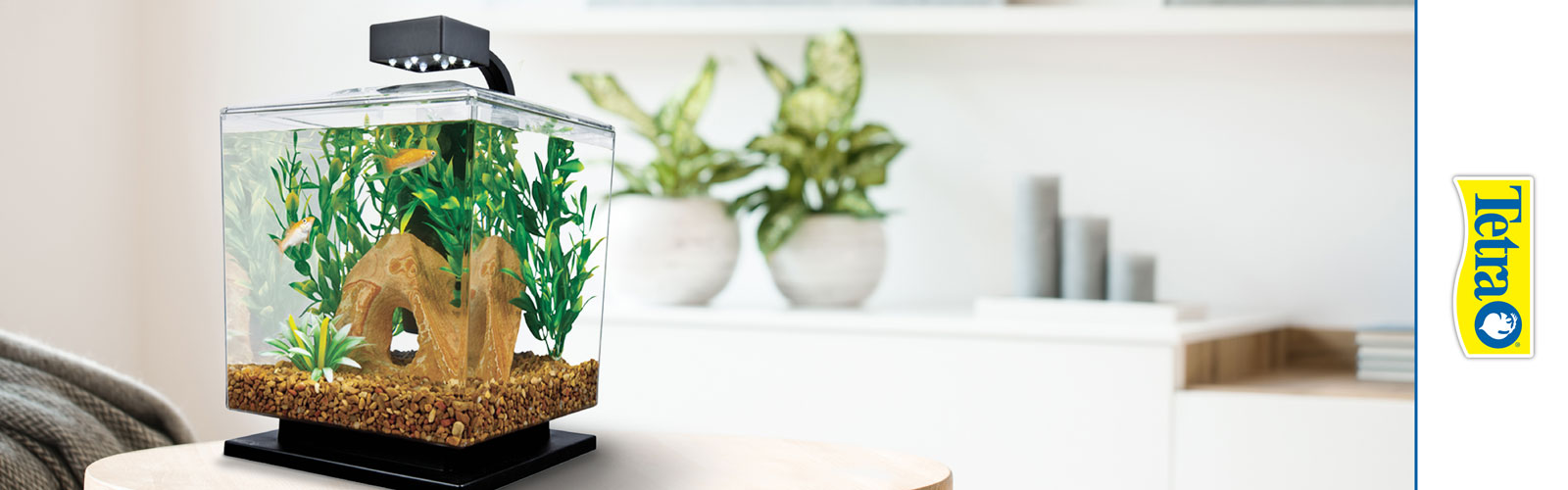
The company’s remaining operating picture reaches from pet supplies and aquatics to pest control, garden products, grooming and kitchen appliances. Tetra, FURminator, DreamBone, Russell Hobbs, Remington and Spectracide inhabit rather different corners of domestic life. Their common address is the home, but their markets are distinct. The investment problem is deciding which activities benefit from sharing an owner, and which require a different arrangement to develop.
A comeback has to survive the arithmetic
The results available in August 2026 gave Maura something concrete to discuss. In the third fiscal quarter, Spectrum reported $753.3 million in net sales, up 7.7 percent from the comparable period. All three segments delivered sales growth. Yet the quarter also produced a $20.3 million net loss from continuing operations, including a non-cash impairment associated with Home & Personal Care. Growth and accounting profit were moving in different directions.
The adjusted earnings number required its own careful reading. Adjusted EBITDA was $158.3 million, including $60.6 million in tariff refunds. Excluding those refunds, the figure was $97.7 million, up 27.5 percent. EBITDA is an earnings measure before interest, taxes, depreciation and amortisation; the adjusted version also reflects company-defined exclusions. These distinctions matter when assessing the operating progress of an executive who talks so often about financial discipline.
Company-reported adjusted EBITDA, a non-GAAP measure. Continuing operations recorded a $20.3m net loss.
The less glamorous work still counts
The same period brought progress on Spectrum’s shared enterprise software. Global Pet Care and Home & Garden had completed their deployments, while Home & Personal Care had made its first move onto SAP S/4HANA. Further work in that business’s Europe, Middle East and Africa operations was expected later in the year. A unified system rarely receives the affection reserved for a familiar consumer brand. It does, however, affect how the organisation sees and runs itself.
His stated ambition remains tied to growth through both the existing businesses and selective acquisitions, particularly complementary assets for Global Pet Care and Home & Garden. On the August earnings call, he put a condition on that appetite: “We will only act when the right opportunity presents itself to us.” It is an intention, still subject to the opportunities and results that follow. Investors have heard promises of patience before; they can judge this one against the transactions he chooses.
The Foreman recollection supplies a more personal closing image. Maura admired a career capable of another act, and the connection mattered enough for him to share it publicly. His own working life has contained several changes of position, though no ringside bell announced them. Analyst, investor, chairman, CEO: each title put him closer to the consequences. At Spectrum, the next act will be measured in what the businesses deliver, including the ones he decides to keep.
Follow the decisions
Continue with Maura’s professional profile, Spectrum’s announcements and the transaction details.
- David Maura on LinkedIn
- Spectrum Brands · company website
- Executive biography
- The 2018 CEO appointment
- The Hardware & Home Improvement sale
- Oaktree investment · transaction details
- Fiscal 2026 third-quarter results
- August 2026 earnings-call transcript
- Spectrum Brands on X
- Spectrum Brands Careers on Facebook
- Spectrum Brands on LinkedIn