Larry Silber had a perfectly respectable exit line. In 2008, after almost thirty years at Ingersoll Rand and a final stretch with its successor, Doosan, he was preparing to retire. He had helped reposition a business, assembled a leadership team and brought new products toward market. His chosen metaphor came from baseball: “I feel like I’m batting .400”. A house at the Jersey shore awaited some overdue attention. For an equipment executive, the prospect of finally staying put had its attractions.
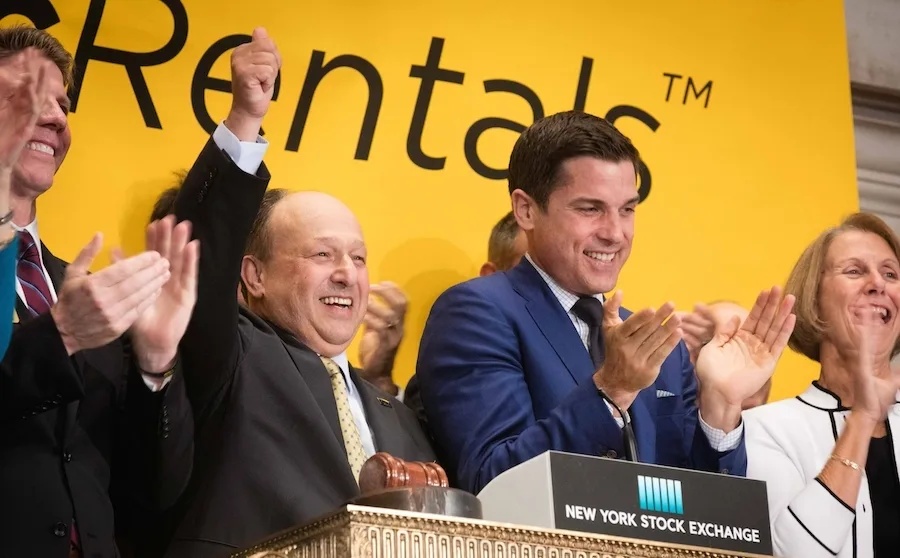
Eight years later, he was at the New York Stock Exchange, smiling beneath a yellow Herc Rentals sign. The equipment business he had joined in May 2015 was becoming independent of Hertz. Retirement had proved less durable than the machinery. The appealing part of the new assignment was quite specific: Silber could choose a team and help a long-established operation become a public company with decisions of its own to make.
That tension gives his career its shape. He has repeatedly reached the point where a business might seem ready to run without him, then accepted another job involving people, products and an organization in need of attention. By 2026, he was still Herc’s chief executive, overseeing the consequences of its acquisition of H&E Equipment Services. The beach house had acquired some formidable competition.
A salesman learns what happens after the sale
Silber began his career in sales. He joined Ingersoll Rand in 1978, working across businesses whose products had to perform in the physical world: power tools, material handling, construction and mining equipment. In 1994, as general manager of the Material Handling Division, he took on his first profit-and-loss responsibility. Selling a product and answering for the business behind it were now part of the same assignment.
His later responsibilities included Utility Equipment, Rental and Remarketing, and Equipment and Services. Those names trace a useful progression through the life of a machine. Someone makes it. Someone buys or rents it. Eventually, someone must find its next owner. Silber’s experience extended across those stages, giving him a view of equipment that continued beyond the original transaction.
Looking back in 2008, he singled out the remarketing operation he had created at Ingersoll Rand. It had grown beyond $100 million in revenue within three years. He also remembered product development, the expansion of company-owned stores and the development of colleagues who went on to lead businesses themselves. His inventory of achievements included people alongside products. A management career, in that telling, could be counted partly in the careers it helped launch.
The attraction of another difficult assignment
Leaving the portable-power business did not mean leaving management. From 2008 to 2012, Silber served as chief operating officer at Hayward Industries, the swimming-pool equipment manufacturer. His tenure covered the recession and the company’s return to profitability. He later joined Hayward Holdings’ board in November 2019, returning to a business he already knew from inside its operations.
There was also electronics manufacturing. Silber served on SMTC’s board from 2012 to 2015 and acted as interim president and chief executive from May 2013 through January 2014. An executive-advisor position at Court Square Capital Partners followed, from April 2014 to May 2015. These were different products and different organizational settings, connected by the practical work of running companies.
Herc offered something those intervening assignments had not: the chance to guide an equipment-rental business out of a larger parent. It had decades of history, customers and branches. Independence would give management a clearer remit to allocate resources around rental. Silber was joining an existing enterprise at a moment when its operating habits, product mix and identity were all open to reconsideration.
“I came back into this business because I wanted to.”
Larry Silber, 2016
His explanation for returning was unusually plain. Choice mattered. So did the ability to recruit expertise where the organization needed it. He described building a team with complementary strengths and addressing weaknesses directly. There was little romance in that description, which was rather the point. The attraction lay in having enough authority, experience and willing colleagues to get things done.
Four letters with room to grow
The new name contained a practical advantage. HERC was already the familiar acronym for Hertz Equipment Rental Corporation. Turning it into Herc Rentals preserved recognition while giving the business an identity beyond its former parent. The company announced the brand in February 2016 and began trading independently on July 1 under the symbol HRI.
Silber’s early ambitions extended beyond the excavators and aerial platforms associated with conventional equipment rental. Professional contractors also needed smaller tools. Other customers needed temporary power, climate control or help configuring equipment for a particular project. ProContractor and ProSolutions gave those activities a place alongside the core fleet. The commercial logic was to serve more needs and broaden exposure across markets.
A rental yard may display machines, but Silber described a service business with engineering and logistical obligations. A customer needing a project solution could require configuration, supporting material and assistance as well as the principal equipment. That expanded the question facing a branch. Having something available was one consideration; assembling a workable answer for the customer was another.
The organizational changes were similarly concrete. In 2016, Silber described moving local and regional salespeople toward responsibility for territories by ZIP code. He also said the company had reduced its supplier count by 40 percent. Fewer equipment brands could concentrate purchasing and make repairs easier to manage. For someone trained in sales and operations, geography and spare parts belonged in the same conversation.
A large company, close enough to answer
One of Silber’s recurring concerns was how to preserve initiative in the branches as the company became more organized. Better software could show management what was happening across the business. Consolidated support functions could help local teams. Yet customers still dealt with particular branches, in particular places, with work that needed doing on a particular day.
In his 2016 account, branch employees needed room to respond to those local demands. Central support and local judgment had to coexist. This is an awkward balance for any expanding service company: enough consistency to operate coherently, enough discretion to avoid making a customer wait while an ordinary decision travels through the organization. Silber’s preferred arrangement placed responsibility close to the work.
Technology was part of that ambition from the beginning. In a conference interview published in February 2017, he discussed plans to move toward mobile technology within five years. The subject sounds less glamorous than a new fleet of machines, but it concerns the same customer experience: placing an order, following delivery and knowing what equipment is doing once it arrives.
Herc introduced its E3OS business operating system in 2023, with a company-wide rollout planned for 2024. Its three words were easy, expert and efficient. The stated purpose was to define processes, measure execution and improve the customer experience across functions. Behind the neat abbreviation sat a demanding managerial exercise: making the different parts of a growing company work together.
Then came 162 more branches
On June 2, 2025, Herc completed its acquisition of H&E Equipment Services. The transaction added 162 branches, more than 2,500 employees and $2.9 billion of fleet at original equipment cost. The completion announcement put the combined network at 613 locations across North America. That historical snapshot marked a substantial change in the size of Silber’s operating assignment.
He emphasized the expanded presence in major rental markets, the broader fleet and the incoming team. Those were the possibilities. Integration supplied the work. Equipment had to fit local demand; sales territories had to make sense; customer information and technology systems had to function across the combined organization. An acquisition announcement takes a day. Getting its ordinary details right takes considerably longer.
By February 2026, Silber reported that systems and data had migrated, sales and territory initiatives were complete, and fleet mix had been aligned by market. Branch-network optimization was still being finalized. His account placed the emphasis on execution across the organization. The scale acquired on paper was being translated into the routines through which employees could actually use it.
The larger business also required financial choices. In his March 2026 shareholder letter, Silber described pausing acquisitions and new branch openings to prioritize reducing leverage after H&E. Fleet investment and the annual shareholder dividend remained priorities. Expansion had brought Herc to a new size; management now had to decide how to finance and operate that size with discipline.
The next inning belongs to more people
Silber’s own role changed at the start of 2026. Aaron Birnbaum became president on January 1, while Silber continued as chief executive and a director. Birnbaum brought more than thirty-five years with Herc and its predecessor business. The company described the appointment as part of its succession plan, with broader responsibility for an executive already deeply involved in operations and integration.
There is a connection to Silber’s much earlier pride in developing future business leaders. A company needs people capable of accepting larger assignments as the organization grows. The promotion did not end Silber’s tenure. It did distribute leadership differently, at a point when the demands of the combined business had expanded.
In July 2026, Silber said H&E’s integration had been completed in the first quarter. Second-quarter equipment-rental revenue reached $1.072 billion, up 23 percent year over year. The company raised its full-year guidance, pointing to national accounts, large projects and specialty rentals. Fuel costs remained a pressure. The results offered progress alongside a reminder that additional scale brings additional expenses to manage.
The baseball metaphor from 2008 has aged rather well. It caught an executive pleased with what a team had accomplished, contemplating an orderly departure. His subsequent career supplied several more innings. At Herc, the continuing task is recognizably his old one: put capable people near the customer, give them equipment and systems that work, and keep improving the business after the applause has stopped.