At a county fair, a broken generator can create a peculiar kind of detective story. Before anyone repairs it, someone has to establish whose generator it is. In United Rentals’ account of one American fair, attractions and vendor booths could close for hours while organizers identified the supplier and arranged service. The equipment was available. Responsibility was harder to locate.
- Customers rent machines and the support needed to keep work moving.
- Specialty services let one supplier handle more of a complicated site.
- The economics depend on productive equipment, disciplined spending and timely returns.
For the 2024 event, the fair moved to United Rentals as its single equipment provider. Its requirements included more than 30 generators the size of semi-trailers, along with lifts, radios, fencing and portable restrooms. A fair looks temporary because the rides eventually leave. Getting it to function requires a small, temporary infrastructure company.
That is a useful way into United Rentals. The obvious product is a machine. The more interesting product is a workable arrangement around the machine: selection, delivery, maintenance, visibility and somebody to call when the lights go out.
The expensive thing is the idle day
Start with a contractor who needs an aerial lift for one phase of a project. Buying it means paying for the periods between projects, too. Storage, maintenance and eventual resale become the contractor’s problems. Renting transfers much of that ownership burden to a company whose job is to find the machine’s next customer.
United Rentals earns rental revenue, charges for associated services and sells used equipment. It serves construction and industrial operators, utilities, municipalities, homeowners and others. A refinery shutdown, a sewer bypass and a home improvement project need different equipment, but share a preference for obtaining capacity without necessarily acquiring another permanent asset.
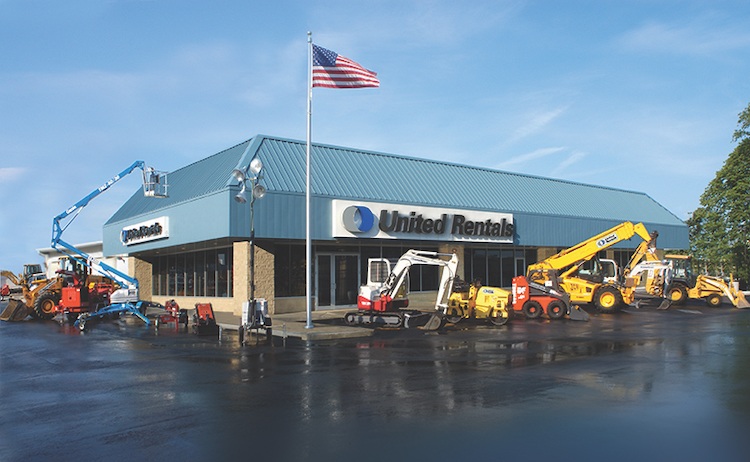
Bradley Jacobs founded the company in 1997. Acquisitions helped assemble its reach. The 2012 RSC transaction, announced at a $4.2 billion enterprise value including debt, expanded its industrial customer exposure. Subsequent deals added capabilities as well as locations. General Finance brought mobile storage and modular offices in 2021; Ahern joined in 2022.
The result is a business with substantial physical commitments. In 2025, United Rentals reported $16.1 billion in revenue and invested $4.2 billion in gross rental capital expenditures. Renting makes ownership optional for the customer. The rental company still has to buy the equipment.
First, buy the road
Consider an acquisition that sounds less glamorous than a fleet of lifts. In 2024, United Rentals agreed to buy Yak for approximately $1.1 billion in cash. Yak’s fleet included roughly 600,000 hardwood, softwood and composite mats. These create protected surfaces and access routes for construction and maintenance work.
The logic is pleasingly literal. Before heavy equipment can do anything useful, it must reach the job. Ground protection sits beside power, trench safety, fluid handling and temporary storage in the company’s expanding collection of specialties. Each solves a neighboring problem for a customer already arranging a difficult worksite.
Sunbelt, Herc and independent rental yards offer alternatives. United Rentals’ pitch is breadth and coordination: handle more requirements through one relationship. That matters most when a site needs several specialties together. For a straightforward local rental, a nearby independent’s availability and total delivered price may matter more than a national network.
The dashboard cannot make the call
A rented machine can still be an expensive idle machine. United Rentals’ Total Control platform shows equipment, utilization and billing, helping managers spot assets that are underused. Its Procore integration brings rental information into the same resource-management environment as owned equipment, reducing the need to reconcile separate views.
In May 2026, the company added another route into its expertise by making its Equipment Agent available in ChatGPT. Customers describe project requirements and receive equipment recommendations. It extends the selection process into a conversational interface; delivery, correct application and service still require the underlying operation.
Visibility only pays when someone acts. A project manager needs a routine for reviewing utilization and a person responsible for requesting pickup. That is the transferable lesson: pair information with a decision and an owner. A dashboard full of idle equipment is merely a well-organized problem.
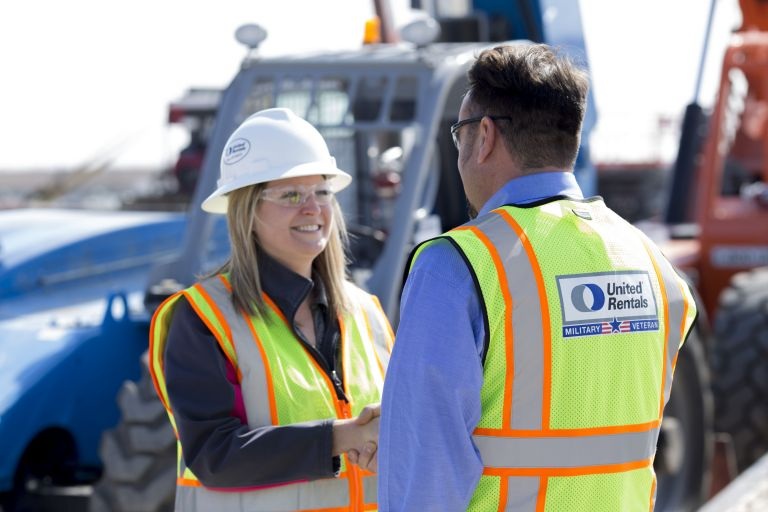
The company describes daily safety huddles and gives employees authority to stop unsafe work. Those are specific operating practices behind its stated safety values. For customers, expertise also includes operator training through United Academy and specialist help with applications such as trench protection and fluid systems.
The purchase it declined to make
An acquisition strategy also needs a stopping point. In February 2025, H&E told United Rentals it had received a superior proposal. United Rentals declined to raise its offer. Chief executive Matthew Flannery said the decision reflected financial discipline. Herc ultimately completed the acquisition that June.
“our decision not to increase our offer for H&E reflects our commitment to financial discipline”
Matthew Flannery / February 2025
The decision illustrates a constraint on the model: adding equipment or locations is useful only at an acceptable cost. In July 2026, United Rentals reported second-quarter revenue of $4.410 billion and raised its full-year revenue forecast to $17.5 billion-$17.8 billion. A forecast, of course, is still a forecast.
For customers, the same discipline starts with the rental agreement. Delivery, pickup, refueling and other charges can sit outside the base rate. Continuous demand may favor owning; intermittent demand can favor renting. Compare the complete cost over the expected working period, and make the off-rent process explicit before the equipment arrives.
A useful purchasing habit follows: ask who owns each handoff. Who confirms the specification, receives the delivery, reports a fault and authorizes the return? Even a small organization can copy that assignment of responsibility. Combining suppliers may simplify it, but the value comes from making the chain clear enough that a tired supervisor can follow it.
The fair’s lesson travels well beyond construction. When many suppliers share a site, the gaps between their responsibilities become work for the customer. United Rentals offers to absorb more of that coordination. The test is wonderfully practical: when the generator stops, how quickly does the right person answer?