In February 2025, Matt Flannery passed on a chance to make United Rentals bigger. H&E Equipment Services had received a competing acquisition proposal. United could increase its offer and stay in the contest. Instead, the company announced that it would decline to submit a revised bid. For an executive whose career has been shaped by buying rental businesses and knitting them together, it was a revealing decision.
Flannery put the explanation in the language of responsibility to investors. The purchase had to satisfy financial discipline. A rival’s willingness to pay more did not change that obligation. Acquisitions are easy to understand when the story ends with a handshake. This one was useful because it ended with United walking away.
The decision offers an entry into a career that began a long way from the CEO’s office. Flannery has managed branches, districts and regions. He arrived at United through a purchased business himself. He understands the arithmetic of consolidation, but he has also spent years working through what the arithmetic asks of people. A deal can be announced in a morning. Making the enlarged company useful takes considerably longer.
An acquisition brought him through the door
Flannery joined United Rentals in 1998 when it acquired Connecticut-based McClinch Equipment. His professional history sits inside the business’s expansion: branch manager, district sales manager, district manager, regional leadership in aerial equipment, then broader operating responsibility. He graduated from Hofstra University. The distinguishing credential in his corporate biography is the range of jobs he held afterward.
Those roles give his ascent a particular shape. At a branch, a company’s promises eventually become an available machine, a delivery and a customer’s next task. A regional role adds the problem of coordinating those promises across locations. Flannery moved through both kinds of responsibility before being asked to oversee the whole operation.
By the time Michael Kneeland introduced him at United’s 2011 investor day, Flannery had spent more than a dozen years with the company. Kneeland singled out his ability to explain strategy in practical terms and to manage change. It is an unglamorous compliment with real weight in this line of work. An excavator has little use for an inspirational slide.
- 1998Joins through McClinch
- 2012Chief operating officer
- 2018President
- 2019Chief executive officer
His promotion came with an integration attached
In 2012, United appointed Flannery executive vice president and chief operating officer, effective with the closing of its merger with RSC Holdings. He had been executive vice president of operations and sales; he was also leading the RSC integration. The promotion placed him at the intersection of a larger organization and the daily work required to make it function.
Kneeland credited him with helping steer operations through the economic downturn and preparing the RSC combination. That assessment matters because Flannery’s route upward depended on handling difficult transitions within an existing business. He was accumulating responsibility while the company itself was changing shape.
United added the presidency to his responsibilities in March 2018. Kneeland described him as an engaging leader with a talent for inspiring the organization. In January 2019, the board announced the next succession: Flannery would become CEO on May 8, retaining the presidency, while Kneeland became non-executive chairman.
They had worked together for 20 years. By then, Flannery’s operating leadership had encompassed organic expansion and the integration of more than a dozen acquisitions. He took charge with a long apprenticeship behind him and a predecessor still involved in the boardroom. The transition put an experienced operator in charge of continuing a strategy he had helped carry out.
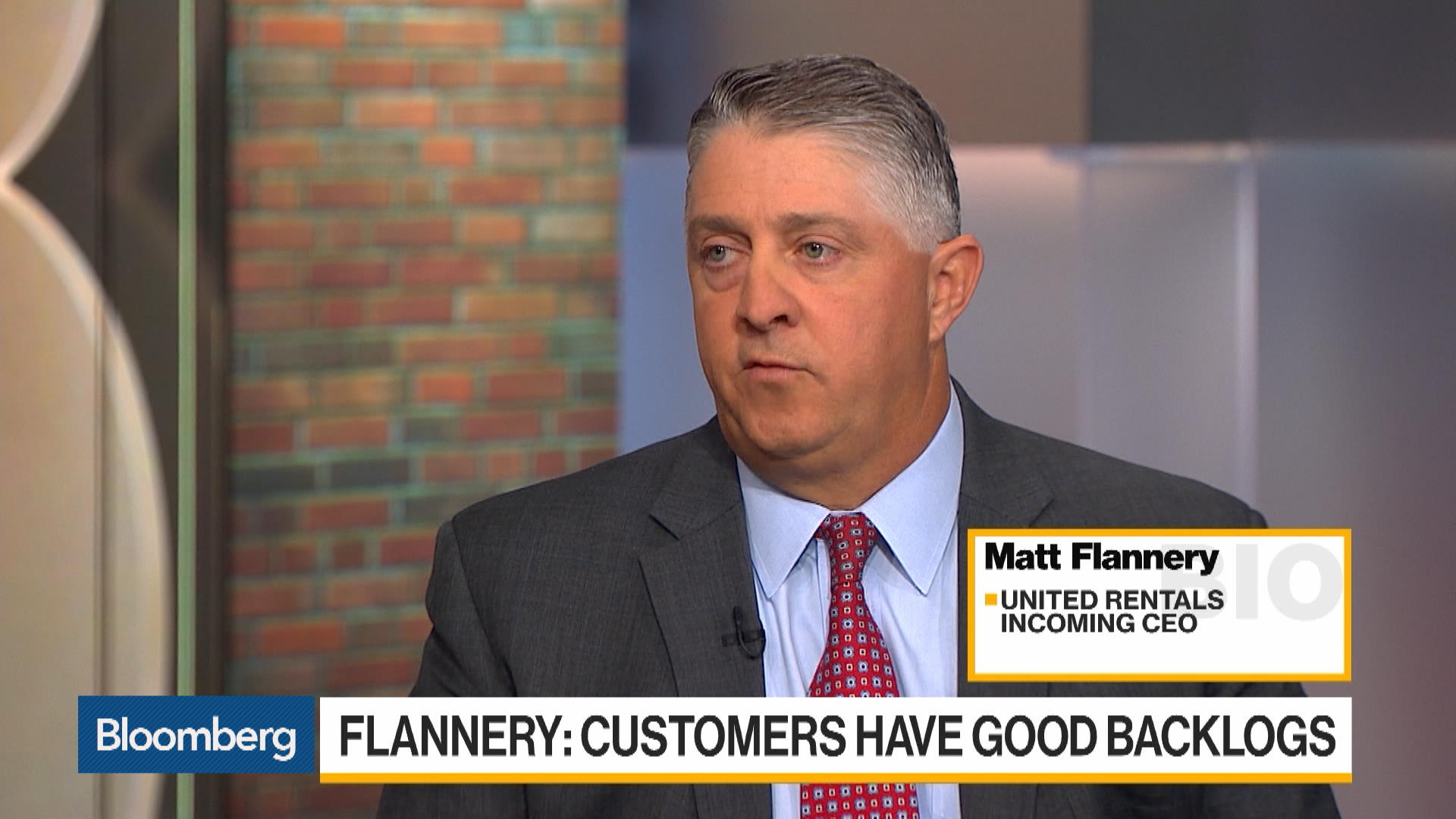
The letter behind the purchase price
Flannery’s approach to acquisitions becomes more personal in an April 2021 letter to employees of Pac-Van, Lone Star and Southern Frac. United was preparing to bring General Finance into the organization. He wrote about employee development, shared values and learning from the incoming teams, then invited their questions about joining the company.
The letter acknowledged that employees would have questions before the transaction closed. It also emphasized limiting disruption to customers. That pairing is revealing: the people changing employers and the customers waiting for service were part of the same integration problem. The transaction’s success would depend on how both experienced the change.
In the accompanying acquisition discussion, Flannery described General Finance as a way to add portable storage and mobile offices. He also said United would work with its experienced leadership team on expansion choices. Buying a business meant acquiring people who understood a different equipment category, along with the assets themselves.
The subsequent Ahern purchase showed the physical scale these decisions can carry. Completed in December 2022 for approximately $2 billion in cash, it added about 2,100 employees, 60,000 rental assets and 106 locations. For Flannery, another announcement immediately became another integration. Every additional location offered more capacity, and another place where the enlarged business had to deliver.
A billion dollars for the ground beneath your feet
In March 2024, United completed its roughly $1.1 billion acquisition of Yak Access. The business brought a fleet of approximately 600,000 hardwood, softwood and composite mats. These provide surface protection for construction and maintenance work. Amid the cranes and engines associated with equipment rental, a mat has a modest public profile. The purchase price suggested it deserved a second look.
Yak mainly served utility and midstream customers. Flannery connected the deal to United’s interest in power generation, transmission and distribution, and to adding related services customers could obtain from the same supplier. It was a concrete expression of his recurring idea that customers benefit when a provider can address more of a project’s requirements.
There is a practical logic to that breadth. A worksite involves equipment, access, temporary facilities and the coordination of different activities. Adding a category can make existing customer relationships more useful. It also asks the organization to master another specialty. The attraction and the difficulty arrive together.
This helps explain why Flannery’s acquisitions deserve to be read as operating choices. The equipment list changes what the company can offer. The acquired expertise changes whether it can offer those things competently. Growth creates obligations as well as opportunities; the enlarged catalogue must still work when someone needs it.
Beside the team, in his own words
In a public year-end message to employees in 2020, Flannery thanked the team for its responsibility, compassion and commitment to customers. The message closed with an expression of pride in working beside them. His choice of position was telling: alongside the workforce, with the company’s purpose framed around customers and communities.
His public statement on racial and social justice that year addressed inclusion, respect and a workplace that would not tolerate racism or injustice. United also held roundtable conversations and a wider employee discussion. These were responsibilities for leadership beyond choosing equipment and approving transactions.
Taken together, the messages add a human dimension to an operating career. They ask the organization to consider how colleagues treat one another while carrying out the work. That expectation has to travel through the same branches, districts and regions that Flannery once managed. A company-wide statement reaches a local team; the next interaction determines what it means there.
A large company, measured locally
Flannery has a concise way of describing the relationship between scale and local service: “In order to lead globally, we must win locally.” Employee Kristi Fleming has echoed the line when discussing connections across branches. The thought suits an executive whose own career moved outward from local operations.
United surveys customers at several points during the rental process and uses the responses to calculate a Net Promoter Score. United said that score improved in 2024. Customer experience supplies a different kind of evidence from a fleet valuation: it asks whether the service feels useful to the person receiving it.
In August 2026, Flannery ranked No. 15 among leaders of large U.S. companies in Glassdoor’s Best CEOs awards. The recognition drew on anonymous reviews and ratings from current and former employees, covering a defined submission period. It offers a view from participating employees, with all the limits of voluntary feedback, rather than a complete census of the workforce.
His response was characteristically collective: “This recognition belongs to the United Rentals team.” The words are conventional enough. Beside the 2021 welcome letter and his history in field management, they fit a consistent public emphasis on employees carrying out the work. The organization’s size makes that emphasis harder to fulfill, and more consequential.
A deal can be announced in a morning. Making the enlarged company useful takes considerably longer.
The work after the handshake
The next test is already on the books
United finished 2025 with $16.099 billion in total revenue. Its aspirational 2028 targets include about $20 billion in total revenue. The distinction matters: one number records completed business; the other describes an ambition dependent on future conditions and execution.
By July 2026, the company was reporting second-quarter revenue of $4.410 billion, including $3.849 billion in rental revenue. Rental revenue in the specialty segment rose 24.8% from a year earlier. United raised its full-year revenue outlook to between $17.5 billion and $17.8 billion. Flannery pointed to large projects, customer backlogs and demand momentum.
Those results give the strategy a current financial setting. They also leave him with familiar decisions about spending on equipment, coordinating services and earning returns from a larger fleet. Revenue records do not settle the next investment choice. The discipline invoked in walking away from H&E still has work to do.
United has scheduled its next quarterly conference call for October 22, 2026. Another set of figures will give investors something new to examine. Flannery’s longer story will remain visible underneath: an employee brought in through an acquisition, promoted through operations, and eventually entrusted with deciding which opportunities the whole company should pursue. After all those years of helping United say yes, one of his most instructive decisions was knowing when to stop bidding.
Follow the work
Interviews, company updates and public profiles.