On July 9, 2026, Joe Ciaffoni and Jack Khattar met at a law office in Washington, D.C. Their subjects included governance, employee retention and the timing of a proposed transaction. These are the sorts of details that disappear behind a merger announcement. They are also where a merger becomes an actual arrangement between people, each with a job, a board and a calendar.
Less than a month later, Indivior and Supernus announced their proposed combination. Ciaffoni was Indivior’s chief executive. Khattar ran Supernus. Under the announced plan, Khattar would lead the combined company, which would take the Supernus name. Ciaffoni had arrived in Indivior’s top job in May 2025. Now he was helping arrange a future with another executive in charge.
The sequence offers an unusually useful way into his career. Look past the procession of corporate titles and a recurring subject appears: succession. He has worked beside a founder, succeeded him, handed the job back on an interim basis, joined another company’s board and moved into its executive office. Leadership, in this account, has an entrance and an exit.
A new office, then the top job
Collegium announced Ciaffoni’s appointment to a newly created chief operating officer position in May 2017. The effective date was May 31. Michael Heffernan, the company’s founder and then CEO, was adding someone whose background covered both emerging businesses and multinational organizations. The job placed Ciaffoni close to the daily work of turning commercial plans into an operating business.
By June 2018, the board had announced the next step. Ciaffoni would become chief executive and a director on July 1. Heffernan would remain chairman. That arrangement gave the company a new executive leader while retaining the founder’s involvement in strategic decisions. The person who had built the business and the person taking responsibility for running it would keep working together.
“I consider it a privilege to lead Collegium in this next phase of growth,” Ciaffoni said at the time. The phrasing was conventional; the setup was specific. He had spent about thirteen months inside the organization before assuming the top job. The succession followed a period in which he could work alongside Heffernan and learn the company from its operating side.
There is a practical distinction between arriving as chief executive and becoming chief executive after serving as COO. In the second case, colleagues have already seen how an executive handles responsibility below the top of the chart. Ciaffoni’s promotion followed that second route. It was an internal elevation with the founder still at the board table, an arrangement with both continuity and a clear transfer of authority.
The education before the title
His route into that office ran through a long list of established employers. He held commercial leadership positions at Novartis and Sanofi-Synthelabo, and served as vice president of sales at Schering-Plough. Later came senior responsibilities at Shionogi, including executive vice president and chief operating officer of Shionogi Inc. and president of Shionogi Pharmaceuticals.
At Biogen, his responsibilities expanded through U.S. commercial leadership to the Global Specialty Medicines Group. He subsequently served as president of U.S. Branded Pharmaceuticals at Endo International. The scale and geography of those assignments varied. Taken together, they explain why his later biographies emphasize experience across U.S. and global organizations, rather than a career inside one company.
Ciaffoni earned a bachelor’s degree in communications and an MBA at Rutgers University. Those are the two degrees listed in his corporate biography. Their combination is a neat fit for the public work of an executive: explaining a direction and being responsible for the economics behind it. The qualifications are facts; any tidy theory that they predetermined his career would be getting ahead of them.
What the employment history does establish is repeated exposure to commercial organizations before his first public-company CEO appointment. His career developed through sales, marketing, business leadership and operations. By the time he reached Collegium, the board was hiring an executive who had already occupied several different seats around a management table.
Growth with a fairly steady expense line
A compact set of numbers helps explain the business he eventually left. Collegium’s May 2024 presentation showed net product revenue rising from approximately $277 million in 2021 to $464 million in 2022 and $567 million in 2023. Over the same period, adjusted operating expenses moved from about $101 million to $122 million and then $124 million.
Revenue roughly doubled across those two years, while that adjusted expense measure rose much less. The comparison describes the company’s reported performance during Ciaffoni’s tenure. It does not allocate the credit among management, employees, acquisitions and existing operations. A CEO is answerable for the whole enterprise; that does not make every improvement a solo performance.
The expense figures also require their adjective. “Adjusted” identifies a company-defined measure, and the presentation excluded stock-based compensation from adjusted operating expenses. That distinction matters when a neat graphic invites an equally neat conclusion. The growth was measurable. The accounting labels deserve to remain attached.
In May 2024, Collegium announced that Ciaffoni would step down effective May 24. Heffernan would return as interim president and CEO while the board searched for a successor. Ciaffoni would stay on the board until the annual meeting and would not seek reelection. The founder who had handed him the job in 2018 would temporarily take it back.
The colleagues behind the columns
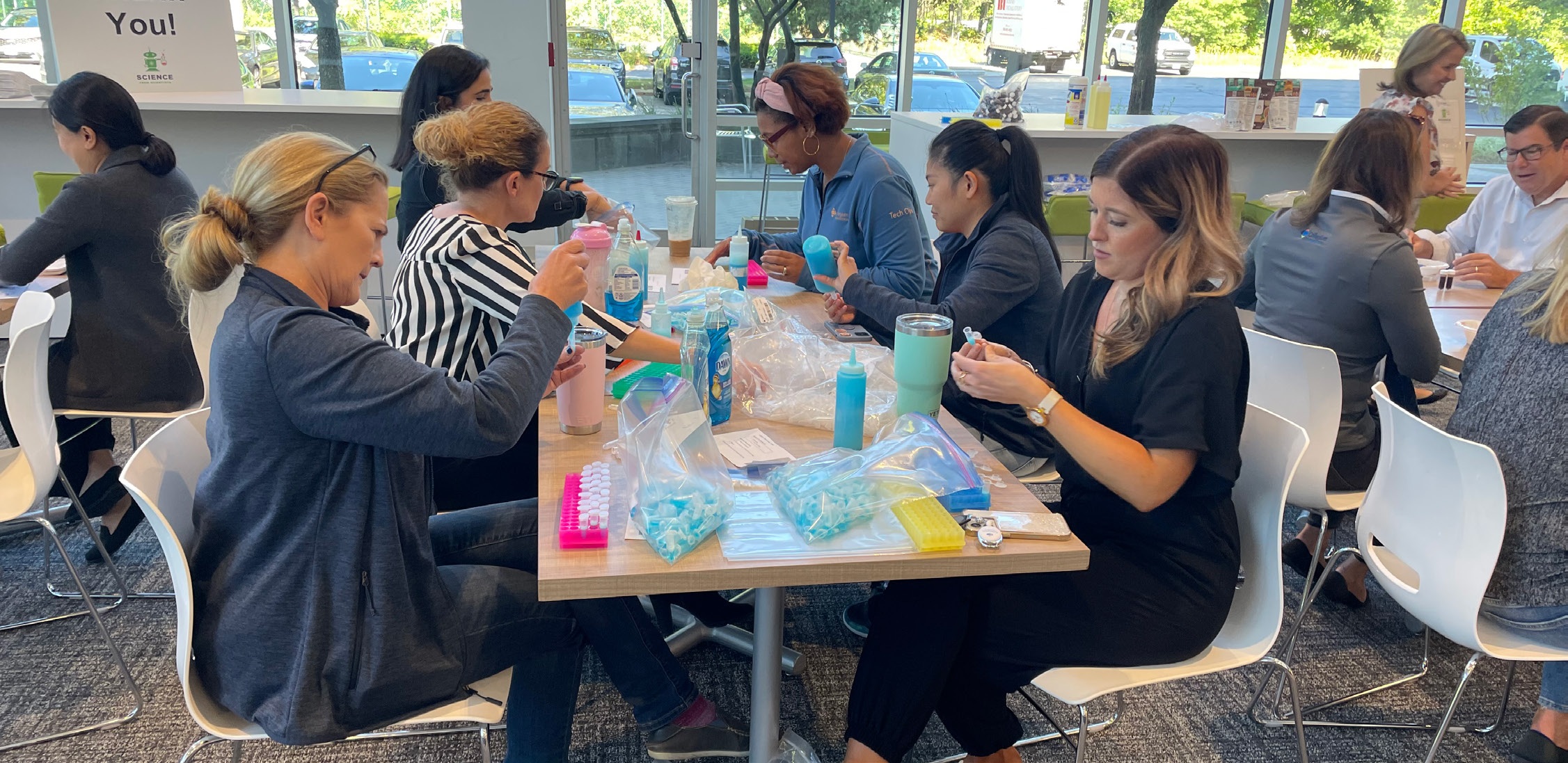
There was another side to the organization during those years. In Collegium’s inaugural ESG report, covering 2022, Ciaffoni identified himself as chair of its diversity, equity and inclusion council. His message discussed inclusion, charitable giving and employee participation. It placed workplace culture alongside the financial story, rather than leaving it entirely to a separate department.
The report recorded more than $350,000 in corporate donations supporting STEM initiatives and charities providing clothing and food. It also described employee service activities. These were company commitments involving many people. They offer a concrete glimpse of the institution Ciaffoni led, without turning collective work into a personal philanthropic legend.
His departure statement returned to the same collective emphasis. “In my time at Collegium, I have worked with an exceptional group of colleagues,” he said. It is a modest piece of evidence about his public voice: the subject of the sentence is his experience of working with others. His next appointment would again begin with a group, this time a board.
Five months across the boardroom
Ciaffoni joined Indivior as an independent non-executive director in December 2024. His arrival accompanied board changes following discussions with Oaktree Capital Management. Robert Schriesheim also joined, and the new directors were placed on the nomination and operational committees. The operational committee’s remit included recommendations on operations and capital allocation.
By May 8, 2025, Ciaffoni had become CEO, succeeding Mark Crossley. The move changed his relationship to the business from independent oversight to executive responsibility. David Wheadon chaired the board. The company maintained separate chair and chief executive positions, with the board explaining that separation as a way to support independent oversight of management.
His appointment also passed through the formal machinery of shareholder approval for a remuneration policy. The employment agreement specified a $1.05 million annual base salary and an annual bonus target equal to that salary, with a higher maximum tied to performance. These were disclosed terms of an executive appointment, distinct from personal wealth. The paperwork was part of the handoff.
The distinction is visible in the two Indivior roles. As a non-executive director, he participated in oversight through the board. As CEO, he became responsible for management. The transition made him accountable to the institution he had recently joined to help oversee. Five months is a short interval on a career timeline, but the change in duties was substantial.
A calendar with an ending
By February 2026, Ciaffoni was describing completion of the first phase of the Indivior Action Agenda. The company said its second phase had begun on January 1. Numbered phases can sound abstract until a later event supplies the endpoint. In August, the proposed Supernus transaction gave the agenda a much more tangible destination.
“Under Jack’s leadership, we are excited by the potential of the combination and confident in Supernus’ future,” Ciaffoni said. The announced leadership structure put Khattar in the chief executive’s seat and Tony Kingsley in the chair. The merger remained a proposed transaction, with completion still ahead. Its governance, however, had already been spelled out.
“Under Jack’s leadership, we are excited by the potential of the combination and confident in Supernus’ future.”
Joe Ciaffoni · August 2026
The Washington meeting gives this final chapter a human scale. Before the names and dates reached a public announcement, the two executives discussed the terms under which their organizations might come together. Employee retention sat beside governance and timing on the agenda. Each subject concerned continuity: who would remain, who would decide and when the next arrangement could begin.
On October 15, Indivior shareholders approved the proposal, with 94% of votes cast in favor. The company said it expected closing on November 2. As of October 22, that date remained in the future. Approval supplied a significant milestone; the distinction between a vote and a completed merger still mattered.
That leaves Ciaffoni at a recognizably different point from the familiar executive portrait of permanent ascent. His current job is CEO of Indivior. The announced destination gives the combined business another name and another chief executive. Across his career, the titles have changed repeatedly. The latest test is whether an organization can move from one chapter to the next with the responsibilities clearly assigned.