A storage chip has a peculiar ambition: to go unnoticed. Nobody opens a photograph and congratulates the controller. Nobody retrieves a spreadsheet and sends flowers to the firmware team. The reward for doing the job properly is that everyone gets on with something else. Tim Ding has built much of his working life around that arrangement.
Ding, the founder, chairman and CEO of PETAiO, works in the layers beneath the digital experiences that attract the applause. His company develops enterprise solid-state drive controllers and complete storage products. In a 2024 interview, he described storage as sitting at the bottom of the computing stack, doing difficult work while carrying core technical responsibilities. It is an unusually literal version of supporting everybody else.
The striking thing about his career is the recurrence. A controller company, an all-flash storage company, another controller company. Each new venture returns to the question of how machines retain and retrieve information. The names change. The obligation survives. For Ding, a business can grow around a component most of its eventual users will never know exists.
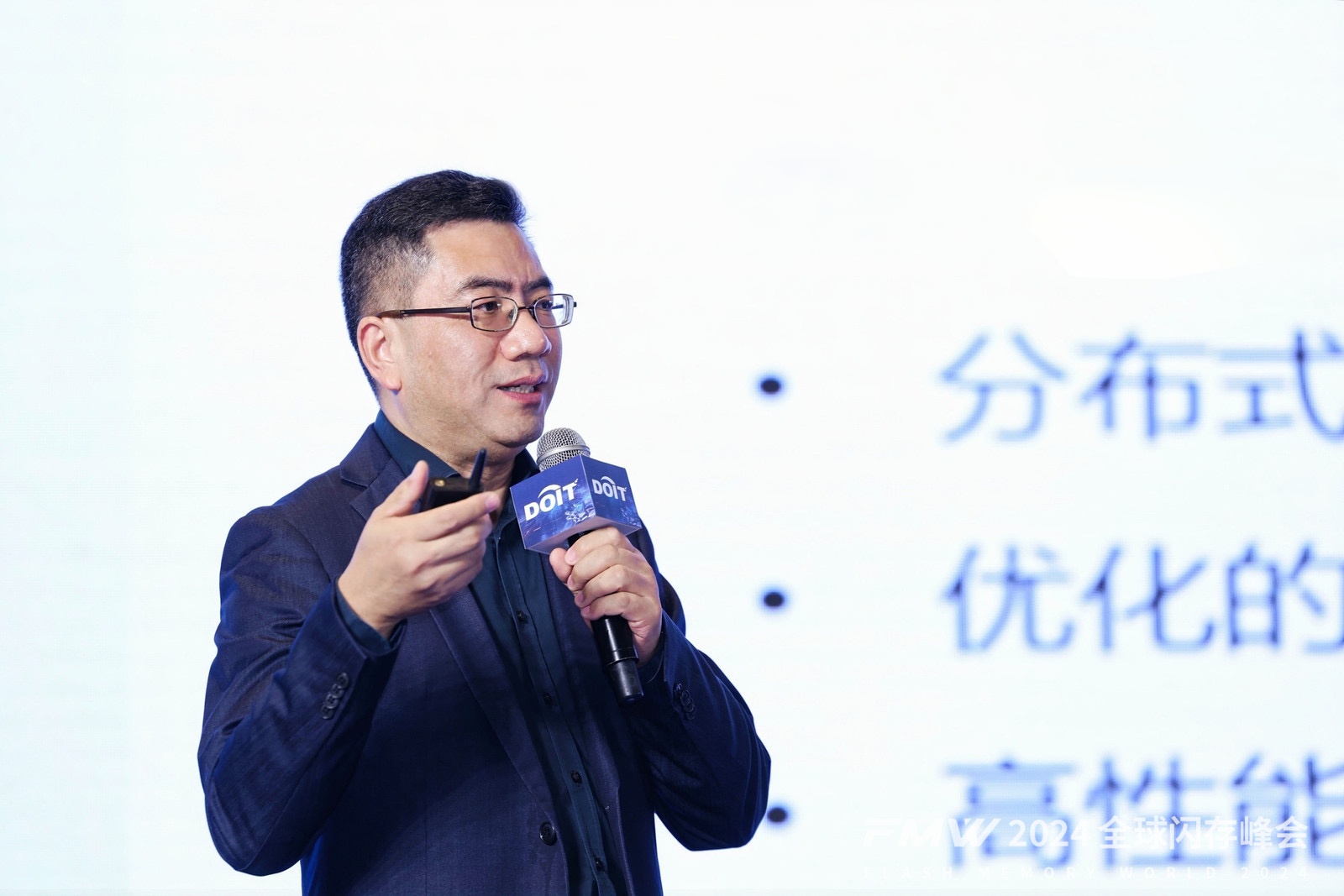
Before the chip, the sky
His education began at a considerably greater altitude. Ding entered Peking University in the 1984 cohort and studied space physics through undergraduate and master's study. He later pursued doctoral study in physics at the University of Texas, followed by study in electrical engineering and chip engineering at Santa Clara University. The progression runs from understanding physical systems to building electronic ones.
His professional history then moves into the machinery of storage. He held engineering roles at Seagate and hardware management positions at Microstor and Castlewood Systems. Between 2002 and 2010, his work at LSI brought sales, marketing and field engineering into the same brief. That combination matters: a component has to function inside someone else's equipment, under someone else's commercial constraints.
There is a useful tension in that résumé. The engineering side asks whether a design works. Field engineering asks whether it works in the customer's system. Sales asks whether the customer will buy it. Ding's career put those questions close together. Read that way, the eventual move into company building feels less like a departure than an enlargement of the job.
An exit, then another beginning
At Link-A-Media Devices, Ding served as vice president of sales and technical marketing. He subsequently co-founded TiDAL Systems and was its founding CEO. TiDAL developed controllers for PCIe NAND flash storage, and Micron acquired the company. The deal placed a business he helped establish inside one of the memory industry's major manufacturers.
Micron paid $148 million for TiDAL. That is a company acquisition price, with all the shareholders and obligations such a transaction entails. It belongs in Ding's story because it shows a buyer assigning substantial value to controller expertise: the electronics between the computer asking for data and the flash holding it.
There was also HoneycombData, where Ding was co-founder and CEO alongside co-founder and chief architect Shawn Ouyang. Founded in October 2014, that business worked on distributed all-flash storage systems. Its stated aim was to make data centers simpler and less expensive to own. Here the problem extended beyond a single drive to the behavior of a collection of machines.
Put the ventures beside one another and a pattern appears. Ding has worked at both component and system level, with the commercial task of finding buyers running alongside the technical task of making storage useful. That pattern offers a better introduction to PETAiO than any isolated product specification. The next company carried a familiar set of questions into a new design.
A view of the work, rather than a sequence of non-overlapping appointments.
A small piece of silicon, a long list of obligations
PETAiO was founded in 2016. By September 2019, it was out of stealth with Titanium-DC, an eight-channel enterprise SSD controller using PCIe Gen4 x4 and NVMe 1.4. Ding was also a seed investor. His involvement therefore reached beyond the title on the door to the money needed to get the business moving.
The announced chip occupied 29.9 square millimeters and had typical controller power of 2.75 watts. Its published specifications included sequential reads of up to 7 GB/s. Those were vendor figures for defined conditions. They describe the proposed engineering trade: put considerable data movement into a small area while keeping the controller's power demand restrained.
The dimensions make an appealing picture, but the obligations are the real story. The controller must coordinate the drive's work. Firmware must give that hardware useful behavior. A customer needs the assembled product to fit the system being built. Ding's business sits where those demands meet, and a promising number on a specification sheet is only the beginning of the conversation.
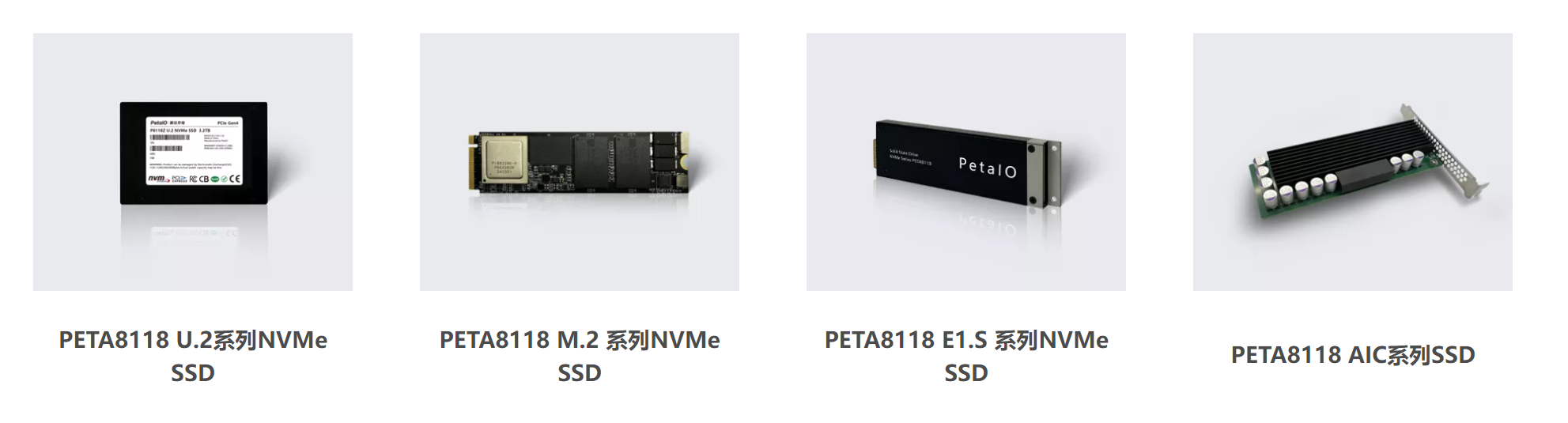
PETAiO went on to offer the PETA8118 family in U.2, M.2, E1.S and add-in-card formats. One underlying technology could reach customers through several physical forms. There is something quietly practical about that choice. Buyers arrive with existing machines, budgets and constraints. The storage supplier has to make room for those realities inside its own ambitions.
Published launch specifications, not independent test results. Controller power is distinct from total drive power.
The banker and the few computers
One of the more revealing episodes comes from the business of paying for the work. In late 2023, a Nanjing investment fund introduced PETAiO to the local Industrial and Commercial Bank of China team. A bank representative described a company with engineers and a few computers, without a factory, approaching the transition from research to selling products.
After visits and an assessment, the bank provided credit support; by May 2024, it had disbursed RMB 30 million in loans. Ding said the relationship had brought useful information as well as financing. This is a less photogenic scene than a chip launch, but it belongs in the same story. Engineering businesses need people willing to finance the interval before delivery.
The anecdote also makes the company easier to picture. Semiconductor development can sound like an abstract procession of interfaces and process nodes. For a lender, it can look like people at desks and a difficult judgment about what their work might become. Ding's role includes helping that work become legible to people whose expertise lies outside the design team.
The next customer is down the road
By February 2025, Ding was traveling between Nanjing and Tianjin to check preparations for a new company project at Tiankai Huayuan Park. The business had chosen the location in March 2024 for research and a storage-system experimental base, with testing and manufacturing activity also envisaged. The company was extending its geography along with its product ambitions.
Ding explained the attraction in terms of nearby technology companies, an established industrial chain and places to apply the products. He also described cooperation with Sugon on digital infrastructure and an introduction to the Beijing-Tianjin-Hebei coordinated development investment fund. These are specific connections with a practical purpose: bringing storage technology closer to the organizations that might use it.
By June 2025, PETAiO had completed a Series D financing round, its eighth funding round. The financing adds another milestone to a career already marked by company formation and acquisition. It also points forward. A storage business has to keep funding the next generation while persuading customers to adopt the present one. For a founder, those two schedules have to coexist: the engineering calendar looking ahead, and the customer's purchasing decision arriving in the present.
What he means by going deeper
Ding's ambitions reach beyond selling a faster drive. In 2024, he outlined a future for PETAiO as an infrastructure solutions company, using storage chips, firmware and complete systems as the basis for expansion. He also expressed hope of reaching public markets within two or three years. That was an aspiration, with a time horizon attached, rather than a completed milestone.
The technical direction includes CXL, an interface relevant to memory expansion, alongside newer PCIe storage technology. PETAiO describes a roadmap intended to provide AI systems with larger memory and storage resources. For Ding, that puts the familiar storage problem inside a changing computing architecture. The company is pursuing a role in how those resources are connected and used.
His choice of problem has remained recognizable even as the vocabulary has changed. A distributed storage system, an enterprise drive and an AI infrastructure proposal operate at different scales. Each depends on components behaving usefully together. That is the territory Ding keeps returning to, with the customer waiting at the other end of the system.
“存储有个词叫zero tolerance error”
“In storage, there is a term: zero tolerance error.”Tim Ding · 2024 interview · translated from Chinese
A future measured in working products
On June 12, 2026, Ding joined a storage industry roundtable in Changzhou with investors and fellow technology executives. He forecast continued rapid growth over the next two or three years and argued that the industry should return its attention to product and technology innovation. Even at a gathering devoted to AI storage, his emphasis came back to what companies build.
PETAiO's September 2026 appearance at Beijing's Data Storage and Computing Ecosystem Conference provided a recent view of that work. The company presented its enterprise storage products and discussed performance, power consumption and data security with visitors. It reported Titanium-DC in mass production and a drive lineup spanning several formats. The conversation still concerned the working details of storage.
There is room for ambition here without making the chip into a celebrity. Ding has moved from space physics through engineering, customer work, founding teams and financing. His business now reaches toward AI infrastructure, carrying the same underlying obligation into another market. Somewhere above that infrastructure, a user will ask for a file. The satisfying ending is that it arrives.