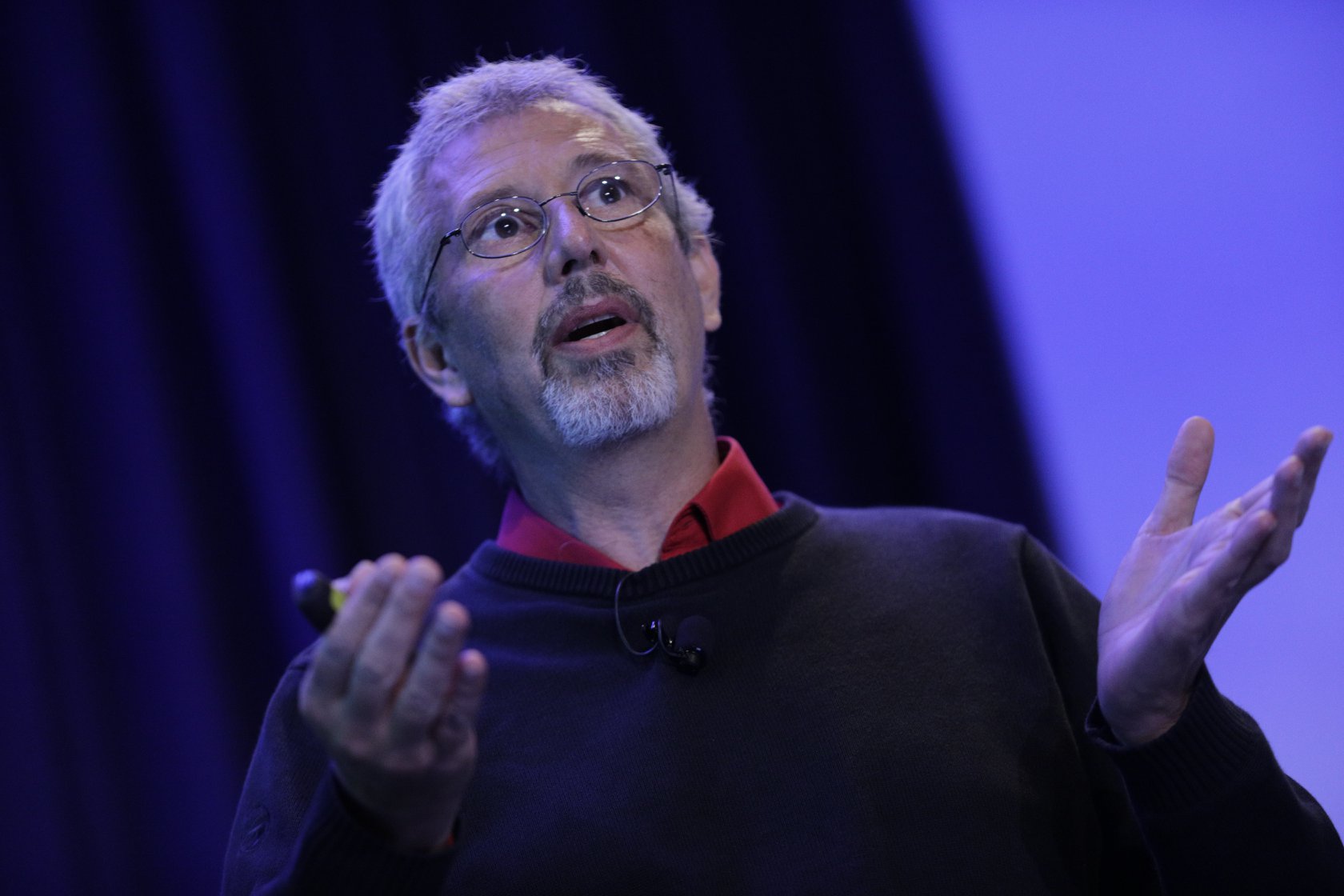
The Story
He bet against Hadoop.
He won.
In 2012, the entire data world was in love with Hadoop. MapReduce was going to eat everything. Oracle veterans were not supposed to walk out the door and build something better. Thierry Cruanes did it anyway.
The French computer scientist and database architect spent 13 years inside Oracle's engine room - not writing applications, not managing teams from a distance, but deep in the optimization and parallelization layers where query performance is won or lost at the microsecond level. He led Oracle's optimization group. He knew where every body was buried. And when he looked at the cloud, he saw something most of his peers missed: the old rules didn't apply.
Together with his Oracle colleague Benoit Dageville and parallel computing expert Marcin Zukowski, Cruanes co-founded Snowflake in 2012 with a radical idea - what if you separated compute from storage entirely? Not as a clever hack, but as the architectural foundation? What if you let customers scale each independently, pay only for what they use, and run multiple virtual warehouses simultaneously on shared data without stepping on each other?
"Coding is the happy place for both of us."
- Thierry Cruanes, Snowflake Co-Founder & CTO
The idea sounds obvious now. In 2012, it was a minority position. Hadoop was supposed to win. The idea of spinning up a database service in the cloud - not just running old software on cloud VMs, but architecting from first principles for a cloud-native world - was still fringe territory. Cruanes and Dageville pitched it anyway, early enough to attract seed investment from Mike Speiser, whose backing opened doors to further capital.
Eight years later, Snowflake listed on the New York Stock Exchange. The IPO raised $3.4 billion and valued the company at $70 billion - the largest software IPO in US history at the time. Warren Buffett's Berkshire Hathaway bought in on the day of the IPO. Salesforce bought in. The market reaction gave Cruanes a "sinking feeling" - not triumph, but the weight of expectation. He and Dageville had built something people believed in enough to pay enormous sums for. Now they had to keep proving it.
Cruanes's technical fingerprints are all over Snowflake's architecture. The ACID-compliant database built on immutable storage. The multi-cluster shared data model. The independent scaling of services, compute, and storage. The approach to data sharing that lets Snowflake customers exchange data with consent, creating an ecosystem - not just a product. These aren't marketing features. They're solved engineering problems, the result of a man who spent his career learning what databases can't do, and then figuring out what they could.
He holds over 40 patents. He has a PhD from Pierre and Marie Curie University (now part of Sorbonne). He still writes code on weekends because, as he freely admits, that's where he's happiest. For all the IPO drama, the billions, the keynotes and QCon talks, Thierry Cruanes is fundamentally a coder who found a bigger canvas.
"Embrace emerging technologies and explore their potential applications."
- Thierry Cruanes
The current chapter is about AI. In April 2026, Cruanes and Dageville co-authored "From First Principles: The Ideas That Built Snowflake - and What Comes Next" - a look at how their founding architectural decisions have positioned the platform for the intelligence era. The compute-storage separation that seemed radical in 2012 turns out to be exactly what you need when you want to run large-scale AI workloads on enterprise data. The bet landed twice.
His aspiration remains the same as it was when he walked out of Oracle's offices in 2012: make data technology easy, simple, and available. Just at a scale nobody imagined was coming.