The most consequential moment in a hiring assessment may arrive months after the interview. A manager sits down with an employee, opens an agenda, and discovers that the person across the table prefers a different pace, a different degree of detail, a different kind of conversation. The hiring decision is finished. The work of understanding each other has barely begun.
That is the territory The Predictive Index now wants to occupy. PI sells assessments, certainly. But its more interesting proposition is that information about people should travel with them into the workday. Otherwise, an expensive insight becomes a very well-filed PDF.
- PI measures workplace behavioral drives and learning capacity, then helps teams apply the results.
- Its customers include HR teams, hiring managers, and leaders at more than 10,000 organizations, according to the company.
- The Charma acquisition brought meetings, feedback, goals, and reviews into PI’s product family.
- Annual plans start at $10,000. The useful question is how often managers will use what they learn.
A navigator notices the crew
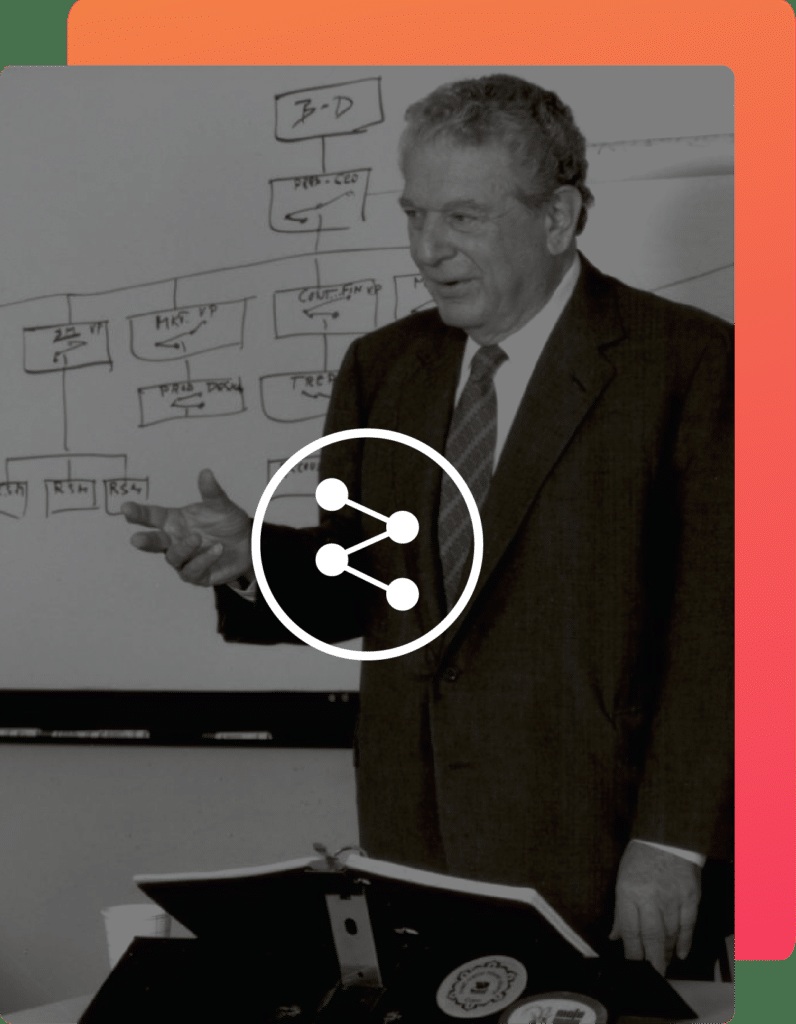
PI’s origin story begins far from an HR department. In 1942, Arnold Daniels volunteered for the U.S. Army Air Corps. Posted to England as a flight navigator, he served on a crew that, according to PI’s history, completed more than 30 missions without a combat casualty. Commanders sent a psychologist to examine the team’s effectiveness.
For Daniels, the encounter opened a question he would pursue in business: what could an organization learn by studying the individuals inside it? He briefly studied workplace psychology at Harvard after the war, released the first Predictive Index Assessment in 1952, and founded the company in 1955. The instrument came first. The business followed.
There is something appealing about that sequence. A software company can spend years searching for a problem worthy of its product. PI began with a question about people, then spent decades changing the machinery around the answer. Its stated vision, “Better Work, Better World,” is broad. Its original subject was unusually concrete: a group of people doing consequential work together.
Four drives, no universal ideal
The Behavioral Assessment is untimed and averages about six minutes. It measures four drives: Dominance, Extraversion, Patience, and Formality. These describe tendencies relevant to autonomy, social interaction, pace, and structure. They give a manager a vocabulary for differences that otherwise get interpreted as attitude.
The assessment also distinguishes between a person’s description of themselves and how they believe others expect them to act. PI calls the latter Self-Concept. That gap can start a revealing conversation. Someone may feel required to be outgoing, speedy, or meticulous in ways that demand considerable effort. A manager who notices the effort has a better starting point than one who merely notices the strain.
Results include one of 17 Reference Profiles. Names such as Analyzer, Captain, and Scholar make the framework memorable. PI’s own explanations caution that people sharing a profile can have different individual patterns. The name is a shortcut; the detailed report carries more information. Office life already has enough pigeonholes without software furnishing the rest.
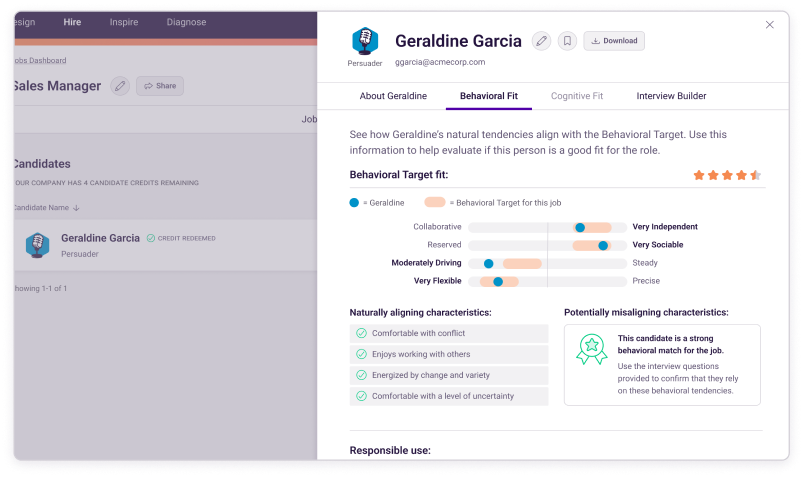
The Cognitive Assessment addresses a separate question: capacity to learn, adapt, and solve problems. Its standard format offers 50 questions in 12 minutes, covering verbal, numerical, and abstract reasoning. PI Hire combines assessment information with a job target and interview guidance. The target matters: PI explicitly discourages a single baseline cognitive requirement across all jobs.
A practical lesson is available before anyone buys anything: get the hiring team to agree on the work. A candidate cannot fit a role that five interviewers have imagined five different ways. Assessments can organize evidence, but a poorly defined job remains a poorly defined job with a chart attached.
The report gets a recurring meeting
In 2014, Phoenix Strategy Investments acquired the business, then called PI Worldwide. Mike Zani became CEO. The investors had already used PI in their own companies for years. Their announced plans included investment in science, technology, and the distribution network. This was an operator’s purchase of a familiar tool.
The road to ownership included a false start. In a Think Like an Owner interview, Zani recalled trying to buy PI in 2009 and getting close without completing the deal. He described the earlier software as an assessment repository with little interpretation capability. The opportunity he saw was to build software around an instrument his team already valued. Familiarity as a customer supplied the conviction; the 2014 transaction supplied the chance.
PI later raised $50 million from General Catalyst in 2019 and received a $30 million minority investment from JM Family Enterprises in 2022. Those announced investments are more useful evidence than a borrowed private-company revenue estimate. They show outside capital backing product expansion and the certified partner network.
The decisive expansion for this story came in October 2023, when PI acquired Charma. Announced that December, the deal added a performance-management product built around recurring meetings, feedback, recognition, reviews, and goals. In February 2024, the integrated product launched as PI Perform.
At launch, PI described two concrete priorities: bring Charma into a coherent product experience, including a unified login, and incorporate its behavioral assessment data. A person’s Reference Profile could appear inside a shared one-to-one workspace. The assessment had acquired somewhere to be useful on Tuesday.
- AssessUnderstand drives
- ApplyPrepare the conversation
- RepeatMeet, coach, review
Other modules cover neighboring tasks. Inspire offers development and relationship guidance. Design examines team composition and strategic alignment. Diagnose collects engagement feedback. Alongside the software, certified consultants supply interpretation, training, and implementation. PI’s expertise sits at that junction of psychometrics and management practice.
A contractor puts the idea to work
Builtech, a construction and general contracting firm, illustrates the problem. As its portfolio grew, it needed people who could handle particular projects and work effectively together. In PI’s published case study, the company applied behavioral insights to hiring, team compatibility, and workplace friction after implementing PI in 2019.
The case study also reports a 4% decrease in attrition rates. Its useful detail is the application: understanding complementary behaviors and reducing conflict, rather than simply issuing profiles. These are vendor-published results, with broader management changes in the picture. They should inform a buying question, not become a forecast for another company.
Club16, the British Columbia gym business, offers a related example. PI’s account describes staff attrition and disengagement during expansion, followed by use of Perform in daily meetings and goal-setting. The company worked with talent optimization consultant Tom Johnston. The software was part of a broader effort to improve visibility and accountability.
For a reader, the copyable practice is modest: bring relevant information into a recurring conversation, then agree on action. If a profile identifies a preference for preparation, send the agenda early. If a discussion reveals friction, ask what working arrangement would help. The report should make inquiry easier, not furnish a polished explanation for ignoring someone.
The price of making it a habit
PI’s current public Talent plan starts at $10,000 a year. Performance and Engagement plans have custom pricing. Prices scale with company headcount, while plans advertise unlimited users and assessments. That model encourages an organization to spread use beyond a small HR group. Premium integrations and workshops can add cost.
The product occupies several markets at once. Hogan, SHL, and Criteria are alternatives when the question is assessment. Lattice and Culture Amp belong in the neighboring conversation about performance and engagement. These products differ in scope and method. PI’s particular pitch is the combination of behavioral data, job context, management workflows, and consulting support.
A buyer should examine that combination against actual habits. If managers will never open the guidance, an unlimited-user subscription offers unlimited opportunities for neglect. If a team treats Reference Profiles as fixed identities, it may harden assumptions instead of testing them. Useful implementation requires role-specific criteria, thoughtful interpretation, and room for evidence that contradicts a first impression.
The AI arrives with homework
PI’s newest attempt to close the application gap is Obi, its AI behavioral guidance tool. Release notes date its open beta to June 15, 2026. It draws on PI data and organization context to help prepare feedback, coaching, and conflict conversations. Documentation says an active Inspire subscription is required and that Obi does not make hiring, firing, or promotion decisions.
“Before Obi, you had to do a lot of the work yourself to apply PI insights.”Taylor Pons, Constant Contact, on PI’s Obi product page
That observation is the whole product strategy in miniature. Knowing a colleague’s pattern still leaves a manager with a meeting to conduct. Obi proposes a bridge from data to suggested words and actions. PI’s documentation also tells users to check accuracy. A fluent answer still needs someone who understands the situation.
PI has spent decades learning to describe people at work. Its present challenge is to make those descriptions useful without letting them become substitutes for attention. The six-minute assessment opens the conversation. Whether anyone listens afterward is a longer test.
Keep the conversation going
Explore PI’s website, current plans, the free behavioral assessment, and the PI blog.
Watch the Greenhouse product walkthrough, browse PI’s YouTube channel, or listen to Mike Zani on Think Like an Owner.